Bryant Lazaro GFXGOAL

Leaving Argentina and learning from Marcelo Bielsa: The unconventional journey of American-born coach Bryant Lazaro to Portuguese side Estoril

It took a year for Bryant Lazaro to realize he could never be a professional footballer. 

The South Florida native had moved to Argentina at 17, joined the Estudiantes de la Plata reserve side, all with the central dream of making it pro in the sport he grew up on. This, he figured, was it. He had the quality. He spoke the language. A break or two, and a long career was around the corner. 

But after 12 months, the dream crumbled. Not because he wasn’t good enough, or that he didn’t care. Rather, his mindset was radically different from the Argentine natives he was training with six days per week. Lazaro had a life in the United States, a support structure around him, friends and family to go back to. His teammates had no such plan. 

“I just naturally realized that I didn't have the drive necessary. The players there play to feed their families, and I had come from a different background. No drama, but I just realized it wasn’t for me,” he told GOAL

Lazaro packed his bags, took what little money he had, and jetted off to Spain. His playing dream was dead. But coaching? That was very much alive. And now, 20 years on, Lazaro is on the precipice of making it big, a highly-rated 37-year-old assistant coach for a surging Portuguese team, ready to take his own side, and proving that careers can be made by hitting the books - not just kicking a ball on a field. 

“It's not straightforward for a lot of people. It's not easy, understandably. I was fortunate to find coaching at 19,” Lazaro said. “And I never looked back.”

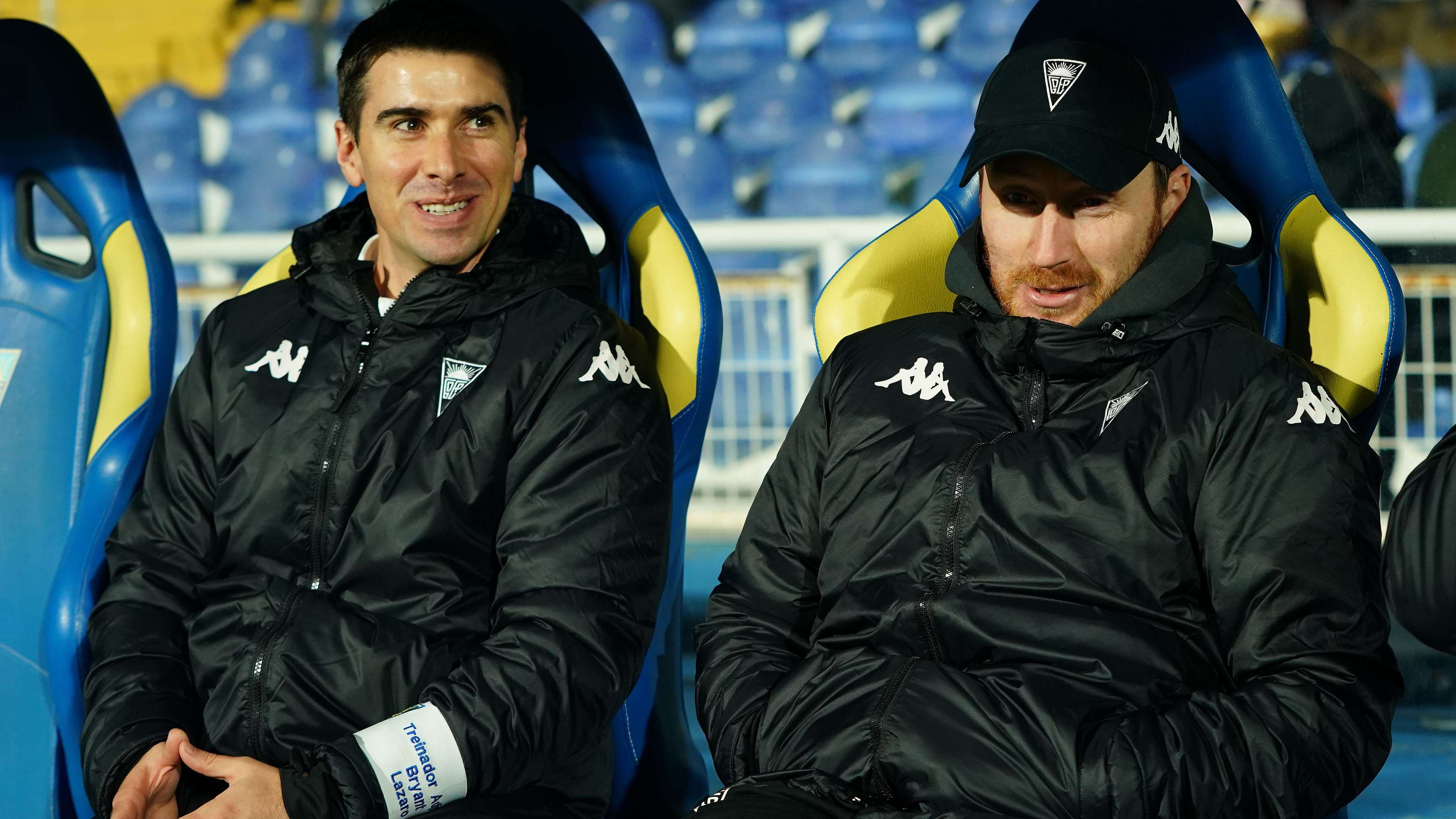
  • Bryant Lazaro Estoril Praia - Futebol SAD

    'A team that plays with no fear'

    Twenty years on, it has all worked out. These days, Lazaro is second in line for Portugal’s Estoril, a surging side on a small budget that has broken into the top half of the Primeira Liga - and in the midst of an improbable push for European football. 

    They are a young side, led by a 39-year-old Ian Cathro, punching above their weight. Legendary manager Jose Mourinho, who now coaches Benfica, praised their way of playing after a 3-1 win last week. 

    “They really do play well, they are pleasant to watch and they can achieve good results even against the big teams,” Mourinho said. 

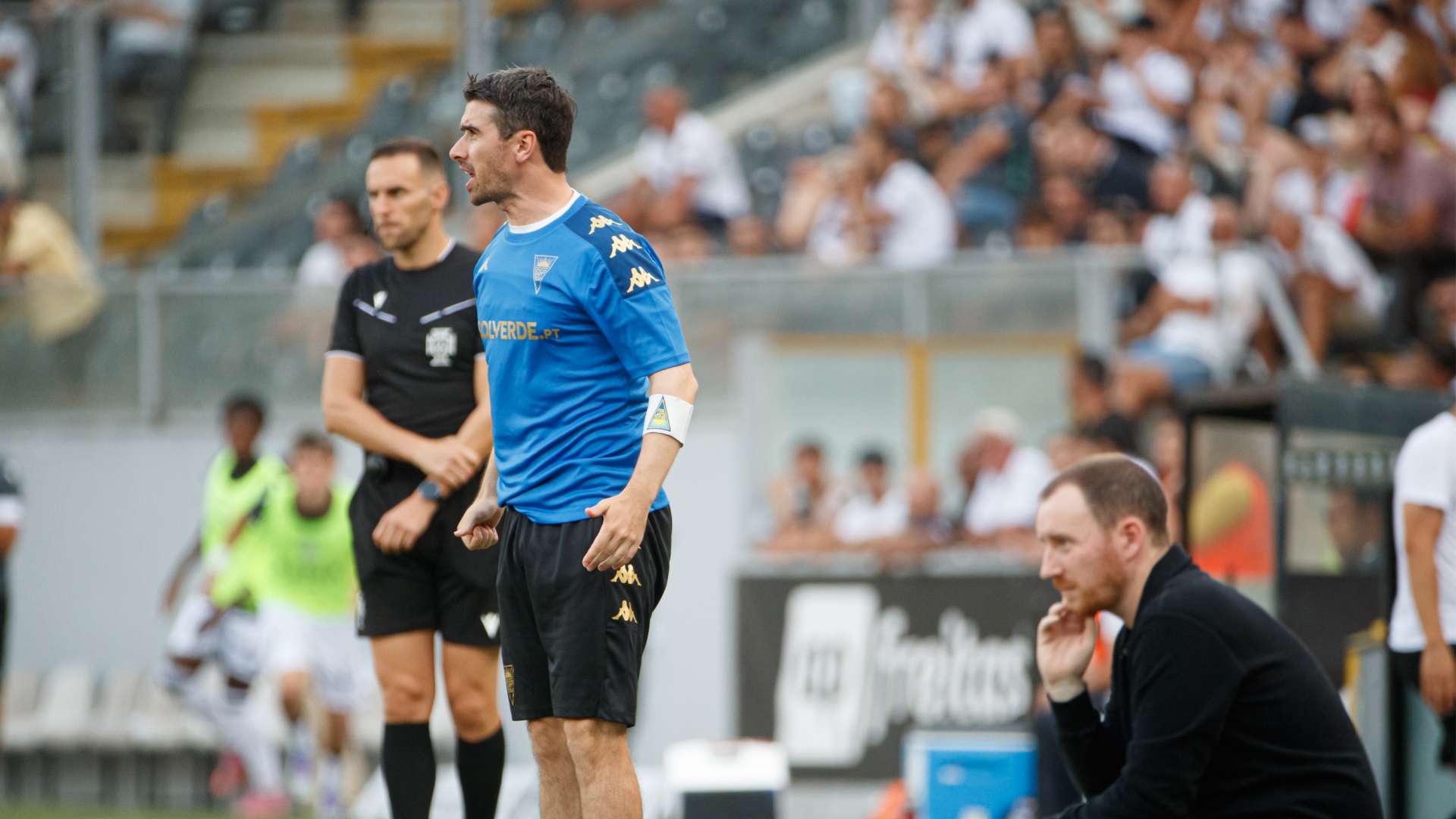
    And Mourinho's praise is warranted. Estoril press high, fight to win the ball and generate shooting chances quickly as a result. It's a team effort, and Lazaro is certainly a central part of it. He speaks four languages, has three degrees and is influenced by the greats of the game.

    “We're a team that plays with no fear, irrespective of the opponent, whether it's Benfica away yesterday or Porto away three weeks ago, or Braga at home two weeks ago. We play against every opponent with no fear,” Lazaro said. 

    But it hasn’t been the most linear journey to get here.

  • Advertisement
  • Bryant Lazaro 2Estoril Praia - Futebol SAD

    From Argentina to Real Madrid

    There is a line to be traced, in fact, between hundreds of individual conversations with taxi drivers in Argentina to where Lazaro is now. 

    His neighborhood wasn’t the best, he admitted. Lazaro was a teenager, 90 minutes outside of Buenos Aires, and alone a lot of the time. His friends and family were thousands of miles away. So, Lazaro found himself in cabs a lot, sometimes just to travel a few blocks. Each ride brought a new exchange with a new driver. And every single one was soccer mad. 

    “They just showed so much passion and knowledge and intensity in such a short period of time while I was trying to get from point A to point B,” he recalled. 

    And they also helped show him that there might be other options for his future. Those interactions made him realize that the best way to grow as a football mind was to be around the most obsessive, whether it be a cab driver trying to get by, a player on the pitch, or a soccer visionary at a high-level academy. 

    So, at 19, Lazaro looked at the footballing world and considered where the smartest people were. Argentina, he realized, had the attitude, the passion, and the sheer belief. But he needed new perspectives. Italy were the reigning World Champions. France had the academies - and plenty of talent. But at the time, Spain were right on the cutting edge, churning out the kind of detail-oriented coaches that got top jobs around the world. 

    “The Spanish had the technical details I was yearning for. And so for me, it was about going [there] to study to get my nose in the door, because I didn't have any contacts,” Lazaro. 

    Real Madrid was the answer - at least as a graduate student. Lazaro got a master's degree in Talent Identification from the Madrid graduate school, before adding an MBA in Sport Management - just for good measure. Learning as much as possible, as quickly as possible, was the most direct route into the game, he assumed. 

    “I knew it was a situation that I wouldn't lose in. So I knew that if I didn't leave with more money than I came in with - which wasn't much - I knew that I was going to learn,” Lazaro said.

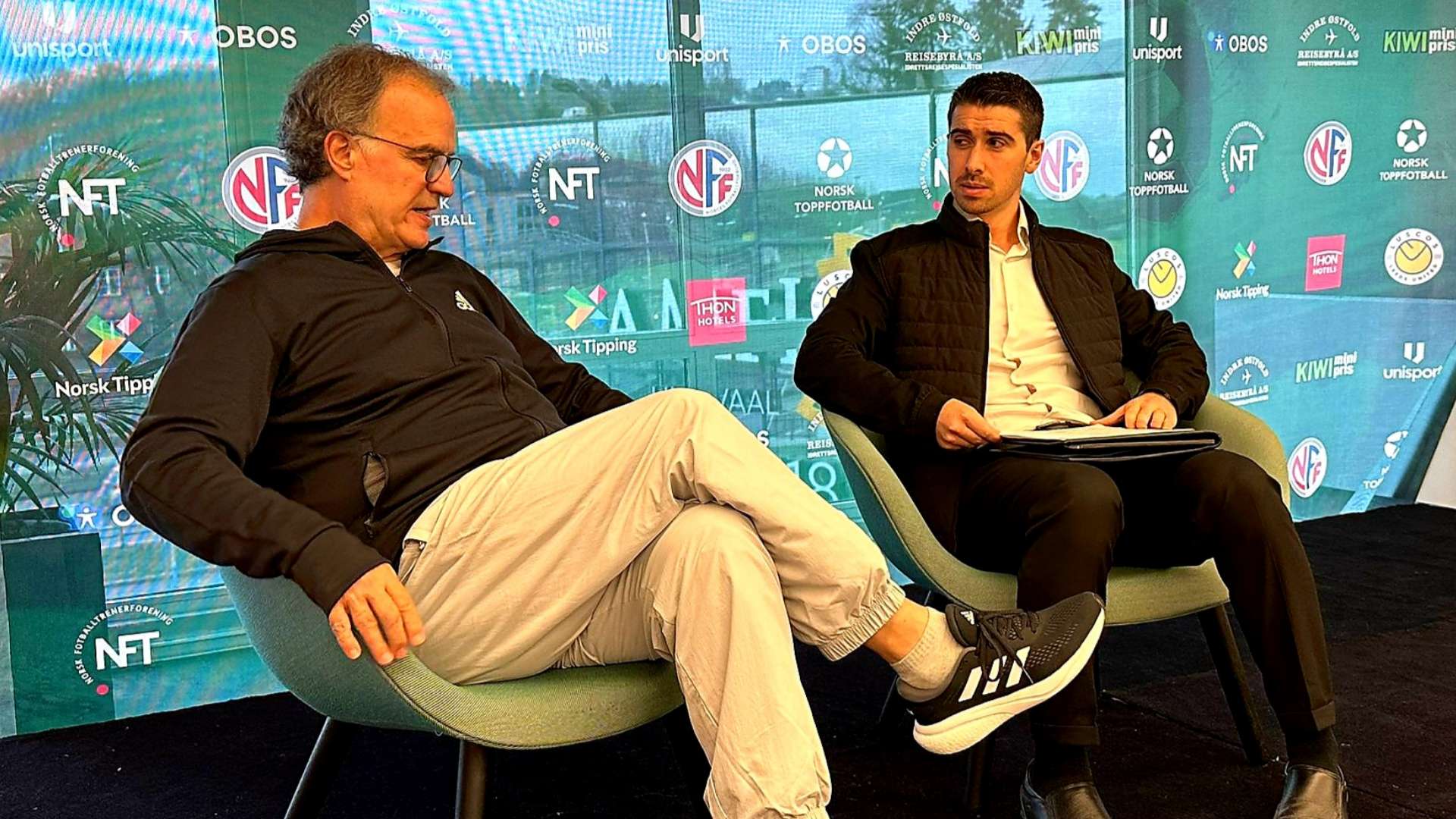
  • Bryant Lazaro BielsaNorwegian Football Coaches Association

    Chasing down new jobs

    And then he went where opportunity called. Spanish club Levante offered a tantalizing position, one where he could oversee coaching development and also get some time on the grass week in, week out. 

    In many ways, it married the community aspect of Argentine soccer - and those taxi drivers - with the minutea that kept his academic brain ticking over. 

    But most importantly? There were no other foreign coaches at the club. Lazaro stood out. Further stints followed: then-Jorge-Sampaoli-led Sevilla, four separate stops in Norway, a spell in Ecuador - with some coaching education sprinkled in. 

    Among it all, he also found time to earn a Ph.D in Sports Science (he graduated Cum Laude after defending his thesis on player identification.) If that sounds a bit insane, Lazaro knows it. But he insists that coaching, in general, is unstable. His way of going into the career is just another route to what is, ultimately, a taxing job. 

    “The whole thing is insane. There's no hiding from that. You’re basically rolling the dice with you and your family's future almost every time you play,” he said.

  • ENJOYED THIS STORY?

    Add GOAL.com as a preferred source on Google to see more of our reporting

  • Mexico v Uruguay - International FriendlyGetty Images Sport

    Learning from Marcelo Bielsa

    He is fortunate, then, to have learned from some of the best around. Spain ushered a generation of great coaches into the world at the same time as Lazaro, and during coaching courses, he struck up a close friendship with now-Uruguay manager and Argentine legend Marcelo Bielsa - an elder statesman of global football. 

    Their relationship has been invaluable. Part of it, Lazaro explained, is Bielsa’s character: the fact that he constantly questions his own methods. 

    “He can constantly question himself while maintaining firm conviction in his ideas. I've never met anybody who does that,” Lazaro said. 

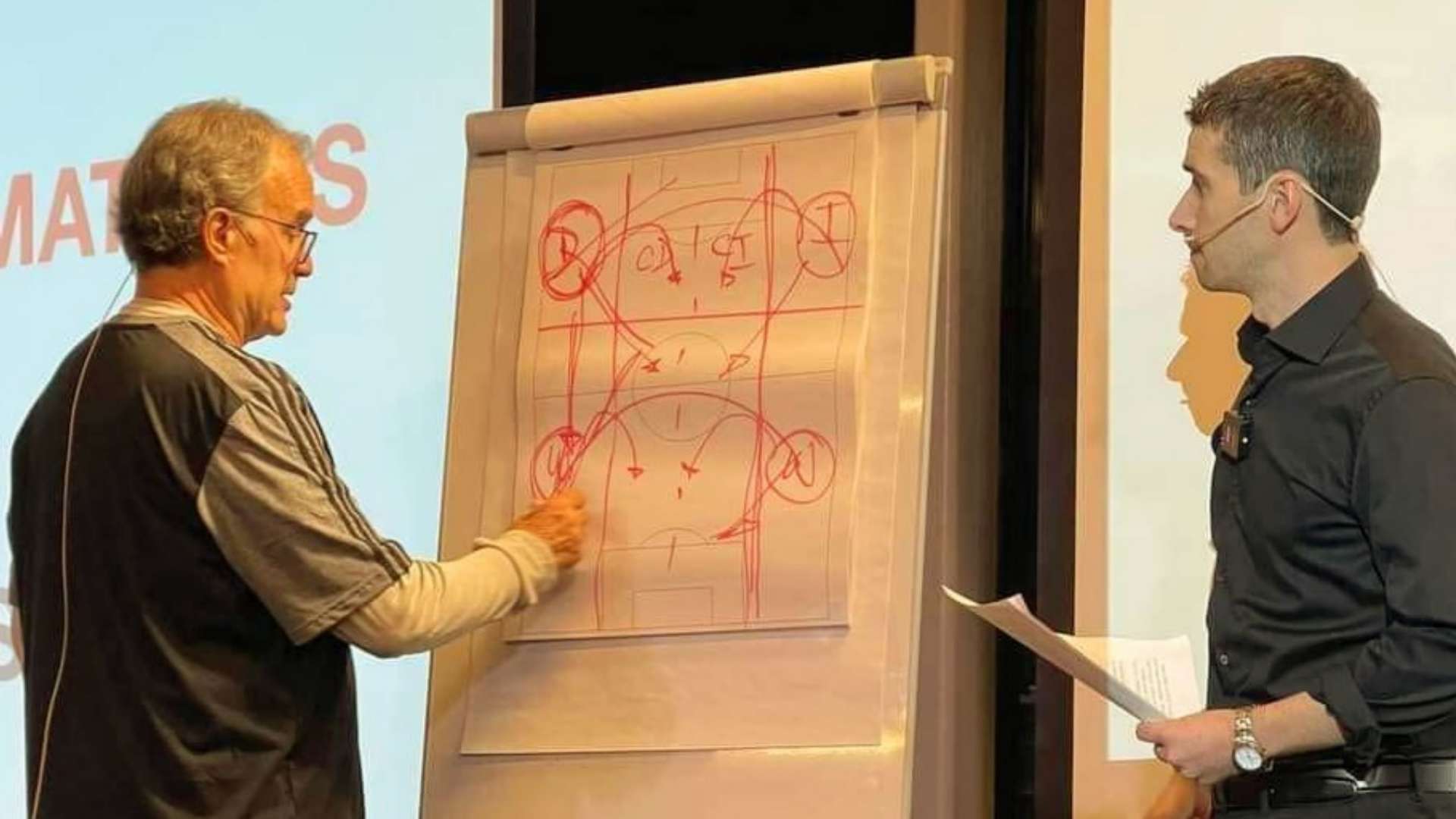
    But a lot of it, too, is the way Bielsa views the game. The wider populous regards the former Leeds manager as a grumpy man who sits on the sidelines, playing out his signature “murder-ball” that came to encapsulate an era of hard running and relentless pressing in English football. Lazaro insists that he can also be an old-fashioned tactical nerd. 

    “[Bielsa] has his own well-defined, absolutely unique, individualized, position-specific, small group, repetitive training sessions that he mixes with what got famous in the UK as murder ball. So [conditioning] would happen once a week, but the rest will be very small group, individualized type work,” he explained. 

    The Argentine is also an advocate for young coaches to cut their teeth at the academy level - something Lazaro took heart in. 

    “Marcelo, similar to Mourinho, was not a big ex-player. They weren't ex-players. They came up the other way. And Marcelo is a big believer in coming through Academy football before you get the first team football. It was one of the reasons why we connected,” he said.

  • Bryant Lazaro 3Getty

    Sticking in Estoril - for now

    When Lazaro looks at the managerial landscape, he is in a unique position. Sure, there are others with academic backgrounds popping up in academies everywhere. There are former superstars leading the way at Man City, Real Madrid and Arsenal. There is also an older class that he grew up watching and studying: Bielsa, Mourinho, Carlo Ancelotti. 

    Most coaches in prominent positions are in their 50s. There are relatively few with his resume and smarts operating at a high level at his age. Lazaro, who at 37, should really be at the end of an impressive playing career, has taken the faster route into management. He became the youngest American to coach a professional club when he took charge of Norway’s Oygarden FK, just 32-years-old. 

    In some ways, he has a head start. But that doesn’t make it easy - nor does it guarantee a head coaching job. For one, he is perfectly happy with where he is. Estoril are playing good football, in 9th in the Portuguese top flight, and are financially stable. He has seen 15 clubs change coaches twice in his 18 months in the country. This sport is unforgiving, with a constant managerial churn based solely on results. Lazaro, for now, is protected. There are no immediate plans to leave. 

    And why would he? Portugal suits Lazaro well, he said. Estoril is a community club based in the gorgeous west side of the country, 30 minutes away from Lisbon. It’s sunny, and the 5,000 seater Estadio Antonio Coimbra da Mota is a charming old thing. Under Cathro, just two years his senior, Lazaro has scope to read, innovate and influence the game. He answered a video call from GOAL in a room surrounded by whiteboards full of numbers, graphs and diagrams. He can be a student on his own terms.

    And there’s more studying to do. Like Bielsa, Mourinho, and his current boss, Lazaro is constantly evolving. 

    “I’m just learning so much here, and honestly, I consider it a privilege to be coaching against guys like Jose and working with Ian Cathro and spending time with Bob Bradley when I was coaching in Norway. So these are guys that I think set a path and facilitated it for other American coaches in Europe,” he said. 

    This world is increasingly influenced by data, AI, and mathematical models, things Lazaro jokes ‘you have to be careful with.’ 

    “At the end of the day, I believe instinct will be king. I believe that football is an anomaly in the sense that its unpredictability is what makes it the most popular game in the world. The data can only take you so far,” he said. 

    Estoril are highly watchable. They chase games and punch above their weight. In a 3-1 loss to Benfica, they registered more shots on target than the Primeira Liga favorites. That is a result of alignment top to bottom - having a defined game model as well as coachable players who are willing to carry it out. 

    “We press them high, and we construct play from the back. That's because it suits our players, not because we're trying to play pretty football,” Lazaro said.

  • Bryant Lazaro 4Norwegian Football Coaches Association

    Ready for a step up?

    But of course, more opportunities are bound to come up. Unlike the kid that left Argentina with a few Euros and a change in mentality, this version of Lazaro has a glittering resume and enumerate contacts. He has endorsements from some of the best coaches out there, and experience as a high-level assistant manager in a big league. 

    Where that lands him is uncertain. Lazaro is close to his American roots - despite decades away. He follows the USMNT and keeps up with MLS. If a head coaching job came up for him stateside - under the right conditions - he would consider it. 

    “It would have to be something special and something that matches my ambition. But honestly, it's not in my head right now,” he said. 

    Until then, it’s a question of continuing to hit the books, changing week-by-week, and proving to himself that walking away from a playing career that hadn’t yet started was the right decision. 

    And there’s still plenty to learn. 

    “The deeper you go into football as a coach, the more you realize what you don't know,” Lazaro said.

0