
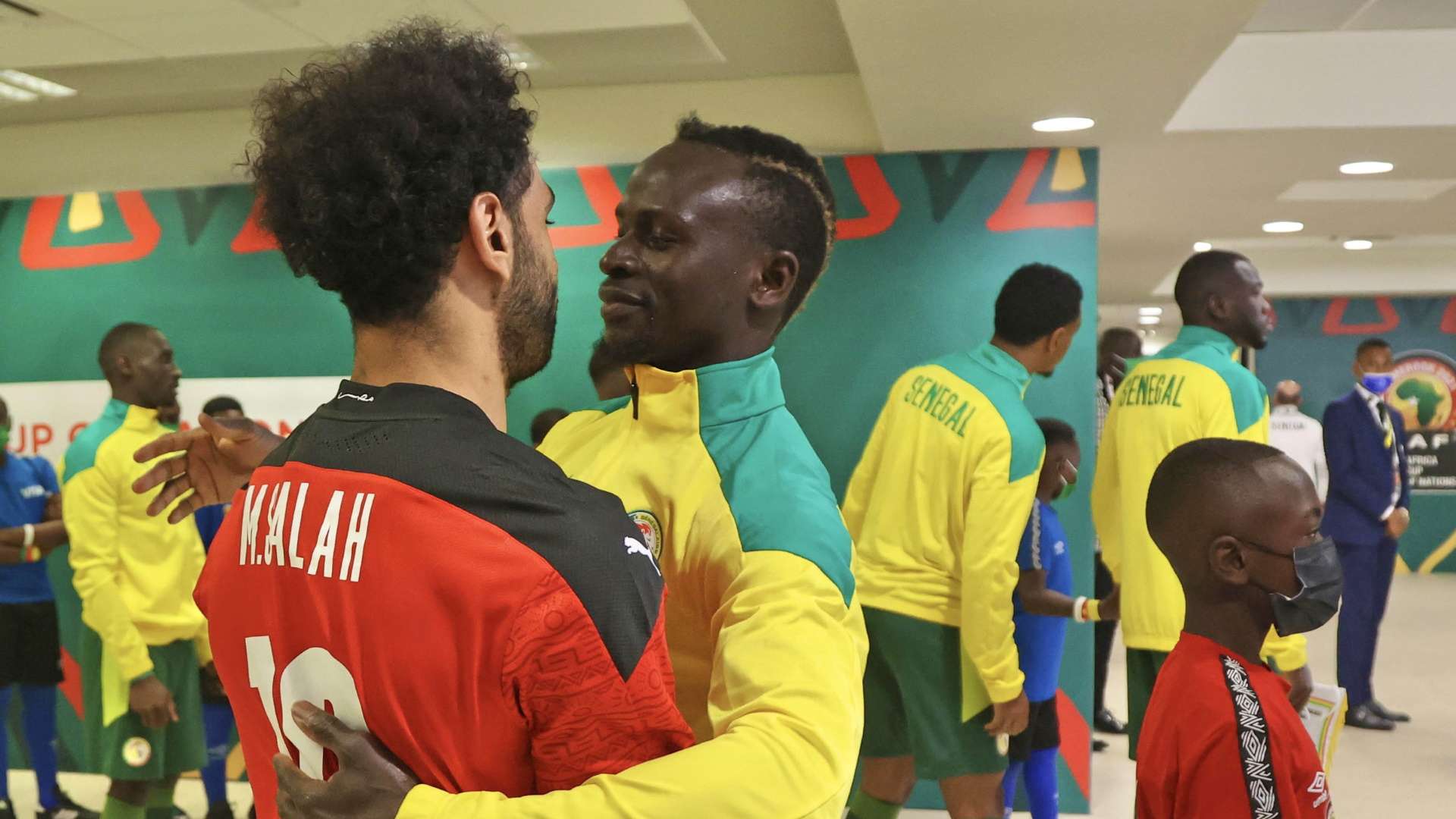
Sunday’s Africa Cup of Nations final, in which Senegal defeated Egypt on penalties following a 0-0 draw to win their first continental crown, had more than it’s fair share of subplots.
How would the North Africans fare physically after going 120 minutes in each of their three preceding knockout fixtures?
Would the Teranga Lions bring home their first Afcon title following defeats in 2002 and 2019?
Would the Pharaohs make up for their own loss in 2017 and their miserable exit on home soil two years later to clinch the title?
Could Senegal build on their years of progress under Aliou Cisse to finally get over the finish line?
Would the absence of Egypt coach Carlos Queiroz—banished to the stands after being sent off against Cameroon—affect his side?
However, amidst these many jostling storylines, none captured the imagination quite like the duel between Liverpool teammates—and friends—Mohamed Salah and Sadio Mane.
The pair have been Africa’s two most prominent players over the last five years, eclipsing even Riyad Mahrez and Pierre-Emerick Aubameyang to establish themselves as the Ronaldo and Messi of African football.
Unlike Ronaldo and Messi, however, their finest hours have been enjoyed in unison.
Both were influential as Liverpool reached the Champions League final in 2018, before winning it 12 months later, and the duo were the Anfield giant’s stars as they ended their 30-year wait for a Premier League title in 2020.
Between them, they’ve won all three of the last African Footballer of the Year gongs—with Mane taking Salah’s gong in 2019—and together, they have a combined seven appearances on the podium for the award of the continent’s top star of the year.
Each have won admirers beyond football, for their attitude, their professionalism, their faith, and the duo have helped drag their nations back to centre stage after periods in the doldrums.
 Getty
GettyIt was Salah who inspired Egypt back to the World Cup in such sensational fashion in 2017, while Mane has been Aliou Cisse’s star man as the Teranga Lions have leapt from 64th to 20th in the Fifa World Rankings—and also qualified to the World Cup again after a long absence in the process.
Yet despite all they’ve achieved, neither had secured the continent’s grandest prize—the Nations Cup—during their illustrious careers to date.
Only one, of course, could emerge victorious on Sunday, and while their greatest achievements to date have been secured in tandem—even the shared Golden Boot in 2019—they knew they needed to go through each other to clinch gold on Sunday.
They played in almost direct opposition at times during the contest, Salah down Egypt’s right and Mane occupying Senegal’s left, with the former notably breathing down the latter’s neck before he missed a fourth-minute penalty that let the Pharaohs off the hook.
However, that early setback aside, the day—and ultimately the tournament—belonged to Mane.
 Backpage
Even before netting the decisive spotkick—both Mane and Salah were designated as their side’s fifth penalty takers, but the latter didn’t even get the chance to step up—the Senegal man had been more influential in the contest.
Mane may have taken fewer attempts on goal than Salah, but while the latter failed to create a single goalscoring opportunity for his teammates, the former set his compatriots up for opportunities on goal twice during the contest.
While both players’ control left a lot to be desired on the day—they each lost possession with six miscalculated touches—Mane drew a whopping eight fouls from an Egypt defence under pressure, demonstrating how the Pharaohs struggled to keep him under wraps.
Understandably, as Senegal’s control of the ball increased as the game wore on, Mane had 24 more touches than Salah’s 41, and while the Teranga Lion was a constant probing presence, his Anfield teammate often cut an isolated figure, shuttling between a central role and wide areas as he sought space to retrieve the ball and attack.
 Getty
GettyMane’s influence in the final—although it must be noted he was playing with a far stronger and proactive team—mirrored his greater impact throughout the tournament.
Salah may have had a hand in three of Egypt’s four goals—scoring three and registering one assist—but Mane offered even more, and there wasn’t major surprise that he won the Player of the Tournament award ahead of Vincent Aboubakar.
Like Salah against Guinea-Bissau, he was a match-winner in the group stage—netting a late, late penalty against Zimbabwe—and the duo also proved influential in the knockouts when things weren’t going their team’s way; Mane following his own injury against Cape Verde, and Salah’s outstanding showing against Morocco.
Ultimately, however, it’s Mane who writes history with his country, takes the tournament’s individual prize, and adds the Nations Cup to his personal trophy haul.
It’s well deserved for a player who’s found himself in Salah’s shadow at times, although for the Egypt superstar—who turns 30 in June—chances are fast running out for him to embellish his extensive legacy with Africa’s greatest prize.