
.jpg?auto=webp&format=pjpg&width=3840&quality=60)
The 4-4-2, when defending is regarded as one of the best out of possession shapes because it covers the most important spaces the opposition wants to exploit, and it offers the best balance with 10 players split in pairs. A front two, a central midfield pair, two wide midfielders, two full-backs and two centre-backs make the roles easy to understand and the shape straightforward to coach, provided the players work in unison.
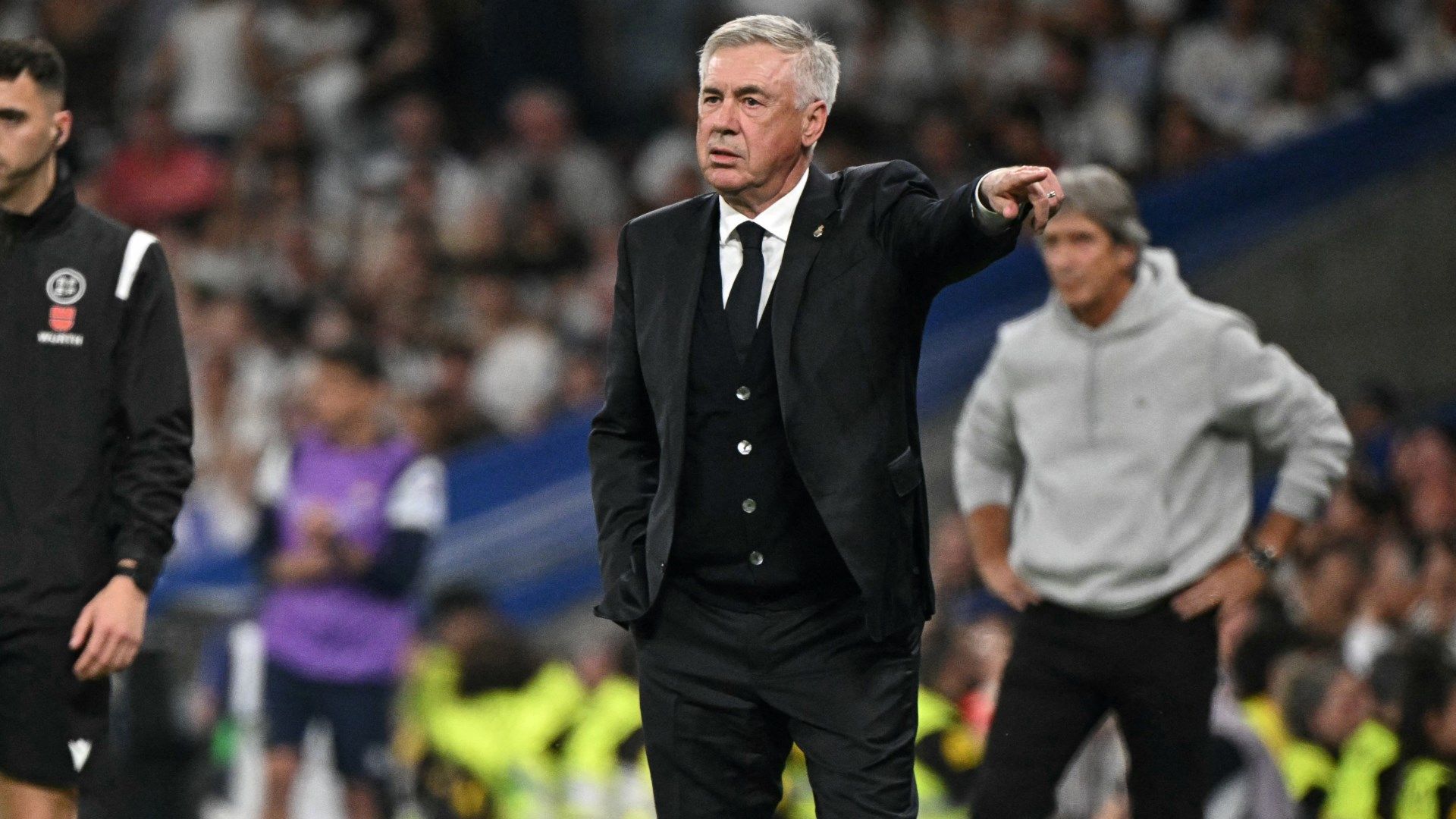
Interestingly, Carlo Ancelotti shares a similar appreciation. After Real Madrid’s 1-0 victory over Athletic Club on 20 April 2025, he said: “My preferred system is 4-4-2 because I think we defend better… defensively it’s the best system.”
The strength of the 4-4-2 isn’t simply just having four defenders and four midfielders though; it is the ability to create a compact defensive block that restricts space between and around the opponent’s attackers. You don’t necessarily have to stop the opponent from progressing, you can just control where they progress.
Elite teams have repeatedly demonstrated that the 4-4-2 can provide a highly effective defensive framework, even when their possession structures differ considerably. It is no surprise that some of Europe’s strongest defensive sides have used this shape to reach Champions League finals — peak Diego Simeone’s Atlético Madrid, Massimiliano Allegri’s Juventus, and most recently Mikel Arteta’s Arsenal in the 2026 final.


In football, the centre is the most direct route to goal, so the primary objective for a team defending is always to protect the central spaces and look to funnel the opposition down to the wings, to use the touchline as an extra defender and trap them there to regain possession and spark a counter. Basically, you allow them outside, then defend the resulting wide situation.

 Substack
In a 4-4-2 block, the intensity and intelligence of the front two is integral for maintaining compactness when defending because the attackers are often regarded as the first line of defense, either when a team is actively pressing or being intentionally passive, while waiting for triggers to restart the press again. They are the conductors, so they lead the orchestra while the rest of the team adapt accordingly to their rhythm.
Their movements and intensity can also signal when the team should transition from holding its zonal reference points to adopting a more aggressive, man-oriented press. Also, their passive tempo signals that the team should hold shape while waiting for pressing triggers to restart the sequence again.
Vertical & horizontal compactness is a priority when defending because a disconnect would occur If the front two’s positioning is either not in sync, too high or their work ethic is lax in their defensive work. This would then open a detrimental gap between them and their own team’s midfield, which makes it easier for the opposition to access their team’s shape centrally. This is a coach’s worst nightmare below.
.jpg?format=pjpg&quality=60&auto=webp&width=380) Substack
SubstackThe defending team out of possession is often regarded as a unit and every player is a cog in that machine, with each line working in unison to create a ‘cage’ like structure from back to front. So the front two must ensure they maintain optimal distances at all times, by being close enough to press/screen the opposition center-backs in possession, and are also close enough to their own midfield pivot, to create what I like to refer to as a ‘sandwich’ situation.
.jpg?format=pjpg&quality=60&auto=webp&width=380) Substack
SubstackA ‘sandwich situation’ is a pressing trap that occurs when the opposition players attempts to drop low towards their centre-backs in possession, to receive the ball or offer themselves as a passing option, then the strikers of the team defending can then screen/press from above while the midfielders also step up from below to create a compact situation. So If any of players of the team in possession attempt to drop into that zone, the midfielders of the defending team can collapse around him with support from their forwards ahead creating a ‘sandwich situation’. The objective isn’t necessarily to tackle immediately, It’s to make the receiver’s next action extremely difficult.
So the front two and midfield two of the defending team try to collapse/box in on the midfield pivot of the opposition or any player attempting to drop low from the frontline, trapping them between themselves, making it hard for the ball to be passed to them, and even if it does, ensure it is hard for them to turn and progress the play.
The trap doesn’t have to win the ball immediately, It only has to make the next pass, turn or progression uncomfortable enough to create the conditions for a possession regain. So they basically create tension whenever the opposition try to progress play through their own midfield, so the defending team tries to use that to their advantage by forcing ball losses, regain possession and spark a counter.
The 4-4-2’s major weakness is that the opposition can create a 3v2 in central midfield, meaning compactness has to compensate for the numerical disadvantage. Just as the key spaces to exploit against a 4-3-3 can be the half-spaces either side of the single holding midfielder, the space between the midfield and defensive lines becomes a key area to attack against a 4-4-2. This is where an opposition No.10 or a dropping forward can attempt to receive between the lines, particularly by positioning themselves in the space between the two central midfielders and the centrebacks. The objective is to draw one of the midfielders or defenders out, to create a gap in the defensive block and exploit the space that opens up.
.jpg?format=pjpg&quality=60&auto=webp&width=380) Substack
SubstackThe 4-4-2’s greatest strength is not that it gives a team more players in any particular area, but that it gives those players clear relationships with one another. Its apparent simplicity allows the team to defend as a collective, with every movement triggering another and every gap requiring an immediate adjustment.
The 4-4-2 will always have its vulnerabilities just like every other shape; the opposition can create a 3v2 in midfield, attack the space between the lines and attempt to pull the block apart. But a well-coached 4-4-2 doesn’t try to eliminate every problem; it controls which problems the opposition is allowed to have.
The tactical objective is simple; protect the centre, funnel the ball wide, maintain the distances both vertically and horizontally, force uncomfortable receptions, then when the opportunity presents itself, collapse around the receiver and turn pressure into possession. That is the real beauty of the 4-4-2 and when it works, a team can operate like a well oiled machine reminiscent to poetry in motion. It doesn’t defend space by standing still, it defends space by moving as a collective unit.