+18 | Commercial Content | T&C's Apply | Play Responsibly | Publishing Principles
Ruben Amorim Man Utd Liverpool GFXGetty/GOAL

Guided by data, not charisma: Liverpool's rejection of Ruben Amorim highlights how far apart Reds have grown from Man Utd

United love a good narrative, and the way that Amorim had revived Sporting CP's fortunes by delivering a first league title in 19 years was highly appealing to a club at a loss as to how to rise again after more than a decade of decline after Sir Alex Ferguson retired in 2013. The club's main decision-makers, Sir Jim Ratcliffe and Omar Berrada, wanted a young charismatic coach on the rise and in Amorim they saw shades of Mikel Arteta and Pep Guardiola. 

Every time Ratcliffe has discussed Amorim, he has lauded his personality, describing the Portuguese as "intelligent" and "thoughtful" while speaking fondly of their chats over coffee at the Carrington training ground, where the co-owner tells the coach "where it’s going wrong, and he tells me to f*ck off." 

What was lacking in United's thought process when they hired Amorim, however, was a thorough analysis of the most intriguing thing about him: his loyalty to the 3-4-3 system. Liverpool, by contrast, saw Amorim's formation fixation as a massive red flag and turned away from him and towards Slot.

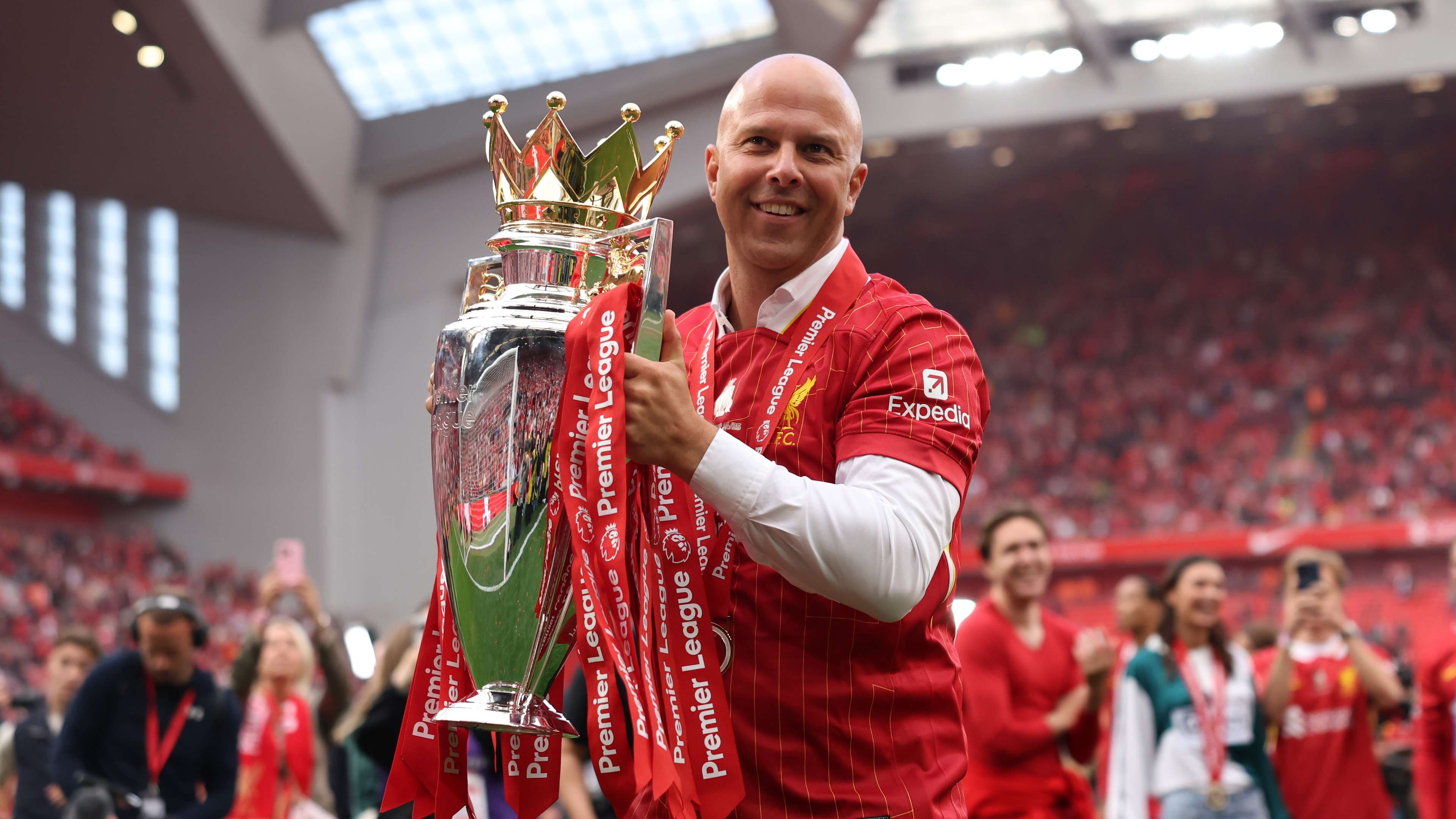
Slot might be enduring his most difficult period as Liverpool boss as his side prepare to welcome their arch rivals to Anfield on Sunday after three successive defeats, but overall he has proved to be a brilliant hire. Quite unlike Amorim, who has created an even bigger mess than the one he inherited when he took charge of the Red Devils 11 months ago.
  • Liverpool FC v Crystal Palace FC - Premier LeagueGetty Images Sport

    Contrasting processes & results

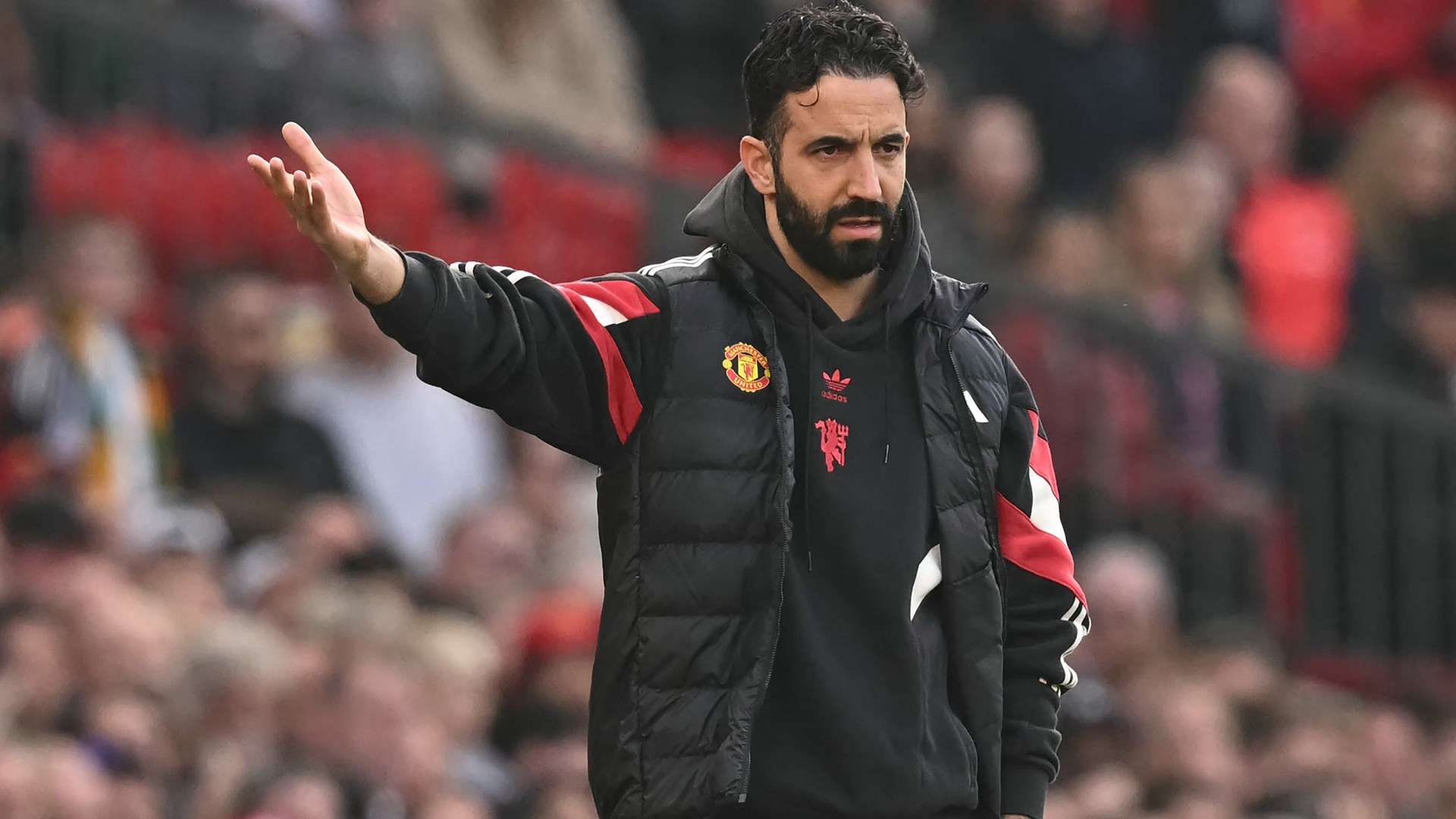
    Amorim's favoured formation was questioned when he took the United job because United's squad had been built over the last few years with the idea of playing a back four. But according to Amorim, it was a short conversation. He explained in August: "They asked me before I arrived here: 'Can you play this system?' I said 'I will do my system no matter what'." And that, bizarrely, was enough to convince United he was the right man. They spoke to no other candidates before offering him the job.

    Liverpool had previously considered Amorim as Jurgen Klopp's successor, but they saw the coach's tactics as a real obstacle to him succeeding at Anfield, where the squad had also been constructed with a view to playing four defenders. To Liverpool's lead data scientist Will Spearman and sporting director Richard Hughes, hiring Amorim would have represented a massive change from what the club had been working towards for almost a decade under Klopp. Thus, instead of ripping up their plans, they sought a smooth transition and their data model told them that Slot's Feyenoord were the team that bore the closest resemblance to Klopp's Liverpool.

    Liverpool racing to the title in Slot's first season to equal United's record of 20 English league triumphes vindicated their decision to hire the Dutchman over Amorim. In his first campaign, the Portuguese oversaw United's worst league finish, goal count and points total in 51 years, and failed to qualify the team for Europe for the first time in 11 years. In the early weeks of his second season, Amorim has lost three of his opening seven league games while the team were knocked out of the Carabao Cup by Grimsby Town in United's first-ever defeat to a team from England's fourth division. 

  • Advertisement
  • Ruben Amorim Manchester United 2025Getty

    Choosing charisma first

    There was reported to be one dissenting voice among United's top brass around Amorim's appointment: the newly-hired sporting director Dan Ashworth. According to Sky Sports, the man who had been headhunted from Newcastle envisaged 'mass disruption' in appointing Amorim and instead petitioned for the club to move for Brentford's Thomas Frank. But among other members of the United hierarchy there was 'a desperation for charisma, and the strong belief was that Amorim could be a tactician to define the next generation'.

    According to The Athletic, Ashworth had also suggested the club copy Liverpool's analytical approach and sub-contract a data firm to compile the most suitable candidates to replace Erik ten Hag. Ratcliffe rejected that idea out of hand because he felt Ashworth should have already known who the best candidates were. He was also reluctant to spend more money at a time when he was slashing costs across the board.

    Little more than one month after United appointed Amorim, they sacked Ashworth, paying a total of £4.1 million in hiring and firing fees for him to work for the club for just five months. Strangely, having rebuffed Ashworth's push to use a data-led approach to hiring the new manager, Ratcliffe later decried the state of club's data department, telling United We Stand: "We must have the best recruitment in the world. Data analysis comes alongside recruitment. It doesn’t really exist here. We’re still in the last century on data analysis here. There’s an immense amount of useful data that we can get from data analysis and we’re in the 'very poor' bracket with data analysis here."

  • FBL-ENG-PR-LIVERPOOL-WEST HAMAFP

    Guided by the data

    Liverpool have long prided themselves on being at the cutting edge when it comes to data. The Reds begun taking data seriously in 2012, when they hired Ian Graham as director of research, and he helped the club develop an in-house analytics department. It led to, among other things, the creation of the 'possession value' model, which calculates how much each player improves their team's chances of scoring with each touch. The model led to Liverpool signing Sadio Mane and Mohamed Salah while walking away from potential deals for Julian Brandt and Mario Gotze, whom Klopp had initially favoured.

    Data also led to Liverpool making their best-ever recruitment decision: hiring Klopp in 2015. The energetic German was one of the most admired coaches due to winning back-to-back Bundesliga titles with Borussia Dortmund and taking them to the Champions League final in 2013, but his last season with Dortmund damaged his reputation, as his team finished seventh while losing 14 of their 34 games. 

    Graham and his team could see, however, that Dortmund had been unlucky in many games and had just failed to take their chances. Graham explained this to Klopp when he met him and the coach was impressed that he had watched so many Dortmund games. Graham responded that he had not watched any of the matches, but had merely looked at the data. 

  • Mohamed Salah Liverpool Burnley 2025-26Getty

    Enormous gap in goals

    Liverpool's data-driven approach has not led to a perfect transfer policy, and while Salah and Mane proved to be incredible buys, there have been some big disappointments, namely £64m ($85m) striker Darwin Nunez. But the Uruguayan, who scored 40 times in three seasons with the Reds, is the exception that proves the rule over the last few years.

    In the same era, United have an endless list of expensive attacking flops, from Antony to Jadon Sancho to Rasmus Hojlund. Liverpool's impressive list of forwards signed over the past decade, meanwhile puts United's inconsistent rabble of attackers to shame: Salah has scored 248 goals and provided 116 assists in 411 games; Mane contributed to 166 goals in 269 games; Roberto Firmino notched 187 combined goals and assists in eight seasons; the late Diogo Jota averaged a goal or an assist every two games; Luis Diaz and Cody Gakpo played huge roles in last season's title win. 

    Liverpool's top five scorers over the past decade (Salah, Mane, Firmino, Jota and Diaz) found the net a combined 434 times in the Premier League. United's most prolific players in the same period (Marcus Rashford, Bruno Fernandes, Anthony Martial, Paul Pogba and Romelu Lukaku) netted a combined 268 goals, a deficit of 166.

  • Manchester United's English forward WaynAFP

    Fifteen-year problem

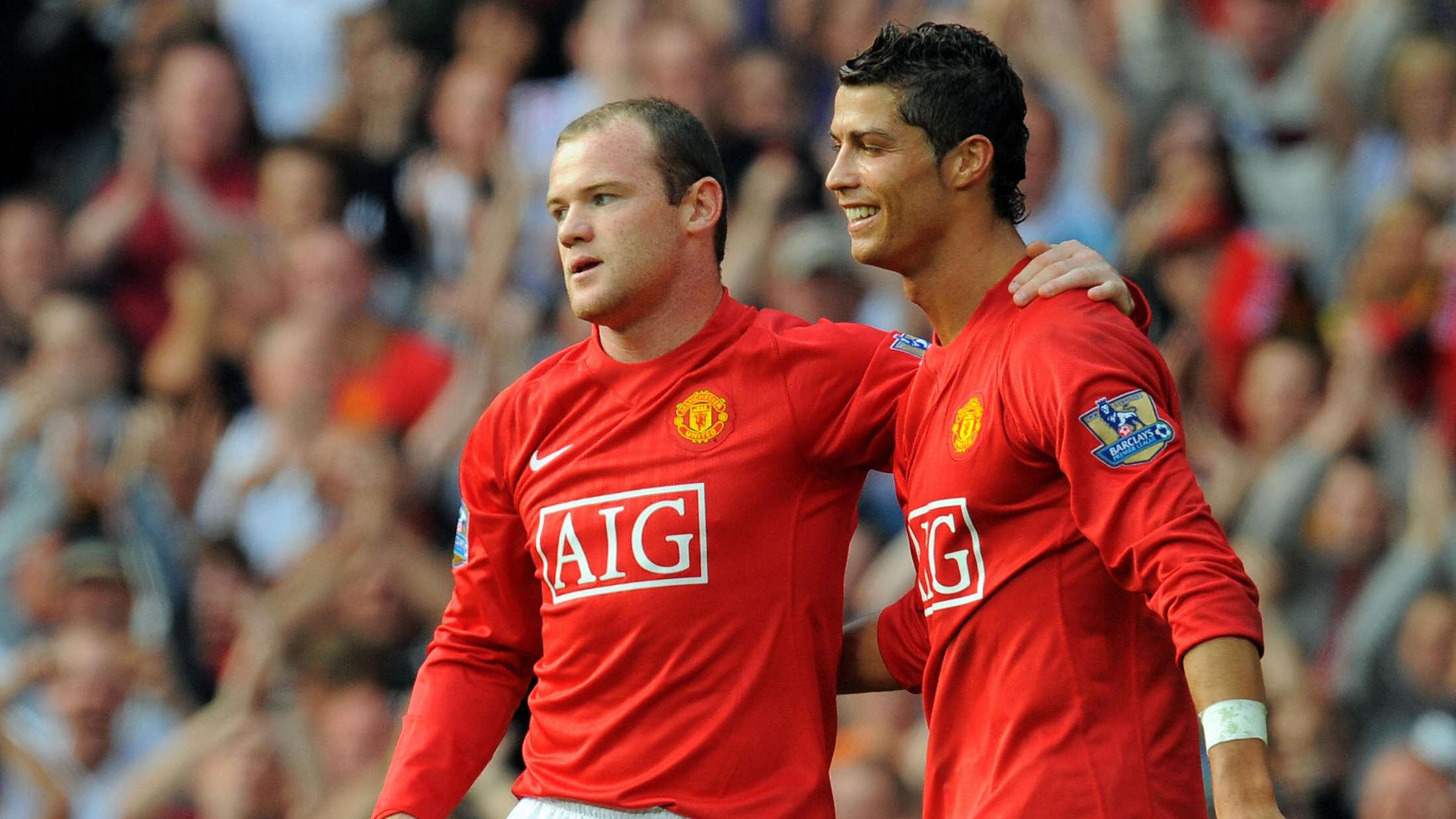
    "I don't think it's been fixed since 2010," Wayne Rooney told former team-mate Rio Ferdinand last month when discussing United's poor attacking recruitment. Rooney famously put in a transfer request that year after confronting Ferguson on the club's failure to sign replacements for Cristiano Ronaldo and Carlos Tevez when they both left in 2009. He quickly made a U-turn and signed a new contract, but he still feels he was right to make the point that he did and believes that many of the fans who took against him at the time, partly because he was threatening to join Manchester City, will agree with him now.

    "Since we lost Ronaldo and Tevez, the club has never had a group of forwards who can all win you games," he said. "That is Man United. This group of four players who can go and win you the game. Think back to 2010 you've got [Dimitar] Berbatov on the bench. You think that Tevez is on the bench. You think 'I need to play well.' I don't think it's been addressed since then."

    Liverpool can certainly not be accused of undervaluing attackers in the last year after spending a combined £300m last summer to bring in Florian Wirtz, Hugo Ekitike and Alexander Isak. Wirtz and Isak are still taking time to settle in Slot's team, but no one could argue they were wrong to go for them.

  • Manchester City v Manchester United - Premier LeagueGetty Images Sport

    Accumulation of bad decisions

    "Their (Liverpool's) recruitment model has been really good," former United defender Phil Jones told GOAL via BetMGM. "Bringing in Jurgen Klopp, the passion that he brings. You just watch him on the touchline and you look at a manager like that, and you'd run through a brick wall for him. They've just got it right, off the pitch and all the other areas, the academy."

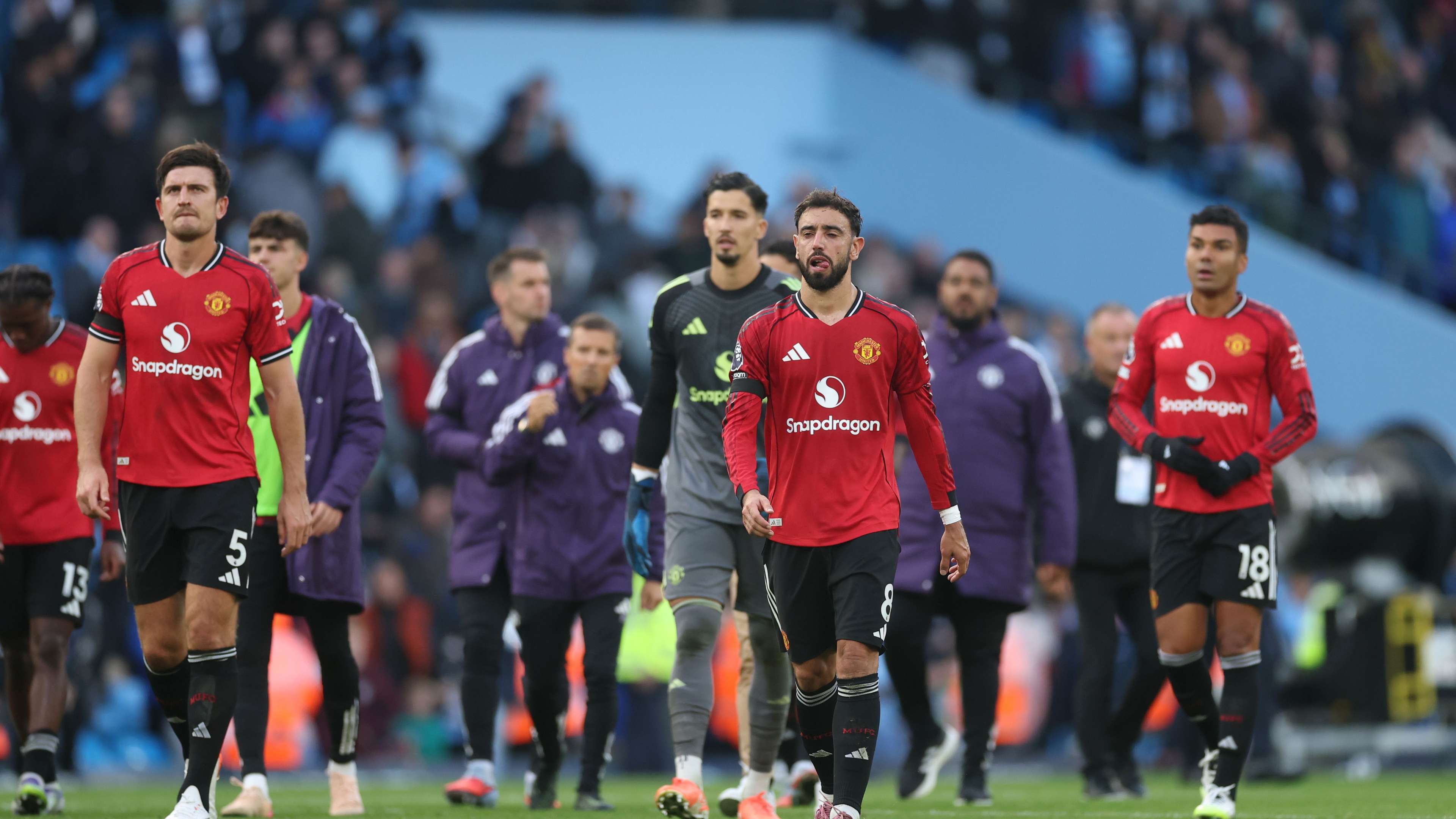
    Jones joined United when they were Premier League holders and Champions League finalists in 2011, but by the time he played his last game in 2022 they were in decline under Ralf Rangnick, achieving their lowest points total in the Premier League era before last season. The ex-England defender is constantly asked what the biggest factor has been behind the club's fall, but he explained how that question misses the point. 

    "There isn't one thing that's the problem, it's an accumulation of all the little one per cents," he said. "Saying 'We’ll do that, we'll weigh that up at the end of the season, we'll worry about that in the next transfer window, we'll tidy that up there..' It’s the accumulation of all these sort of decisions that maybe aren't bad decisions at the time, but they're not great ones. 

    "It's a heavy, heavy shirt to wear, but it's a rewarding one. Hopefully they can start to build a little bit of momentum and regain some of that X Factor. But it's going to take a long time to get to get back to the Man United that we all knew and loved."