
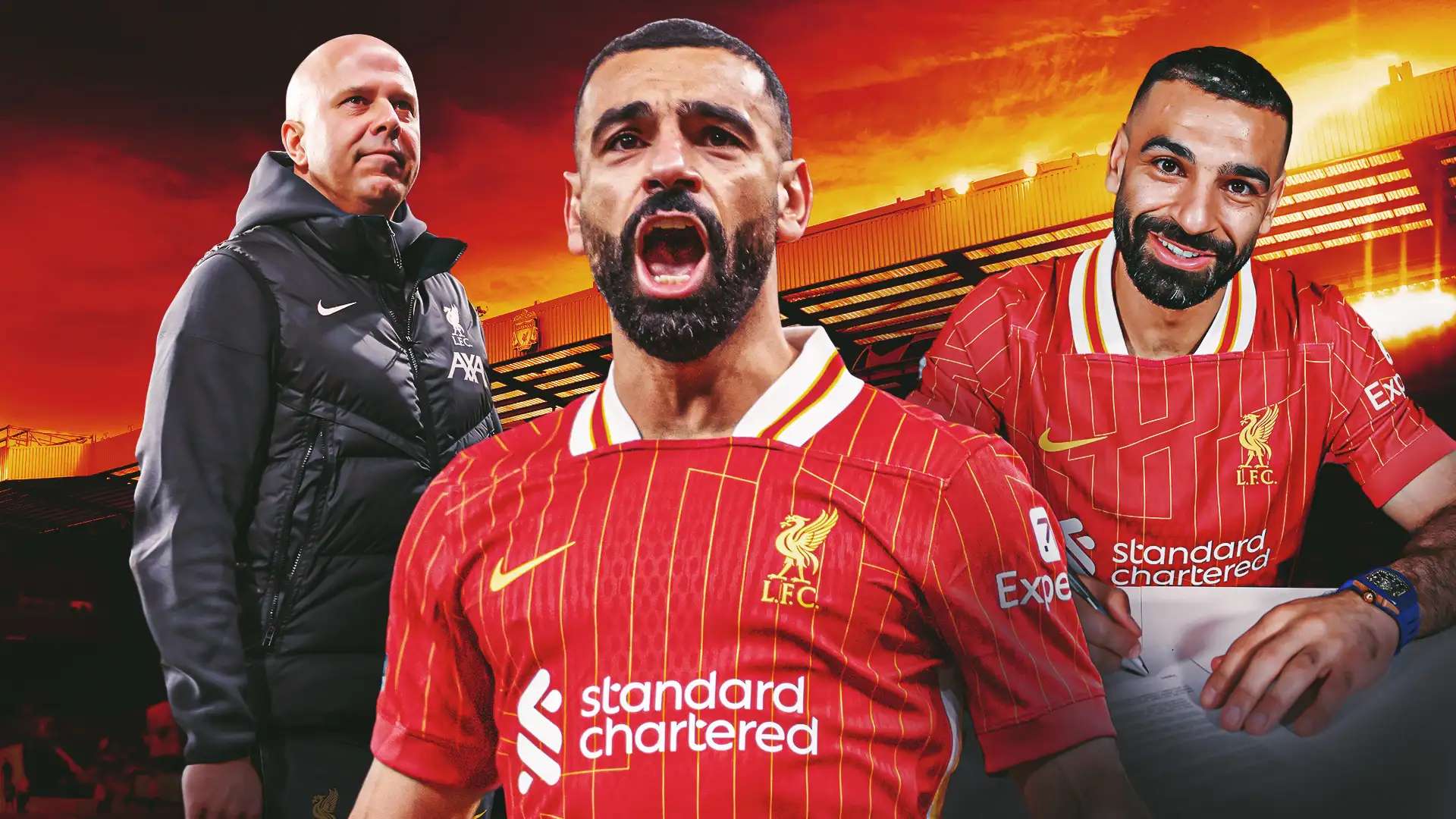
Mohamed Salah produced an outstanding 2024 to 25 campaign, leading Liverpool to their 20th Premier League title, a long-awaited triumph celebrated with supporters in full, unlike the pandemic-affected title. With his contract situation unresolved, the season carried the feeling of a final statement. Salah delivered accordingly, reinforcing a familiar pattern in football: rewarding a superstar with a major contract after a peak season late in their career always carries risk.
From Liverpool’s perspective, the decision was far from straightforward. Allowing Salah to leave would have been the rational long-term move, but also one that risked major backlash given his status at the club. Salah, for his part, held firm in negotiations. The result was a compromise: a two-year deal on record wages for a 33-year-old, a decision that now, with the benefit of hindsight, raises valid questions.
So where does the current decline come from? Is it driven by Salah himself, or are there deeper structural factors shaping what we are seeing?
Salah Then vs Now: What Changed?
To properly understand Salah’s decline, the starting point is identifying what has actually changed. Rather than focusing only on end output, we extracted his key offensive actions, goals, shots, assists, and key passes, across both seasons to compare patterns in involvement, positioning, and shot profile.
 Dream Databall

Salah’s Open Play Shots and Shot involments during the 2024-25 Season.
The most striking feature from last season is volume and consistency of access. Salah was repeatedly receiving the ball in high-value areas, particularly inside the box and in the right half-space. His ability to cut inside created a dual threat, he could both finish and create, reflected in his unusually high shot involvement for a player often labelled as a pure goalscorer.

Equally important is shot quality. His average shot distance was low, meaning he was consistently positioned close to goal in central areas. This is exactly what you want from a primary scorer, frequent touches in dangerous zones, high involvement in final actions, and repeatable chance generation.
 Dream Databall
Salah’s Open Play Shots and Shot involments during the 2025-26 Season.
The contrast this season is clear.
There is a visible drop in volume across all metrics, fewer shots, fewer key passes, and reduced overall involvement. His shot locations are more dispersed, with a noticeable increase in average shot distance, indicating fewer touches in central, high-xG zones.
Beyond positioning, his role within the team has shifted. Some of his assists now come from set plays, reflecting a broader tactical trend in the league toward more direct and set-piece-focused football. Liverpool, and Salah specifically, appear less dominant in open-play chance creation compared to last season.
Under Arne Slot, attempts to adapt to this evolving landscape have altered Salah’s role. He is no longer the focal point of attacking sequences but rather one component within a more distributed system. At times, he has even been rotated out of the lineup, partly due to off-ball limitations and the need to rebalance the team structure.
The result is not just a drop in output, but a fundamental change in how and where Salah impacts the game.
Context Matters
Data can show us trends, but it cannot fully explain them. Interpreting those trends requires context, and in Salah’s case, that context has changed significantly.
Liverpool are not the same team as last season. The attacking structure that once maximised Mohamed Salah has been reshaped. Previously, he operated alongside familiar profiles, Luis Díaz, Darwin Núñez, and the late Diogo Jota, players whose movements, timing, and tendencies he understood. Behind him, Trent Alexander-Arnold provided a unique creative outlet that consistently fed him in dangerous areas.
That ecosystem no longer exists in the same form. Despite heavy investment and the arrival of top talent, Liverpool have lost key references, both tactically and emotionally. Salah himself has acknowledged that building chemistry takes time, and constant changes in personnel only slow that process.
At the same time, the league has evolved. There has been a visible shift toward more direct play and greater emphasis on set pieces, something that was already noticeable in pre-season. Teams adapted quickly, including sides like Manchester United, while Liverpool’s transition has been less immediate. This broader tactical shift has reduced the dominance of structured, high-possession attacking systems, indirectly impacting players like Salah who thrived within them.
This does not remove responsibility from Salah, his output has clearly declined, but it reframes it. The drop is not purely individual, it is the result of a system, a league, and a squad all changing at once.
With that in mind, the contract renewal becomes easier to question. In most contexts, rewarding a player of Salah’s level would make sense. In this specific moment, with tactical shifts and squad turnover happening simultaneously, it carried more risk than usual. That judgment, however, is clearer now than it was at the time.
What remains unquestionable is Salah’s legacy. He leaves Liverpool as one of the defining players of an era. And while this season suggests decline within this context, it does not mean he is finished at the highest level. In a different environment, or with more stability around him, there is still enough quality for him to perform.
There may even be one chapter left to complete. The Africa Cup of Nations remains the one major honour missing from his career, something he has come close to more than once. Not as validation, but as completion.