Megan Rapinoe: Valedictorian
Megan Rapinoe was still a college student when it all began back in 2006. A breath of fresh air, she was quickly earmarked as the future, with the most sensational of scenes set for her big arrival. But then disaster struck, an ACL injury robbed her of the 2007 World Cup.
But four years later, Rapinoe emphatically announced herself, ushering in a before-and-after moment of US Women’s soccer, instantly identifying herself as one of the best – and most unique – raw talents in the U.S. program. Big things were expected of her at the World Cup in Germany that year, but she was surprisingly omitted from the starting lineup for the Americans’ first two matches. She entered the U.S.’ second group-stage match against Colombia at the start of the second half, and five minutes later, she struck a gorgeous goal with her right foot and celebrated in patriotic style, grabbing a field microphone and singing “Born in the USA.”
Rapinoe’s most famous moment at the tournament came eight days later, when she served a cross to Abby Wambach for a 122nd-minute equalizer against Brazil in the quarterfinals, the goal that “saved the USA’s life,” as commentator Ian Darke proclaimed. The U.S. would fall to Japan on penalties in the final, but Rapinoe would shine again in 2012 as the U.S. won another Olympic gold medal. Her Olimpico goal – scored directly from a corner kick – in the semi-final was a first in Olympic football. With her bleach blonde hair and her increasingly entertaining, dynamic style of play, Rapinoe had become an unmistakable part of the fabric of the United States national team. That flair and personality remains a staple of her game today. But as the U.S. women prepare to defend their World Cup title in France – with Rapinoe as one of 12 players returning from that triumphant 2015 side – the 33-year-old is a very different player. Over the past two years, she has reinvented herself on the pitch, further crafting her creativity as an out-and-out winger for club and country.

Her graduation now long merely a hazy memory of the past, Rapinoe is a bonafide alumni, a veteran who finds herself in a role which perhaps even she wouldn’t even have imagined four years ago: co-captain. “I think that’s sort of the next phase of my career, not only playing-wise having to change things up, but as a person off the field and leader on the team,” he said. “I I feel like I’ve sort of welcomed that responsibility and that new challenge. It kind of comes naturally in a way, because you just can’t help but know more things than certain other players and it’s easier for you, ultimately, if they know it as well. So, trying to help these players along and be that good example, an arm around the shoulder or kick in the butt – whatever is sort of needed. But, yeah, I have very much enjoyed my latter time of being that figure and stepping up more within the team.”



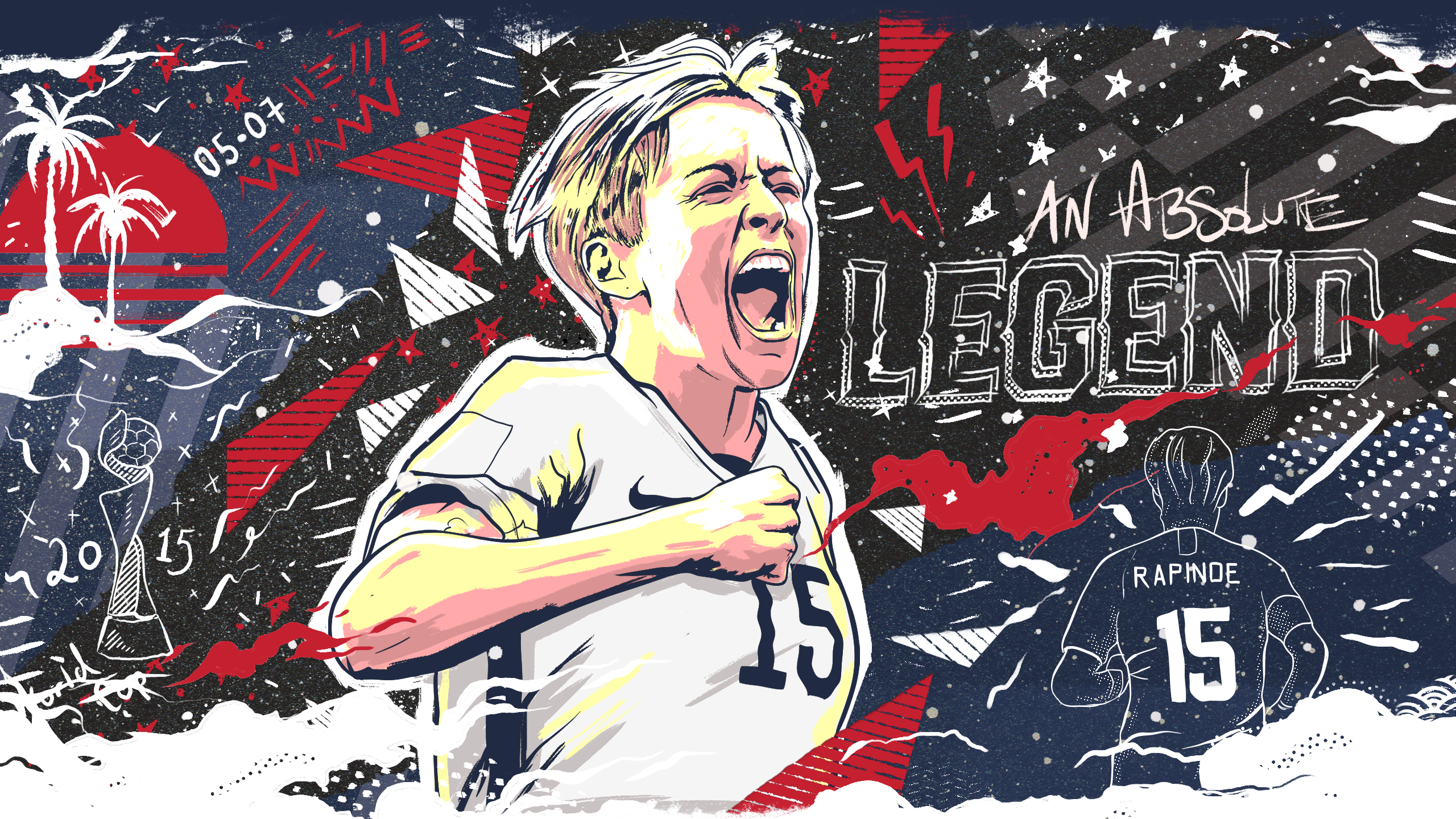
Rapinoe has stepped up in a big way. She tallied two goals and two assists at the 2015 World Cup as the Americans lifted the trophy for a record third time. Rapinoe was named in the team of the tournament and made the shortlist for world player of the year. Later that year, however, she heartbreakingly tore her ACL for a third time. She rushed back for the 2016 Rio Olympics, but wasn’t fully fit, and hadn’t played a competitive match that year prior to the tournament. U.S. coach Jill Ellis took Rapinoe to Brazil on the gamble that even a partially-fit Rapinoe was worth taking up a spot in the condensed 18-player squad, a testament to the winger’s game-changing abilities. The gamble didn’t pay off. It was clear that Rapinoe needed more time to return to her electric self. She played 58 minutes total at those Olympics, where the U.S. fell short of the semifinals for the first time in a major competition. Rapinoe continued to rehabilitate – at the slower pace she would have, had the Olympics not loomed – and by late 2017 began looking like her old self again.
By 2018, she didn’t only look like her old self – she was an altogether better player. Rapinoe changed her diet and got serious about strength training, a maturation which she realised she needed to prolong her career.

“I think there’s a reason that I’m here, and it’s not by luck and it’s not just by God-given body or anything like that,” she says “If I didn’t do anything, I would regress dramatically. I think just keeping on those little things, those little details – creating a routine for yourself and just doing that five minutes of stretching when you don’t want to, and doing recovery when you don’t want to, but understanding that it’s not just a given thing. It’s not a permanent thing; it’s something that you have to keep working on all the time.
“And the reward is then getting to play well and having consistency with your body. Obviously, that leads to consistency in your game. So, that’s kind of the trade-off of doing all the annoying little things that you never want to do, whether it’s recovery or sleep or other things off the field. You get to play and be free on the field. That’s the balance. Sometimes it’s difficult; you don’t want to do those things; it’s difficult but it’s a good little pay-off in the end.” Rapinoe tallied the second-most points for the U.S. in 2018, scoring seven goals and adding 12 assists as the Americans went unbeaten in 20 games. That form has carried over into 2019, with Rapinoe scoring against fellow contenders Japan, England and Australia.

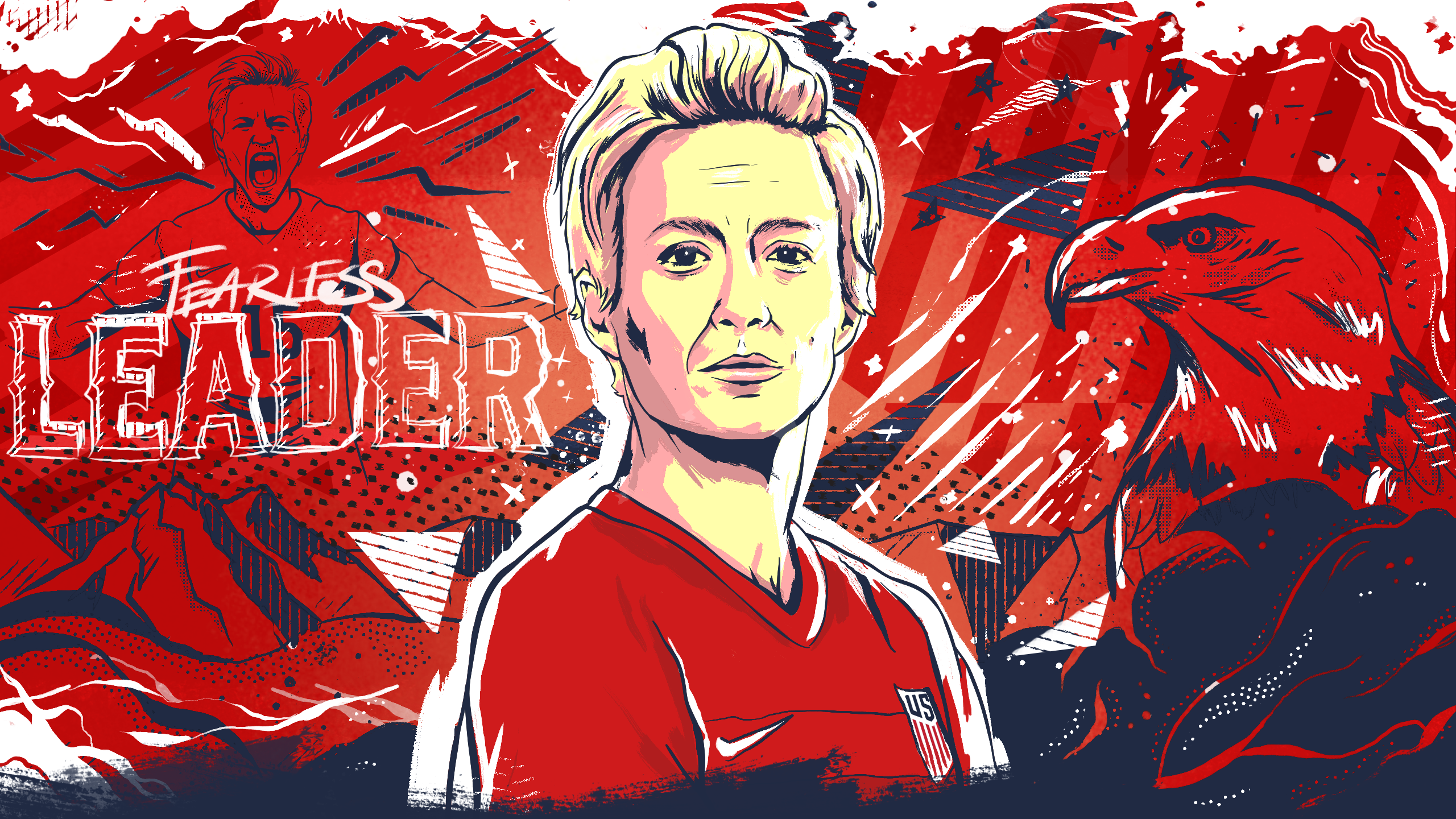
If the Americans are to defend their World Cup title, Rapinoe will be central to their success – on and off the field. She, along with Tobin Heath on the opposite wing and Alex Morgan up front, compose arguably the most dangerous front three in the world. Heath is the United States’ most individually technical player, but Rapinoe isn’t far behind – and she’s equally unpredictable.
A sublime free kick, a deft flick to play a teammate into space, even a quick throw-in, are just a number of ways in which Rapinoe can manipulate opponents makes her nearly impossible to stop. Rapinoe’s voice carries weight within the team now, too. She’s a bridge between Ellis and a younger, less experienced crop of players upon whom the U.S. will rely in France.
“When [Ellis] first came in, I was in that middle-to-younger group, and we had such an amazing group of veterans,” Rapinoe said. “So, they were closer with her. As I’ve gotten older, I think I can do a good job of relaying her message to the team, and older players can do a good job. She’s not always going to be able to have 35 conversations with everyone, so it’s our job as extensions of her and the technical staff to get the vision out and to make sure that everyone is on the same page, check the pulse of the team. It doesn’t even really have to go back to her, but I think there’s a group of us within the team that sort of make sure it’s all running smoothly.”
Rapinoe possesses natural charisma which commands respect from, and allows her to easily connect with, people. She has been one of the leading players in the U.S. team’s push for equality. The U.S. women in 2016 ramped up their fight for improved working conditions and equal pay to their male counterparts. Earlier this year, 28 players filed a gender discrimination lawsuit against the U.S. Soccer Federation. Rapinoe was one of the most outspoken players on the lawsuit, further displaying her evolution as a leader off the field. Her fight goes well beyond just soccer, thought. Rapinoe has used her growing platform to advocate for LGBTQ rights. On several occasions in 2016, she kneeled during the national anthem in protest of social inequalities.




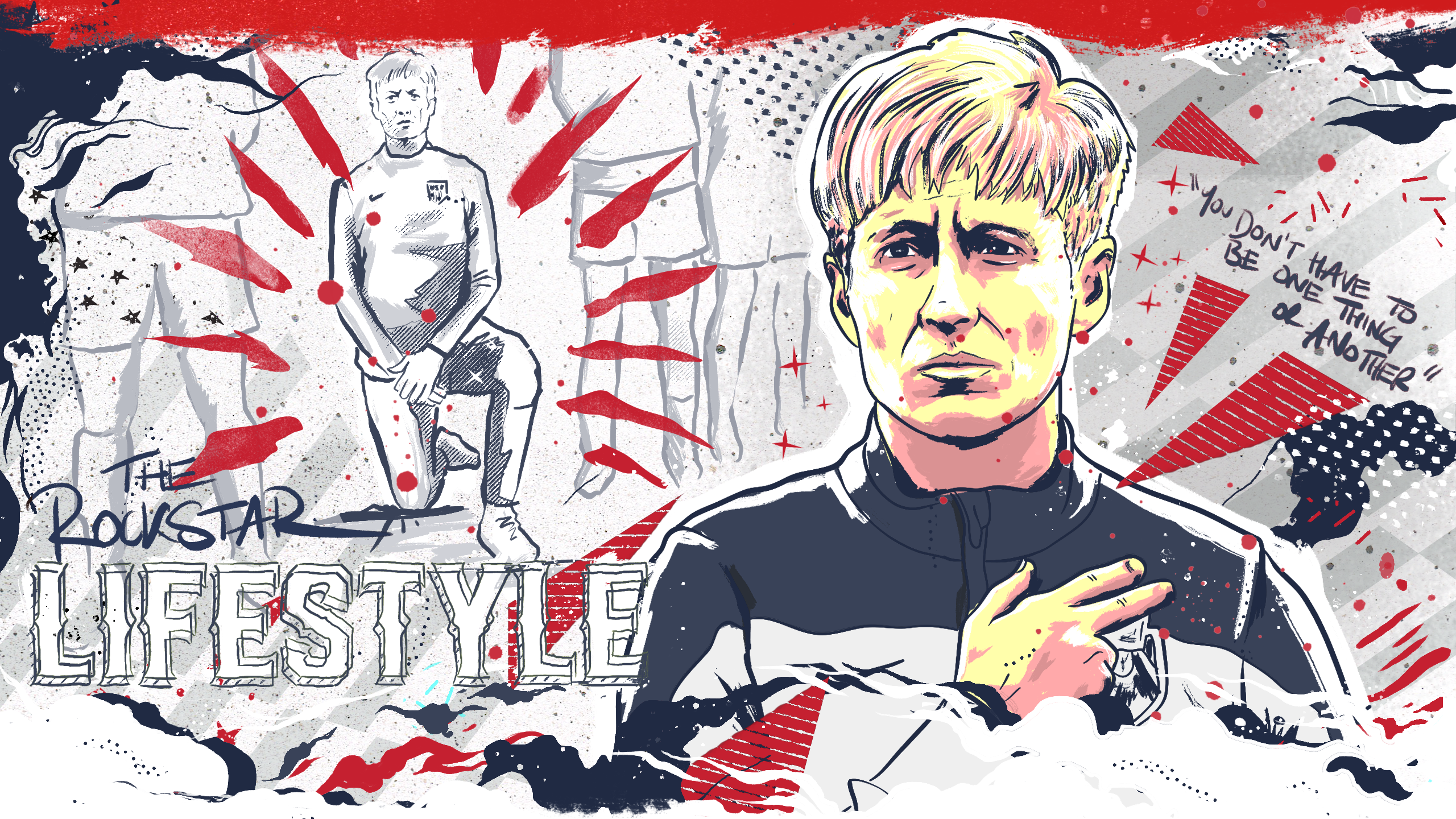
She is unapologetically Megan Rapinoe, and she is increasingly influential in what she does in society and on the pitch.
This summer in France could realistically be her last World Cup. The Americans are the favorites, but they have questions to answer in midfield and defense, where their personnel have changed drastically since 2015. If they are to repeat as World Cup champions, they will likely do so behind the success of their forward line, of which Rapinoe is one-third of an incomparable trio.
As a leader and co-captain, Rapinoe is tasked with setting a tone that has long been tradition for this prestigious U.S. program: winning is the only acceptable outcome. “That’s the DNA of this team, just always wanting to win everything,” she says. “So, whether that says defending champions, or chasing something, or just trying to prove that this team can stand on its own as one of the best in the history of this team, is always something special.” And Rapinoe will play as important a part as anyone. Her ACL problems behind her, she is a freshman no more, but the chief alumni in what could yet be the crowning achievement of a dynasty.
Words by Jeff Kassouf
Illustrations by Scott McRoy
Jeff Kassouf is the founder of equalizersoccer.com. He is the co-author of the new book, “The Making of the Women’s World Cup: Defining stories from a sport’s coming of age,” which you can buy here.