

.jpg?quality=60&auto=webp&format=pjpg&width=1148)
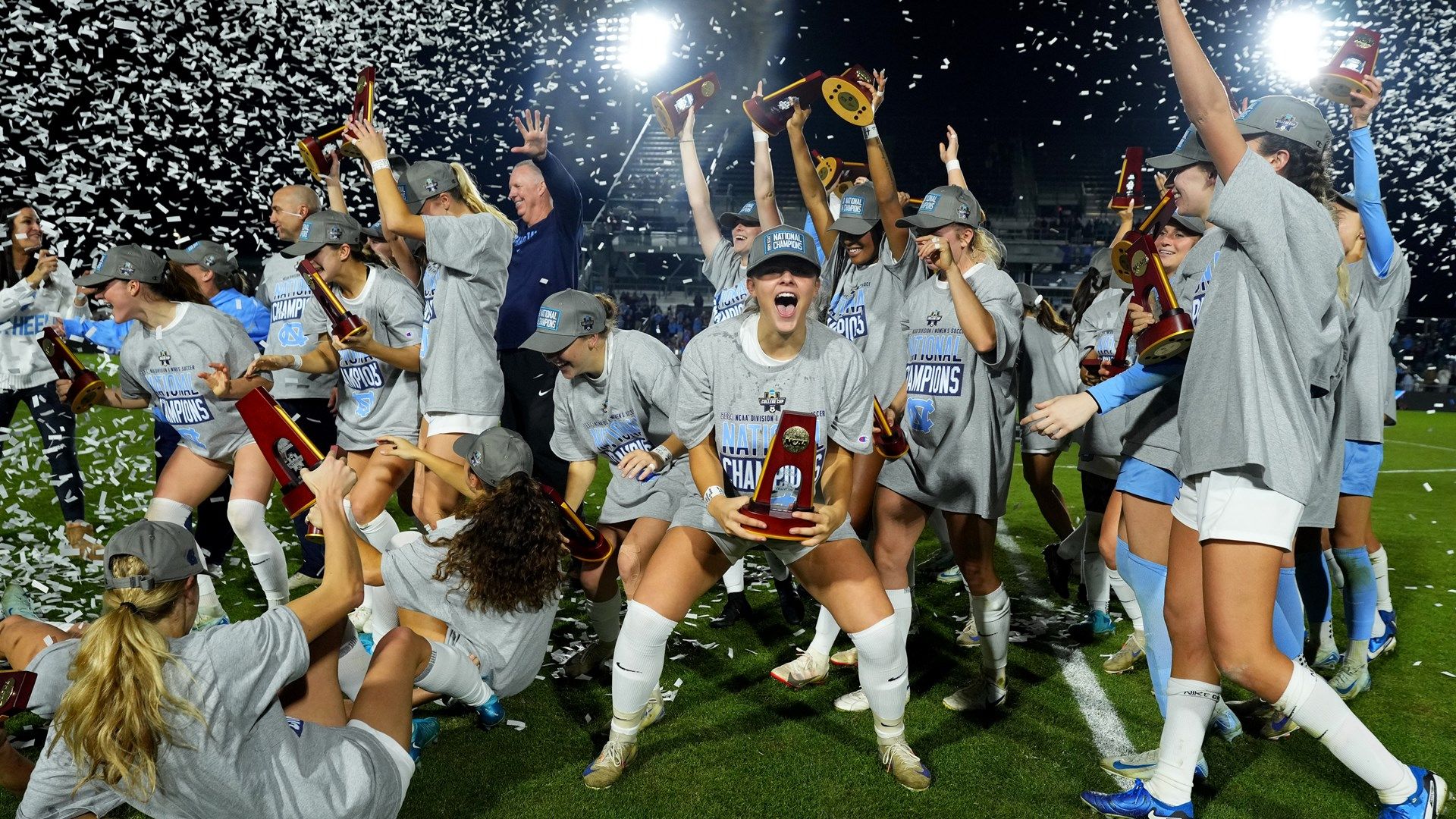
So much is changing with the college athletics landscape, and women’s college soccer is no exception. But when North Carolina won the College Cup earlier this month, it proved that even as things change, some things will remain the same.
Of course, even the Tar Heels look different than they did mere months ago – let alone from 12 years ago, the last time that they took home a national title in women’s soccer. The winningest program in women’s college soccer history, now with 23 championships to their name, the Tar Heels faced uncertainty heading into this season.
Nine players transferred from last year’s squad. A total of 11 others departed for the NWSL and other professional opportunities. Some incoming freshmen opted to forego their college eligibility for pro soccer. In total, 21 players left the team after their quarterfinal exit in last year’s College Cup.
Such a large amount of departures prompted questions, with The Assembly interviewing former players who said that longtime coach Anson Dorrance’s program “is designed to be stressful" while other players called it an “unsafe environment.” Three months after that article, in early August and mere days from the start of the regular season, Dorrance announced his retirement from coaching.
Dorrance was the first, and only, UNC women’s soccer coach up until his retirement and left as the all-time NCAA championship leader in Division I athletics. But his exit coincided with a shift in college athletics – and National Women’s Soccer League – landscape.
Largely gone was the Pac-12, with teams such as Stanford heading to the ACC and UCLA off to the Big Ten. On Aug. 22, the NWSL announced a new Collective Bargaining Agreement that made them the first major pro sports league in the United States to eliminate the college draft. And the House v. NCAA lawsuit settlement will result in $2.8 billion being given out to former college athletes who were unable to collect Name, Image, Likeness money from 2016-2021 over the next 10 years.
Moving forward, schools will be required to engage in revenue sharing with its athletes which could result in program cuts.
Looking back on this season, and looking forward, what does that all mean?
Conference Realignment
Soccer was not the only sport hit hard by conference realignment. But there’s no arguing that things looked wildly different this year.
UCLA won the Big Ten women’s soccer conference title in their first year as members. Penn State, despite being ranked, finished 10th in the conference standings. Florida State won the ACC championship for the fifth-straight season, and despite realignment the ACC remains one of the deepest women’s soccer conferences in the country, made only stronger by the addition of programs such as Stanford.
The Big 12 was arguably impacted the most, with Texas off to the SEC where they won the league tournament. With their depth blasted, Kansas won the Big 12 Tournament for just the second time in program history. TCU and Texas Tech were the only Big 12 teams ranked by the season’s end.
The elimination of the college draft
For years, the college pipeline to the NWSL has been growing murkier. In 2022, the league introduced an under-18 entry mechanism that resulted in an uptick in high school stars such as Alyssa and Gisele Thompson foregoing college to enter the NWSL directly. There’s no doubt the elimination of a college draft changes the dynamics of college soccer, with the league noting that college players are now empowered “to decide which team environment is the best fit for their needs and their development."
In November, Texas star Trinity Byers made NCAA history by becoming the first active NCAA athlete to sign with a team in the NWSL, joining the San Diego Wave. Even still, there’s room for college soccer to grow in relevance to leagues like the NWSL, especially in the era of NIL.
Speaking during NWSL championship weekend, league commissioner Jessica Berman cited the need “to create stars” when asked about takeaways from the WNBA’s growth under Caitlin Clark. Notably, Clark’s star power arose during her time in college at Iowa.
How NCAA soccer creates such stars moving forward remains to be seen, especially when factoring in competition with the global sports landscape, but it could certainly be a pathway toward increased relevance as women’s sports continues its boom.
Budget cuts, program cuts, smaller roster sizes?
As schools prepare for the House v. NCAA settlement to go into effect, leaders across college sports are rewriting rules to soften its blow. Part of that includes new limits on roster sizes for every Division 1 NCAA-sponsored sport. If implemented, that could reduce the number of Division 1 opportunities by at least 4,739, according to ESPN, with 19 of the 43 NCAA sports seeing smaller maximum roster sizes.
Women’s soccer, ESPN reported, would be “disproportionately affected” with a reduction of more than 1,000 athletes across all D-I programs. During the 2023-24 season, women’s soccer was limited to roughly 31 players per roster. The new maximum under the proposed rules would be 28. Already, high school players are seeing the impact.
One Penn State recruit, Taylor Wilson, had her verbal offer pulled due to the proposed rules, with coach Erica Dambach’s projected roster for next fall over the limit of 28 players.
"I was just shattered," the 17-year-old told ESPN. "I didn't really know how to act. I kind of felt numb."
On the flip side, in order to avoid further lawsuits, leaders in college sports afre working on eliminating NCAA rules that limit the expenditure on athletes, which would include limits on the number of scholarships a school can give to players in each sport. How that will prevent schools from stockpiling talent remains to be seen.
And with roster limits undecided as teams look to construct 2025-26 rosters in the offseason, be it with incoming freshmen or transfers, the women’s college soccer landscape arguably looks murkier than ever.
Even as these changes come and the future of college athletics – and college soccer – remains uncertain, teams such as UNC showcased that they will still contend.
They weathered 12 years – and a bit of a storm over the past 12 months – to return to college soccer glory under head coach Damon Nahas. Nahas’ interim tag was removed prior to the championship game, becoming the fourth UNC coach to win a national title in their first year as a head coach.