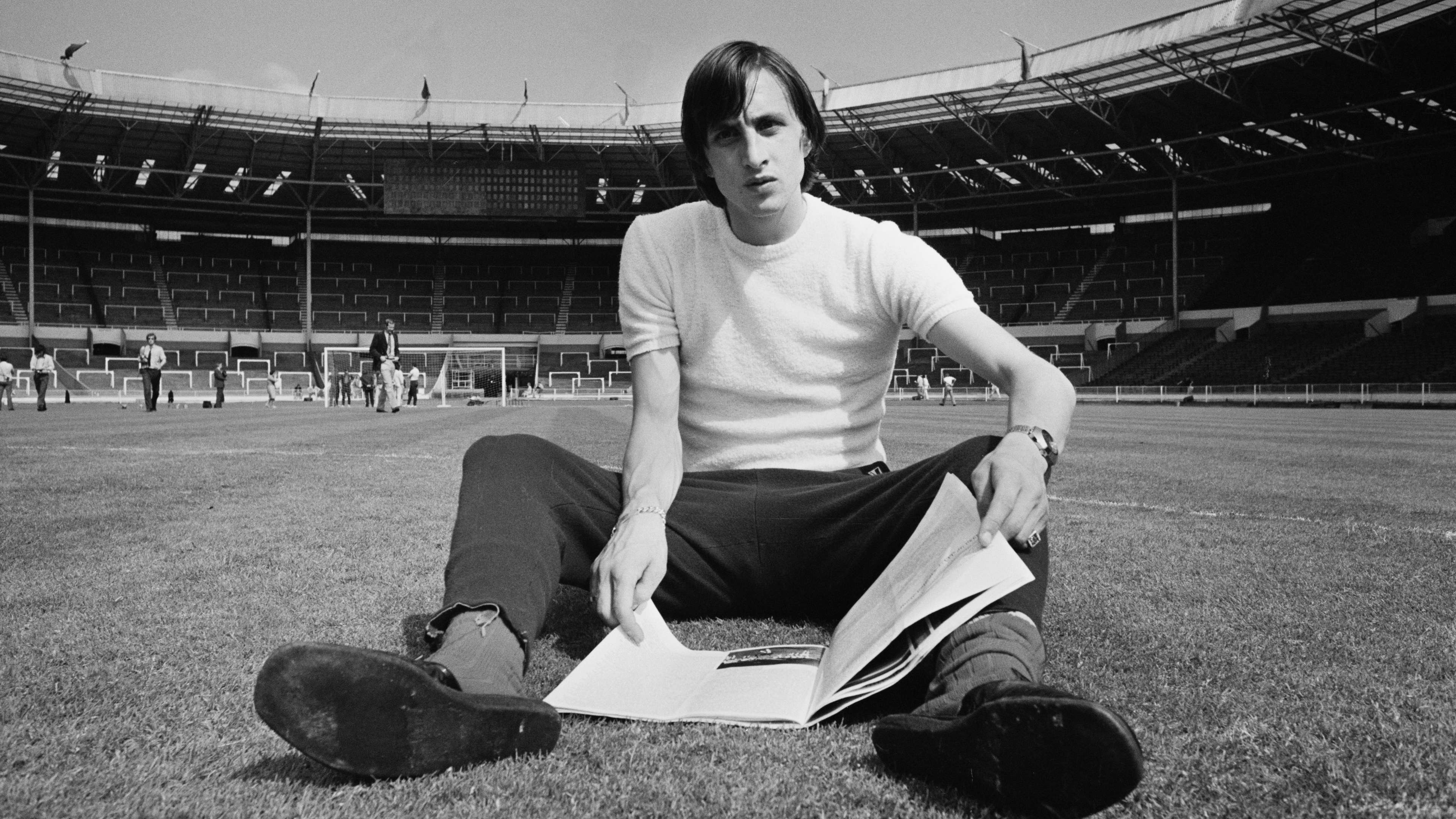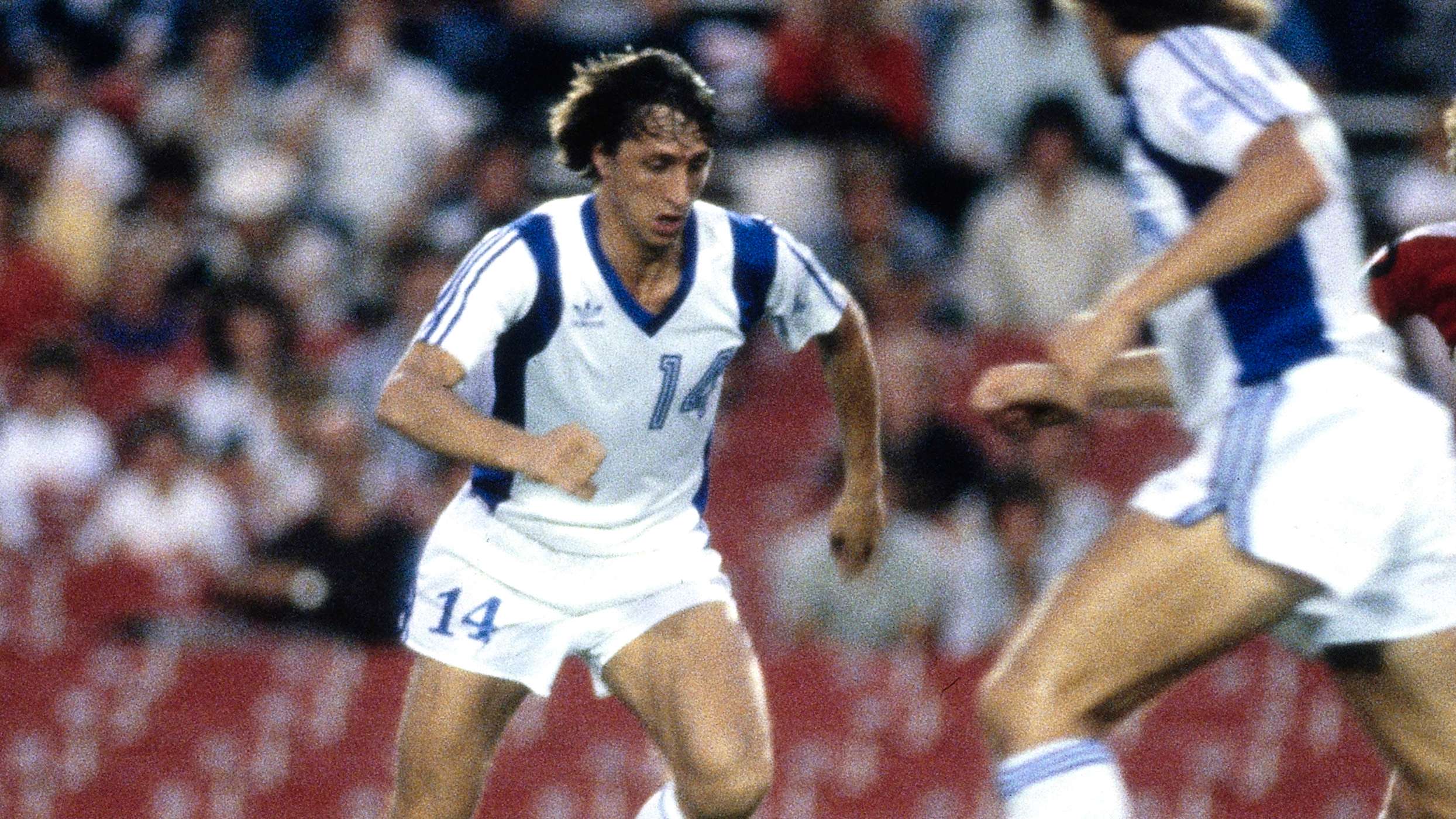
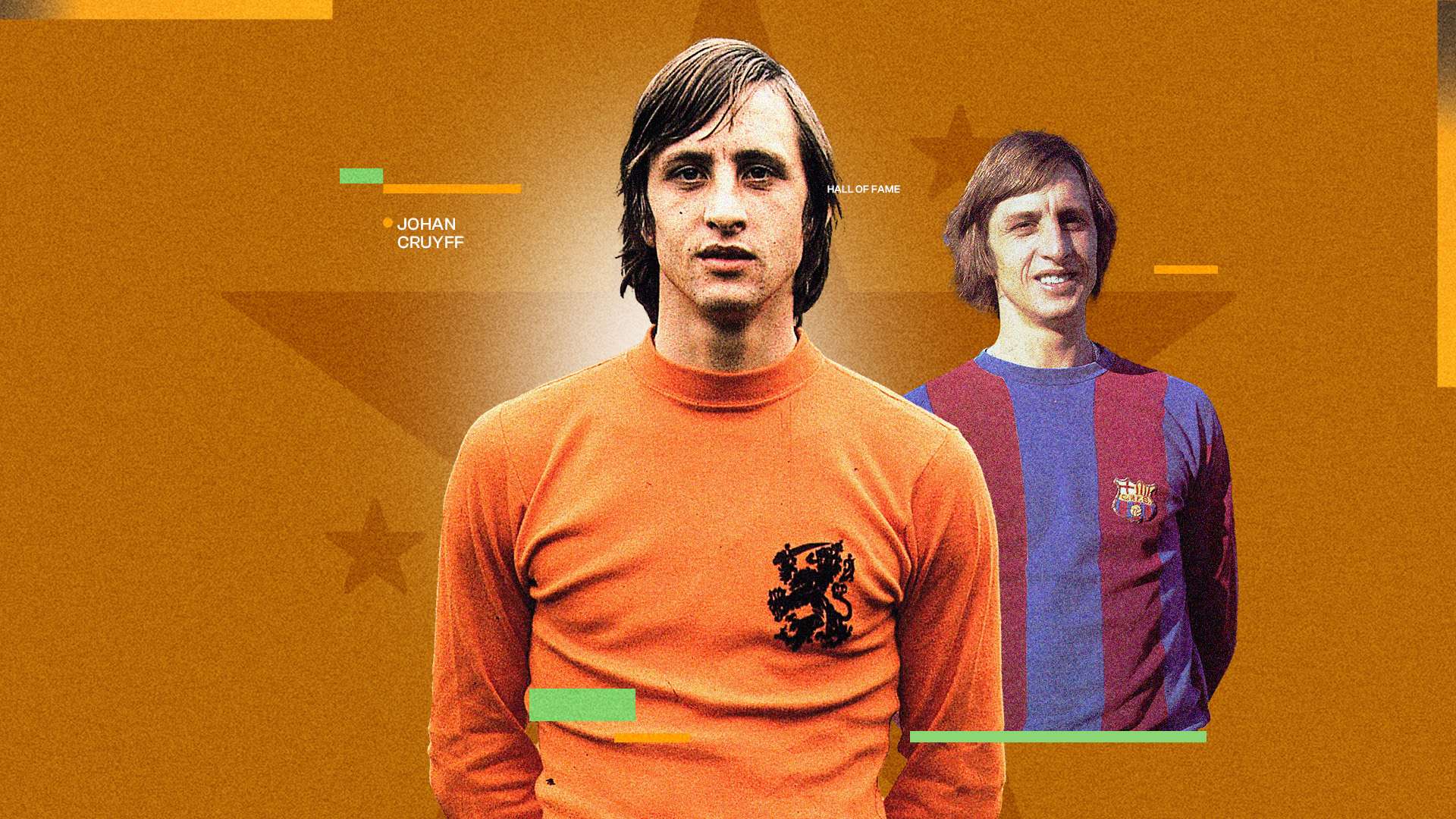
When Johan Cruyff was on the pitch, everyone noticed him. His team-mates were motivated, even galvanised by having him among them, while opponents were literally terrified at the mere thought of his unpredictable moves, his constant changes of position, his sudden bursts of speed and his pure class. He was, as acclaimed Italian commentator Sandro Ciotti put it, 'The Prophet of Goals'; Italian journalist Gianni Brera simply dubbed him 'The White Pele'.
Ambidextrous and gifted with exquisite class, Cruyff possessed a unique charisma, capable of inspiring his team-mates and influencing the game, which he always read in advance, embodying rationality and instinct, sublime elegance and fierce athleticism, discipline and rebellion. This explosive mix made him the perfect interpreter of 'total football', the new philosophy of the game that emerged in the late 1960s and 1970s.
Cruyff undoubtedly revolutionised the game more than anyone else did previously or has since. His role was theoretically that of an attacking midfielder, but Cruyff moved constantly between all positions in midfield and attack, becoming a centre-forward, winger or even a playmaker depending on the situation. In total football, there are no longer any fixed roles: when a player moves from his starting position, he can be effectively replaced by one of his team-mates, allowing the team to maintain its tactical formation.
Linked to an unconventional shirt number, 14, Cruyff wrote indelible pages in the football history books with Ajax, Barcelona and Feyenoord, while also playing for Los Angeles Aztecs, Washington Diplomats and Levante on his way to winning 21 career trophies. His honours include nine Dutch championships, six Dutch Cups, one La Liga, one Copa del Rey and, above all, three European Cups and one Intercontinental Cup, as well as three Ballons d'Or, which he won in 1971, 1973 and 1974.
Cruyff did not, however, achieve the same success as captain of the Dutch national team, with whom he was a finalist in the 1974 World Cup in West Germany and came third in the 1976 European Championship in Yugoslavia.
Off the pitch, Cruyff was a rebel: He had long hair, a passion for beautiful women (he married model Danny Coster in December 1968, again ahead of his time compared to contemporary footballers) and cigarettes, and had a distinctivle character, tough and uncompromising. He was also the first footballer to manage his image on and off the pitch, entrusting it to his father-in-law Cor, a wealthy diamond merchant. All these characteristics contributed to making him a unique and inimitable champion - and a shoo-in for GOAL's Hall of Fame.