
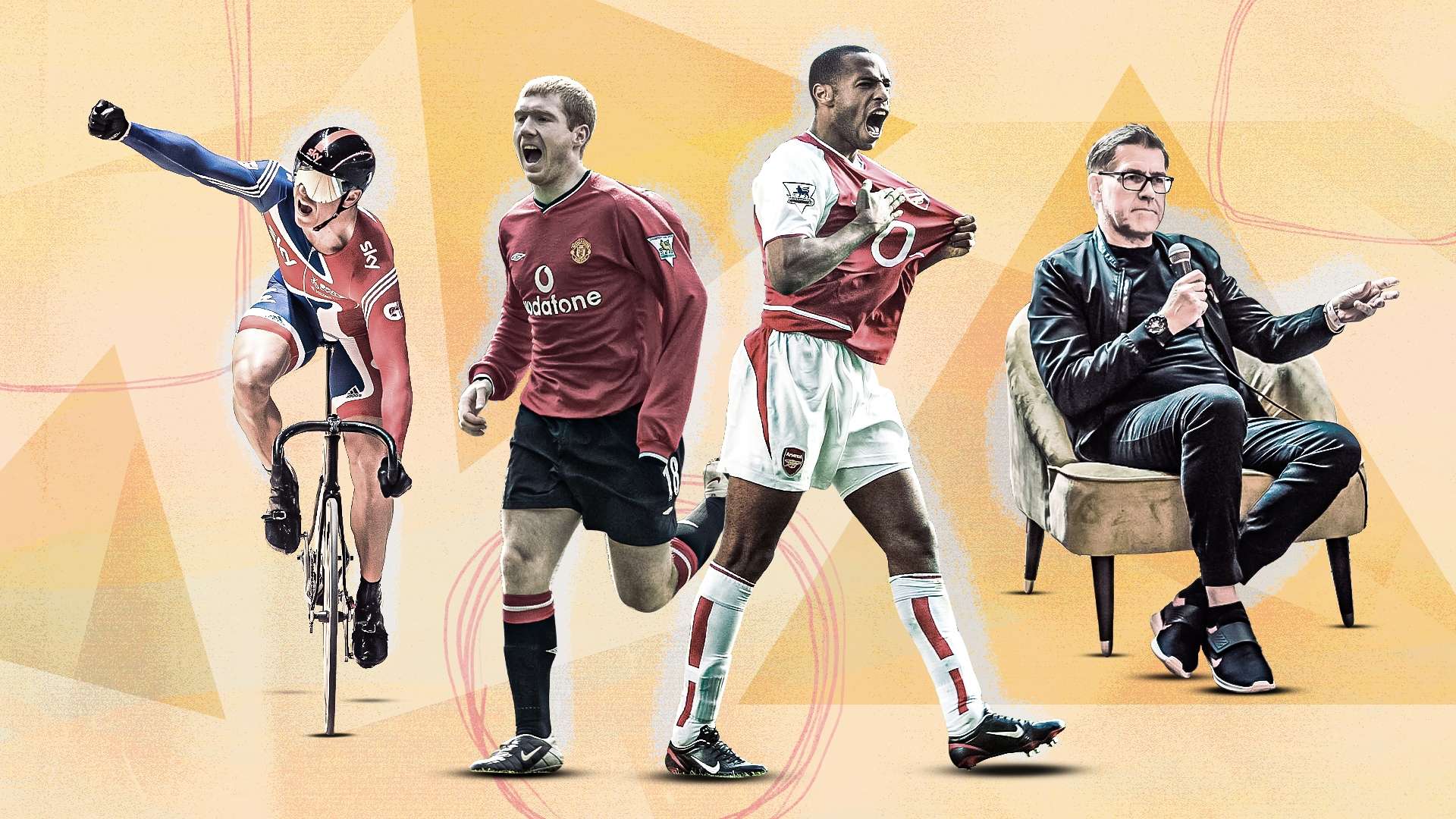
What do Sir Alex Ferguson, Arsene Wenger, Mauricio Pochettino and Pep Guardiola, as well as the England national team, Liverpool, Real Madrid, RB Leipzig, British Cycling and a host of Olympians, Formula 1 drivers and NBA stars have in common?
At some point or other, they have all called upon the services and expertise of Nick Littlehales.
Littlehales is a former professional golfer turned marketing director, who is now recognised as the world’s leading Elite Sport Sleep Coach, and an innovator in the field of ‘human recovery'.
He published a best-selling book, ‘Sleep’, in 2016, and has pioneered a technique, the R90, which he believes can not only improve the quality of an individual’s sleep, but also enhance physical and mental wellbeing, and therefore performance.
“It’s a seven-step process,” Littlehales tells GOAL. “And at the core of it is the idea that we break down every 24 hours into 90-minute cycles.


“Traditionally, the idea around sleep is that it just happens at the end of the day when there’s nothing else to do, and ideally you’ll get eight hours a day, right?
“Well, nobody gets that. You can’t just say ‘get a good night’s sleep and I’ll see you tomorrow’. Everyone is different.
“We need to change the language around sleep. It should be talked about at school, as the first pillar of human health, because it impacts upon everything; diet, hydration, exercise, mental health, wellbeing and performance.
“If you get your ‘human recovery’ right, then everything else will be better, not diminished.”
Littlehales was working as the international sales and marketing director for Slumberland, a Manchester-based bedding company, in the mid-1990s, when he was approached by Oldham Athletic about a potential sponsorship deal.
“They’d just come off the back of a really successful period with Joe Royle as manager,” he says. “Most of the workforce were fans, so I thought it was a good idea.
“And of course because I’d written the cheque, I’d be invited along to games. And it was there that I was introduced to Mr Ferguson…”
‘Mr Ferguson’, of course, is Sir Alex Ferguson, who at the time was in charge of the all-conquering Manchester United. He and Littlehales hit it off, and before long he was invited to Carrington, the United training ground.
“Dave Fevre was the physio at the time, and he asked me to go in and speak to the players,” Littlehales says.
“At the time there was no focus at all on how players slept or how they recovered. But United under Ferguson were so open-minded, and always seeking an advantage, that they allowed me in. It was a big deal, and I don’t think it would have happened at any other club.”
Littlehales worked initially with individuals. “Gary Pallister was one of the first,” he says. “He had a lot of lower back problems, so we looked at what we could do to help alleviate those issues.
“Then for the first time during pre-season, Ferguson introduced double-sessions, which led to us creating a recovery room at the training ground, where the players could sleep between sessions.”
Word spread quickly. United’s England players – the likes of David Beckham, Paul Scholes and Gary Neville – sang Littlehales’ praises on international duty, prompting an introduction to Gary Lewin, the physio who also worked under Arsene Wenger at Arsenal.
“Those two, Ferguson and Wenger, they ran their clubs completely,” he says. “So if they told a player to do something, whether it was changing their diet, yoga, stretching, cutting out alcohol, they did it. And that helped me when it came to what I was looking to do.”
 Getty/GOAL
Fast-forward 20 years or so, and Littlehales’ work is everywhere. He works with a host of clubs, at academy and first-team level, and advises teams and individuals across a number of other sports.
With Team Sky (now Ineos), he created ‘sleep kits’ for their Tour de France riders and staff, which were tailored for each individual. He has done similar with football clubs, including Southampton when Pochettino was manager.
The aim, he says, is always to try and replicate a ‘home’ environment, even when on the road, in hotels or in a motorhome.
“Think about it,” he says. “Your brain always has to get used to any new environment, and for each individual there are different factors.
“A lot of those are quite private and personal, but can we replicate some of them when they are away from their homes?
“Luxury hotels, they’re set up for hen and stag parties, for executive travel. But for an athlete, we can improve it. The bedding is the biggest thing, mattress toppers, sheets, pillows, but it could be a smell, a colour, it could be the way the window is facing, the temperature. Anything we can do to elevate a ‘foreign’ place into something more familiar, we do.”
Littlehales designed the players’ bedrooms at Manchester City’s Etihad Campus, and now “dips in and out” with Guardiola and his squad.
Similarly to Pallister at United in the 1990s, he helped the likes of Sergio Aguero and James Milner ovecome issues, and helped educate younger players on the importance of recovery cycles and R90 techniques.
 Getty/GOAL
“Chronotypes are massive,” Littlehales says. “There are two types, AMers and PMers, morning and evening people. And they really matter.
“Knowing which person is which chronotype can help inform decisions over when to train, how much to train, what kind of recovery period that person needs after an early kick-off or a night match.”
He adds: “It’s difficult to find another club that does things as well and as thoroughly as Manchester City.
“Yes they have a lot of money, yes they have fantastic facilities, but that doesn’t always equal success. You can’t buy everything.
“When you wander round their facilities, you feel that common goal. Whether it’s the first team, academy, women’s team. It’s like ‘we’re doing it, so why aren’t you?’”
Littlehales agrees when GOAL suggests that sleep and relaxation for modern elite players may be more challenging, given the world’s reliance on smartphones, iPads and other devices.
“It’s a great point,” he says. “What I have experienced over the last decade is that we are in a social media experiment, and a technology experiment. Some of it is so amazing that we just can’t get enough of it. Other sides to it, though, are quite scary.
“Now everybody is a journalist, everybody can say exactly what they like without legislation. We can find out anything we want – where Steven Gerrard lives or where Cristiano Ronaldo goes for a walk. So security becomes huge.
“I can tell you, I’ve wandered around Manchester city centre with people like Beckham, Scholes, Giggs. They could go wherever they want. People would come up and ask for an autograph and that would be it.
“Now, a player doesn’t know who is taking films or pictures of them from the other side of town. So they are under a lot more pressure, and the big question is how do they get away from it?
“What I find is that they start to create other behavioural traits. They’re trying to deal with the time they have to spend on their own, escaping from the day-to-day pressures and scrutiny. That leads to things like gaming and gambling and social media addiction.
“And it’s amazing what you can get delivered to your fingertips through a smartphone or iPad. Whether it’s fake news, bad advice, criticism, praise, propaganda, it’s there in a millisecond.
“I was actually giving a coaching session to a top club last summer, and there are guys there on Google while I’m speaking, checking what I’m saying!
“And football is trendy. I’ve been into clubs where they’re all using Snus, these tobacco pouches which you place inside your top lip, or where they are all on sleeping tablets, because it’s become the thing to do.
“Even inside elite Premier League clubs, these things can happen, things can go wrong and things can be lost.”
What of sleeping tablets, then? An article by The Athletic back in September suggested that such pills were used across the English game, and that players were ignoring the advice of club doctors, using prescription drugs and sedatives, in many cases to help cope with the game’s relentless schedule.
“Everyone wants a shortcut,” Littlehales says. “So someone reads that they should be getting X hours of sleep a night and they think ‘I need a sleeping tablet to help that.'
“But what they don’t see is that they should not take such a tablet unless they have a serious clinical problem, and it is prescribed by a doctor for an extremely short period of time. Because it becomes addictive.
“And it doesn’t help you ‘sleep’ so to speak. It sedates you. It’s dangerous.”
Littlehales is aware that there will be resistance to new ideas, to ‘specialists’ and people who are looking to change mindsets.
“Look, any expert will tell you that what they do is the most important thing in the world. I get that,” he says.
“But I think in modern top-level sport, we accept that certain things are vital to performance; nutrition, hydration, recovery, stretching, mental well-being. And to me, human recovery – sleep – is something that feeds into all of those things, and much more besides.”
He finishes with a question.
“Let’s use someone like Mo Salah as an example, because he’s very current,” he says. “So, how does he consistently have this alertness, awareness, ability to make decisions quicker than goalkeepers, full-backs or anybody else?
“You can say it’s because he sleeps well, but the truth is that he is doing a lot of things right which is maximising his ability to recover. And if he recovers better he can train better, and he can take on and retain information better, he can focus on the things that really matter in any particular game or situation.
“It might only be a split-second difference, but it’s the difference, you know?
“Sport has made so many advances in so many areas, but clubs now are realising that this area, the ability to recover as an athlete more consistently and sustainably, is so important.
“It is that which will enable you to take more advantage of all the other things that are available to you, be it food, training, coaching.
“It can be the difference between a 9/10 performance or a 10/10 performance.”