
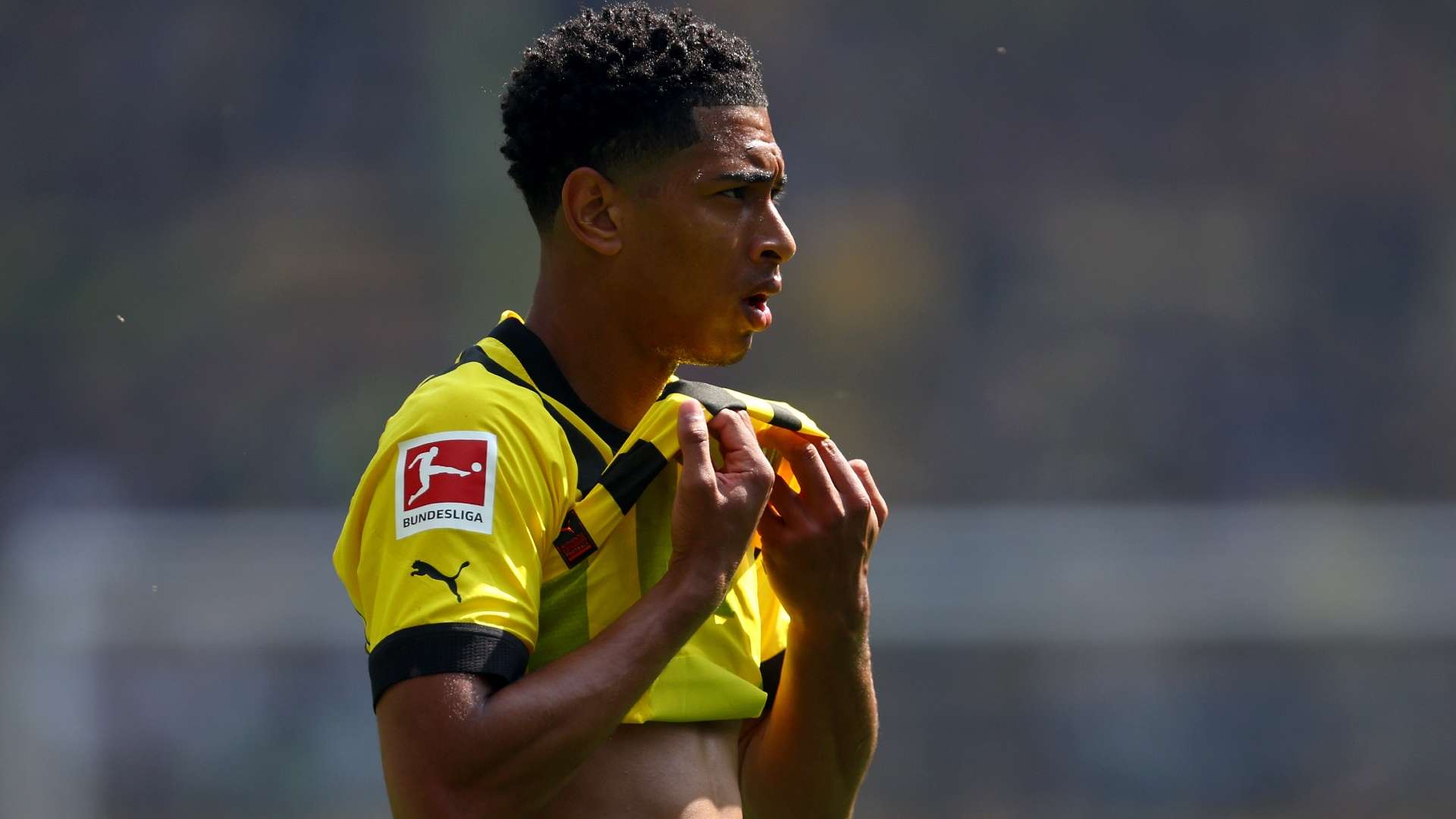
Jude Bellingham says it felt like many fans in England turned against the national team's Black players in the wake their Euro 2020 final defeat to Italy on penalties last summer.
After Marcus Rashford, Jadon Sancho and Bukayo Saka failed to convert their shootout attempts, they were subjected to racist abuse on social media.
Bellingham believes they were singled out as Black only when they did something wrong on the pitch - a form of discrimination he says "should never happen".
Bellingham on racist abuse after Euro 2020
“You look at the run into that final and you felt as though the country had united,” Bellingham told reporters on Tuesday. “Then as soon as they missed a penalty, they were not English, just black.
"Anyone can miss a penalty. Anyone can make a mistake in their line of work. But to be criticised like that should never happen. They are human."
Bellingham praised England boss Gareth Southgate for his public and private support of the team's Black players.
“To be fair, Gareth Southgate was brilliant,” he said. “He has always brought it up as a topic in meetings when we are aware that we going to [a country with a history of racism]. We went to Hungary shortly after the Euros and the same thing happened again but we felt more prepared. We felt more supported because of what Gareth had put in place. As a Black player you feel very grateful for that.”
“There’s not a single job in the world where you deserve to be criticised with racism. I’ll never forget the first time I properly got a batch of messages. My club were quick to send someone to message me and make sure I was alright and I really appreciate that. I had team-mates message me and family members."
Bellingham questions priorities of DFB
While the Borussia Dortmund midfielder was happy with the treatment he received from Southgate, he was less pleased with how instances of racism have been handled by football's governing body in Germany.
Bellingham compared the quick punishment he received for suggesting match-fixing in the Bundesliga to what he believed to be a lack of action towards abuse.
“I didn’t receive anything from the DFB or FA," he said. "And I always kind of compare it to when I said the thing about the referee in December. They were very quick to get into contact to give me my fine, give me my punishment and kind of make it a big drama in the media.
“I’ve learned from that. I know what I can and can’t say. I know that sometimes I have to control my emotions better. But, you know, when you give that more energy than the situation I was going through, well - I felt: ‘Maybe we are alone. Maybe they’re not interested, maybe they don’t care. And maybe it is down to me and down to us to work independently to get our message out.’”