+18 | Commercial Content | T&C's Apply | Play Responsibly | Publishing Principles
Manchester derby compositeGetty

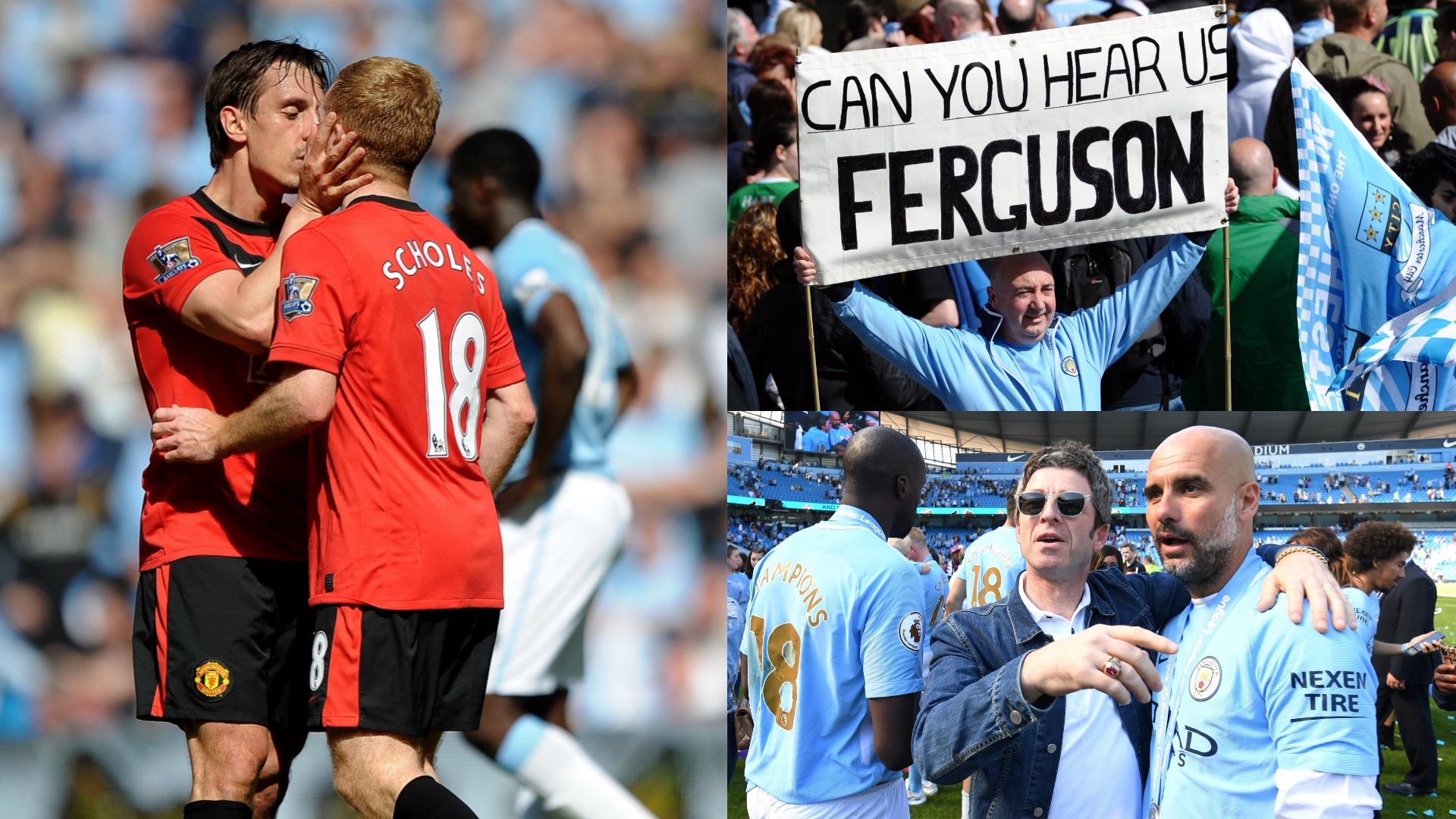
Is Manchester blue or red? Why Man City could soon usurp Man Utd as the best-supported club in the city

Two chants encapsulate the age-old question of whether Manchester belongs to City or United and will be heard frequently in Saturday’s FA Cup final, the first ever final between the two teams.

“The city is ours, f*ck off back to London, the city is ours,” chant Manchester City fans. “The city is yours? 20,000 empty seats, are you f**king sure?” is how Manchester United supporters respond.

City’s stereotypical view of United fans is that they come from London and couldn’t point out Manchester on a map, while United like to joke that their neighbours are not even big enough to fill their own ground. Both views are, of course, complete nonsense, even if they contain shades of truth.

But which team truly is the biggest club in Manchester and how has it changed over the years? GOAL investigates…

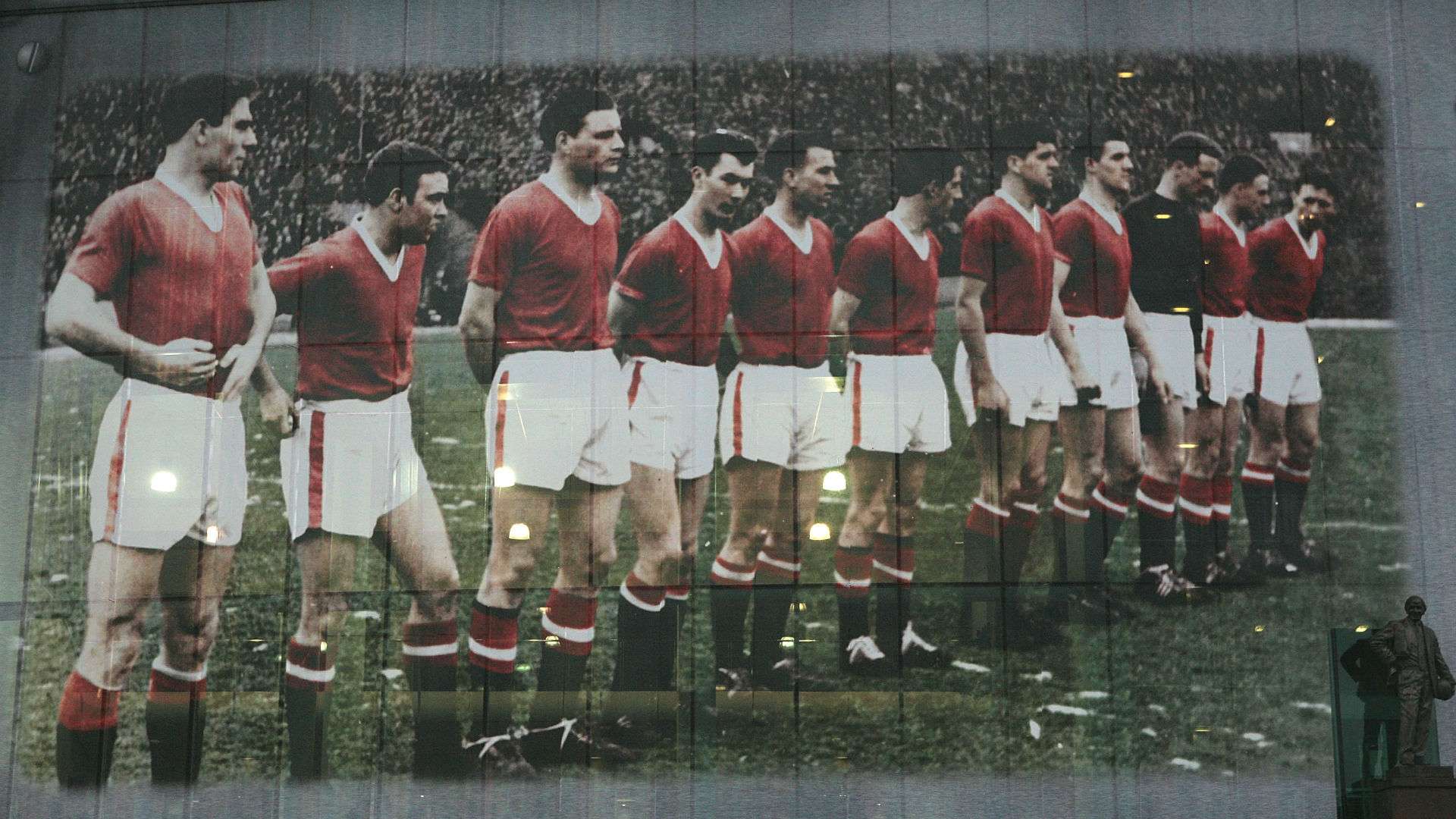
  • Busby Babes Manchester United muralGetty Images

    Busby Babes take United global

    Both clubs have always had massive followings. United hold the record for the biggest attendance at an English top-flight game, with 83,260 people cramming in for their match against Arsenal in 1948.

    The game itself was played at City’s ground at the time, Maine Road, as Old Trafford was being rebuilt after being bombed during the Second World War (an incident City fans later made a song about involving cult striker Uwe Rosler).

    City, however, hold the record for the biggest attendance in an English domestic match (excluding finals), when 84,569 turned out at Maine Road for an FA Cup tie against Stoke City in 1934.

    United started to attract a bigger fan base outside of Manchester after the Munich air disaster in 1958, when many people were drawn to the team’s rebirth under Matt Busby, who survived the crash along with nine other players. The Scottish manager led United to win the European Cup 10 years later with a team containing fellow survivors Bobby Charlton, Harry Gregg and Bill Foulkes.

    “The quest to win the European Cup after the tragedy of Munich gave United this global attention, winning it in 1968 cemented the status as a global club. City continued to be perceived as the Manchester club whereas United’s fan base became their part of Manchester and beyond,” football historian Dr Gary James told GOAL.

  • Advertisement
  • Maine RoadMaine Road

    City foster a new generation of fans

    City also had huge success in the same period, winning the league in 1968, the same year as United's European Cup triumph, before lifting the FA Cup in 1969. In 1970 they won the European Cup Winners Cup plus the League Cup.

    And in that period they sowed the seeds of their future loyal fanbase through the Junior Blues initiative, becoming the first club to set up a supporters club for children.

    "It tried to make sure that the generation of fans coming through in the 70s were caught early. The old chairman Peter Swales got this bit right, he got that if you can get kids when they’re seven and eight years old and if you have custard pie fights with players in the social club and related activities, if you can capture them at that age they'll stay loyal forever," says James.

    "So when the success dried up in the 1980s and 90s it didn't really change much for City as they'd worked hard to get those Mancunion supporters at an early age. When City were having no success and United were having a lot of success, it then became 'We’re Manchester’s team. You might have an international support but we still represent Manchester’. And most of those kids caught by the club in the 70s were the ones making the noise, the most vocal ones. What City did in the 70s paid off."

    City took other initiatives to strengthen their ties with the local community, forming a women’s team in 1988. United did not officially launch theirs until 2018.

  • Class of 92

    City lose ground to United in the 90s

    But United’s second glorious era in the 1990s inevitably increased its fanbase in Manchester as well as abroad. When Alex Ferguson took over the club in 1986 one of the first things he did was bulk up the club’s local scouting network after being appalled by their lack of presence in local football in his first meeting with youth coach Eric Harrison.

    At the time, City had the better youth academy but the new focus led to United winning the FA Youth Cup in 1992 with a team containing Ryan Giggs - who had switched sides from City - Paul Scholes, Gary and Phil Neville, Nicky Butt and David Beckham, who would become known as the Class of '92. All bar Beckham were Manchester boys.

    The six youngsters went on to star in the subsequent Premier League triumphs and were all in the squad when United won the treble in 1999. As well as containing foreign stars such as Eric Cantona and Andrei Kanchelskis, United’s team reflected its local area, attracting more local support.

    "That investment in youth, the idea of what is Manchester United, is what would see them on for years and years,” adds James. "What happened in the 90s? City dropped to their lowest position [relegated to the third tier of English football] while United had incredible success. That’s when City were losing Manchester in young support.”

    Old Trafford’s expansion to hold 55,000 people in 1996 helped them further grow their support, while only 35,000 could get into Maine Road.

    “In late 90s it was a sellout so young kids couldn't get to City games and the club couldn't attract new support," James adds. "At that point it was easier to get a League Cup game at United, if you're a young kid you're thinking they're winning trophies and I can get to see them. Had City’s lack of success continued for any longer it would have been irreversible, City would have been on a downward spiral who knows where it would have gone."

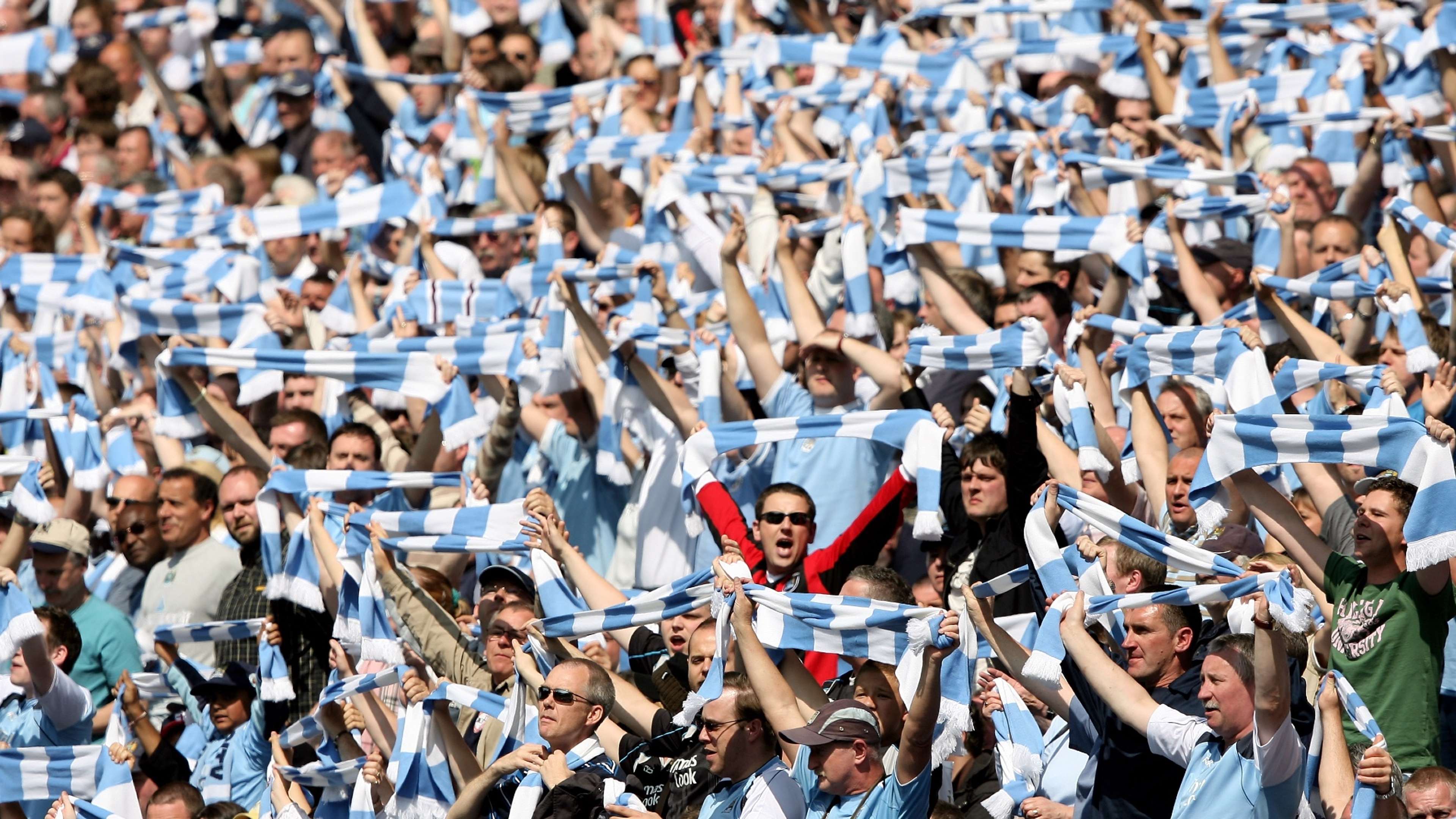
  • Manchester City fansGetty Images

    City catch up with United's global fan base

    United were ahead of the curve when it came to garnering support abroad. Their first supporters club was launched in Malta in 1959, one year after the Munich air disaster. The club have also enjoyed strong support in Ireland since the 1960s, beginning with the arrival of George Best and maintained by Kevin Moran and later Roy Keane and Dennis Irwin.

    The club capitalised on their success in the 1990s by making high profile tours to other continents, targeting Asia in particular. City have had long-running supporters clubs in Scandinavia and a following in Ireland too but in general lagged behind United in global support, adding to the sense that they were the local team and belonged more to Manchester.

    But since the 2008 takeover they have made huge inroads across the globe. Through the City Football Group they have created a vast network of clubs in Uruguay, the United States, India, Japan, Australia, France, Belgium, Spain and Brazil. Indeed, they now have 330 supporters clubs compared to United’s 277.

    Nuria Tarre, CFG’s marketing officer, claimed last year that only one percent of City’s fanbase lives in the United Kingdom. The club had 91 million followers on all social media platforms as of 2022 but United had almost double with 177 million.

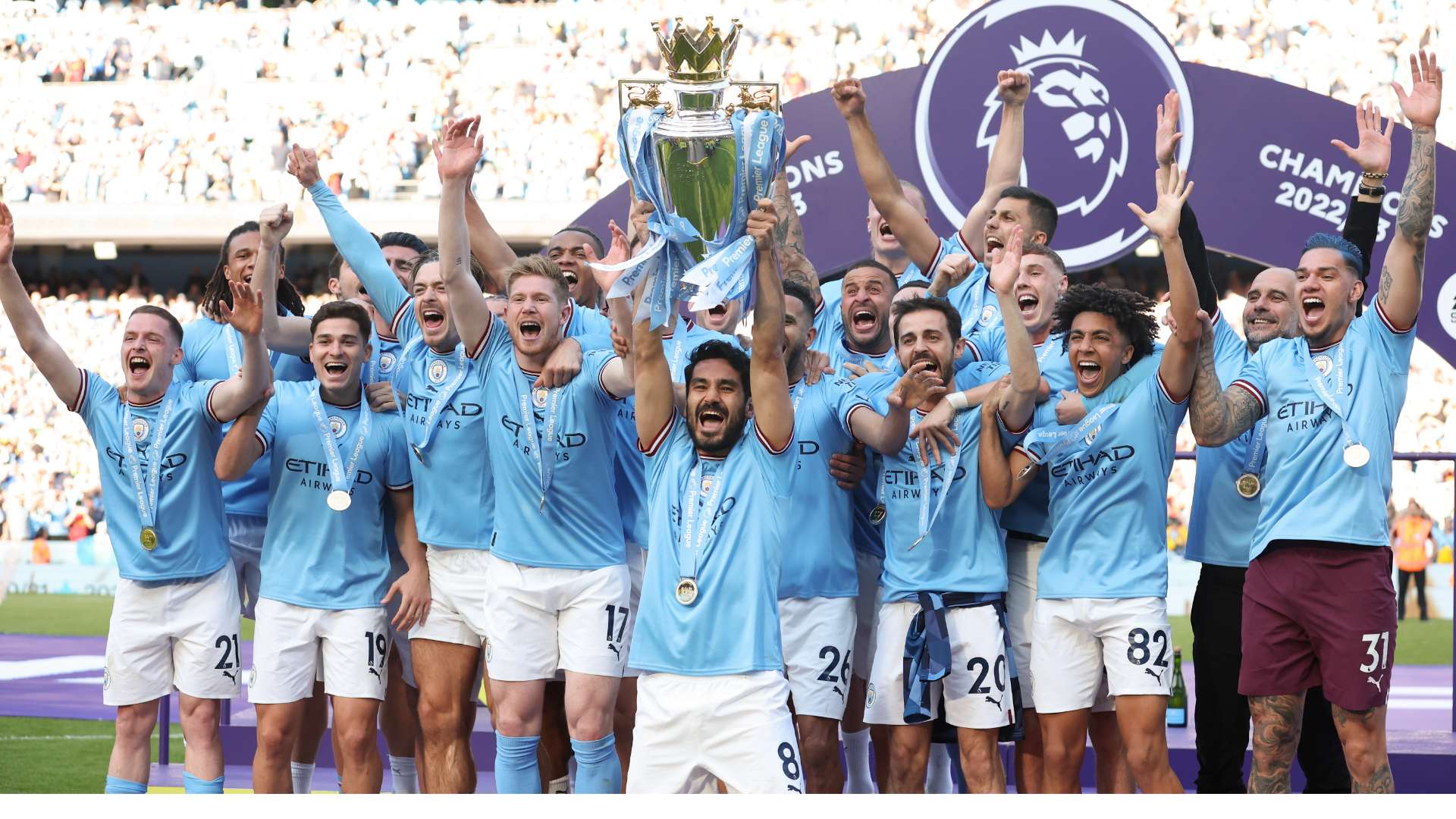
  • Manchester City Premier League trophy 2022-23Getty

    City now gloat about trophies, not local support

    City’s global reach is leading to a different matchday experience and an increasingly international audience, particularly on Champions League nights. The claim to be Manchester’s team in that sense is being diluted, and fans are now happier to gloat about their dominance over United in terms of silverware, rather than how they better embody the local area.

    "If you're there in the 80s and 90s when City’s not winning, United are winning trophies, what can you criticise them for? It's 'We're from Manchester and you're not'. Its not necessarily the thing that matters, it's the thing you have over your rival. It's banter."

    But for James, the club’s global growth is not anything for local supporters to worry about for now. City is expanding the Etihad Stadium, spending £300 million to increase the capacity to 60,000 and make room for their new-found fanbase.

    "If you can't get a ticket to a game those things matter or if it goes in such a way that you are priced out, but the stadium is expanding. The jibes about the 'Empti-had' we all know are not true. As long as you can get tickets I don't think that’s an issue."

  • Manchester United fans Glazers OutGetty Images

    A tale of two owners

    James believes City are winning the local battle with United again, and not just because Pep Guardiola has them on course for the treble, although it certainly helps. Their Abu Dhabi owners have bought them some of the best players in the world while also pumping money into the local area.

    As well as twice expanding the Etihad Stadium, the owners invested £200 million to build the City Football Academy adjacent to the Etihad Stadium. They also constructed 6,000 houses in one of the city's poorest districts - though the 'Manchester Life' scheme has not been without its critics.

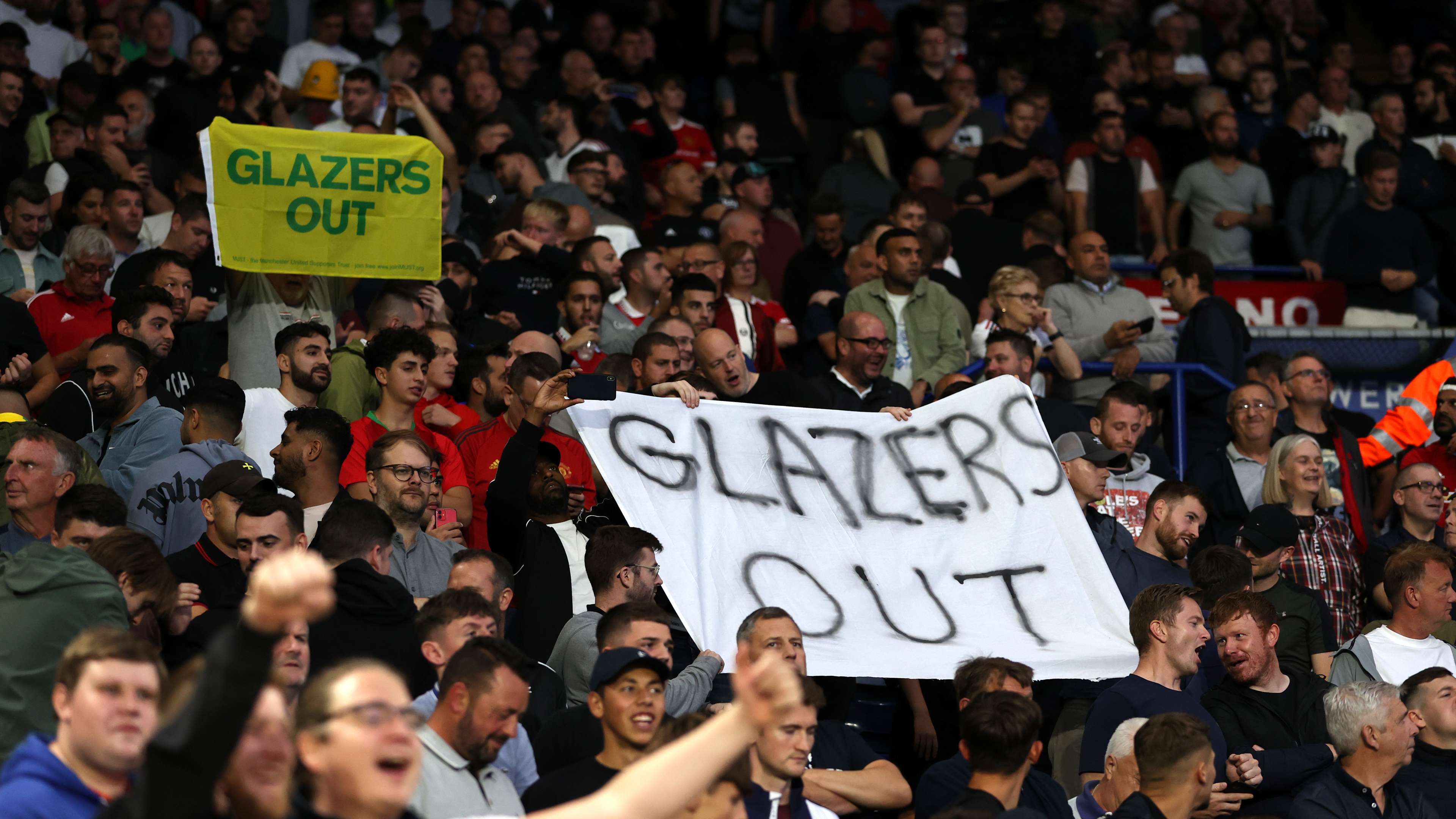
    The Glazer family, meanwhile, have alienated local United fans by taking out an estimated £1.6 billion from the club since their takeover in 2005. While United fans have staged fiery protests against the American family and chant 'We want Glazers out' after each goal scored at Old Trafford, City adore their owners.

    When Bayern Munich fans held up a banner during the recent Champions League quarter-final first leg at the Etihad Stadium reading 'Glazers, Sheikh Mansour, All Autocrats Out! Football Belongs To The People,' City supporters responded en-masse by chanting Sheikh Mansour's name.

    "It's easy to own a football club and take profits which is what happens at United. Investing in the city of Manchester, building housing, building community facilities, that’s different. I'm not aware of any English club that’s done that," James adds.

    "If you've got an owner that’s taking something out of Manchester and one that’s putting money into Manchester, that matters to people.

    "Every time I look at what the Glazers have done to United I just imagine if instead of taking the profit if they’d have put that into facilities, repaired the leaky roof, built an academy, built houses. United would have been streets ahead of any team."