+18 | Commercial Content | T&C's Apply | Play Responsibly | Publishing Principles
GFX Icons 1986GOAL

ICONS: From Tepito to the Azteca - the incredible story behind Argentina's 1986 World Cup jerseys

But there are other stories, quieter ones, that exist on the margins of the great tales. Episodes that seem minor but end up illuminating a tournament, a country, or an entire generation from an unexpected angle.

Mexico ‘86 was full of such moments; the midday heat of Mexico City, the altitude that forced Carlos Bilardo to plan obsessive training sessions, the press conferences where Maradona answered incredulous journalists with sharp, unforgettable lines.

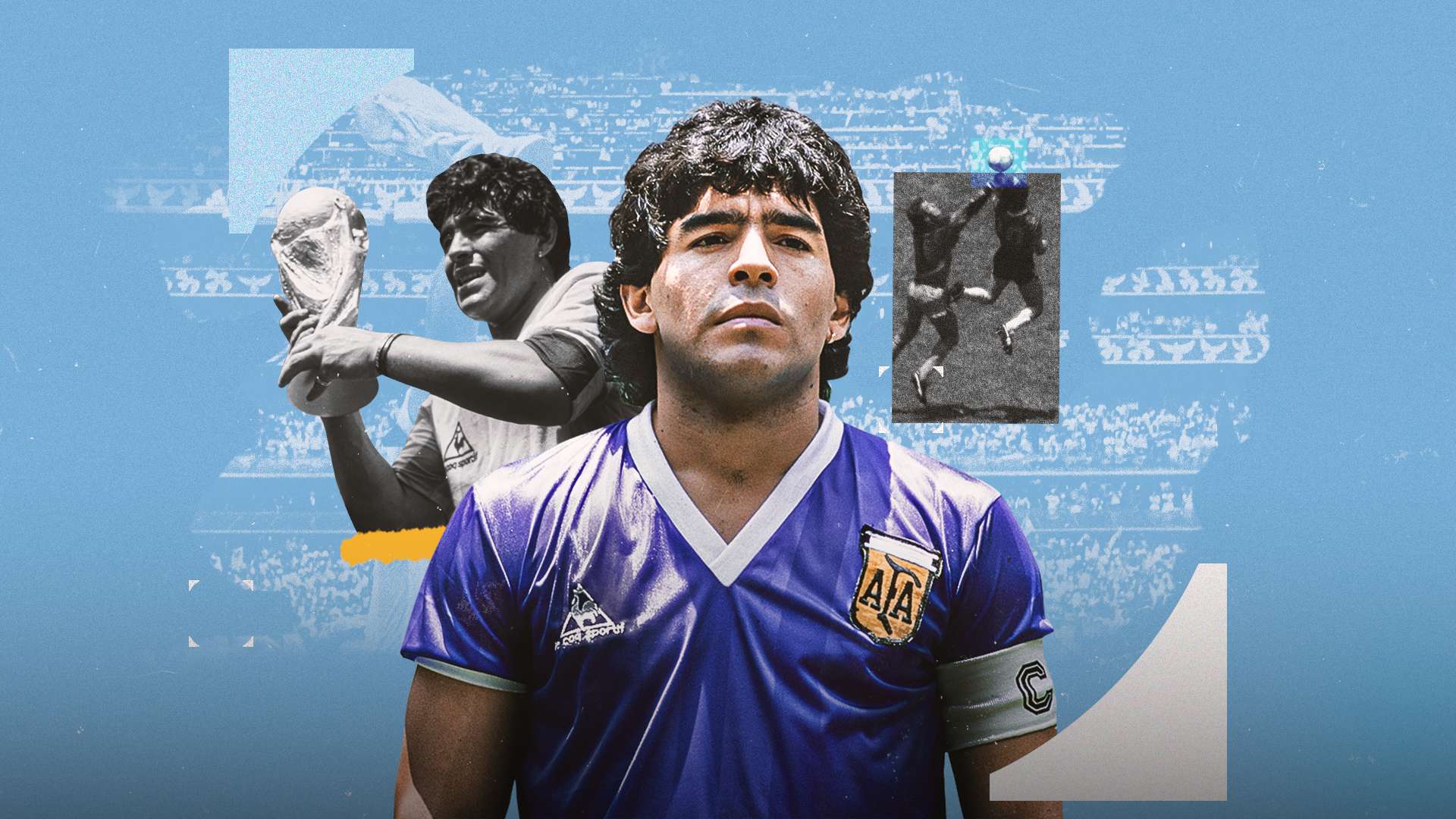
And among those parallel stories is one of the most colorful: that of the ‘fake’ jerseys Argentina wore in their quarter-final win over England - acquired at the very last minute in Tepito, the roughest neighborhood in Mexico City.

This is the first story in GOAL's new World Cup series, Icons. Listen to the podcast version on Spotify or Apple now.

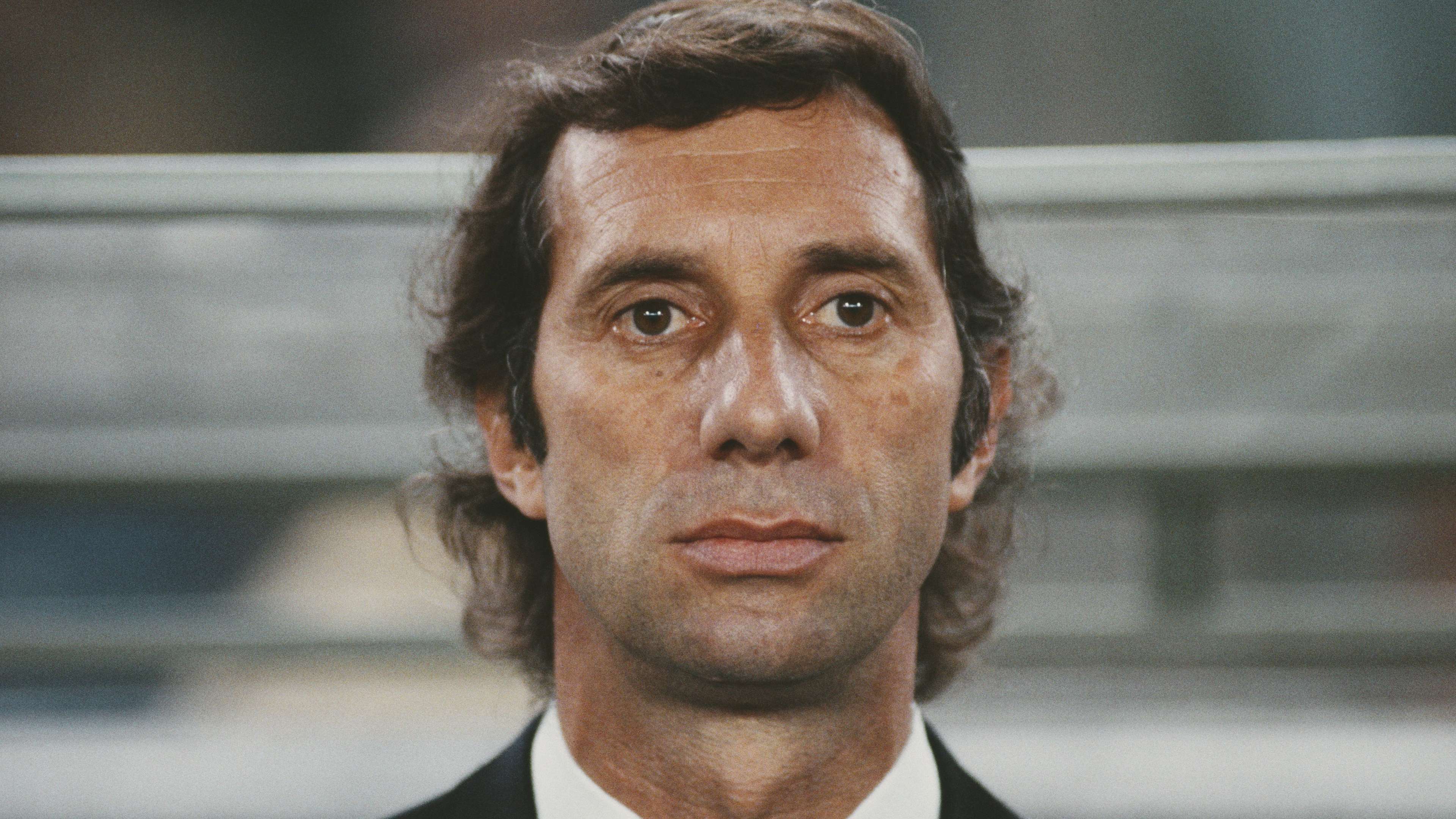
  • Argentina Manager Carlos Bilardo 1984Hulton Archive

    Under suspicion

    To understand the magnitude of that anecdote, you have to go back to months earlier. Argentina didn’t arrive at Mexico ‘86 as a favourite. The memory of Spain 1982 still weighed heavily - a World Cup in which the team tried to defend its 1978 title but failed spectacularly. Cesar Luis Menotti’s squad collapsed in the second round, and Maradona, then an up-and-coming 21-year-old, was sent off against Brazil.

    The transition to Bilardo’s era was far from smooth. His tactical approach - a 3-5-2 system that prioritised defensive order and discipline - was seen by many as heresy against Menotti’s romantic, attack-minded ideal. The always influential Argentine press openly distrusted Bilardo, calling him defensive and calculating, and even accused him of 'killing the essence' of the national game.

    Pre-tournament results were modest, the team didn’t click, and scepticism spread. Some journalists even wrote that the goal should simply be ‘to get through the group stage and save face’. The atmosphere in Buenos Aires was pessimistic, almost hostile. Meanwhile, the country itself was facing its own turbulence. Raul Alfonsin’s young democracy was struggling to consolidate after a military dictatorship amid political and economic tension. Football, as always, served as an escape valve - but also as a symbolic battleground. In that context, the World Cup appeared as a space for catharsis and hope, even if few believed in the team.

  • Advertisement
  • Maradona 1982 Argentina Brasil 24 10 2016

    Unfinished business

    Amid all the doubts, there was one certainty: Diego Armando Maradona. At 25, he arrived in peak physical form and as team captain. In Italy, he was already a god in Naples - though he was still in the process of leading Napoli to the glory that would come later. But in World Cups, Diego still had a debt to settle.

    Spain ‘82 had been a bitter blow after the red card against Brazil, the early elimination, and the merciless criticism. For many journalists, Mexico was Maradona’s ‘now or never’. Bilardo knew it and built the entire team around his number 10. There was no Plan B - everything revolved around Diego.

    “We’re here to fight. I feel like this is our moment,” Maradona would later recall in interviews. That conviction wasn’t an act - it was a message he sent to his team-mates and to a doubtful nation. Bilardo reinforced it during training sessions: “Diego is the axis; we all play to bring out his best.”

    The challenge, however, wasn’t only tactical. There were external factors: the altitude of cities like Toluca and Mexico City, the scorching midday sun, and the logistical hurdles of a World Cup that demanded quick solutions. And it was precisely within that mix of obstacles that the bizarre jersey episode appeared.

  • The jersey dilemma

    On June 22, 1986, Argentina were set to face England at the Estadio Azteca in the quarter-finals. It was a match charged with symbolism. Only four years earlier, the Falklands War had pitted both nations against each other, leaving open wounds and painful memories across Argentine society. Although FIFA insisted it was “just football,” for fans and players alike it was clearly something more.

    In that context, FIFA informed Argentina that they had to wear dark jerseys to distinguish themselves from England’s white. A technical detail, seemingly minor, but the problem was that the team didn’t have an appropriate alternative for the heat.

    The only available shirts were made of thick cotton - heavy, almost unwearable under the Mexican midday sun. Bilardo immediately noticed that wearing them would pose a physical risk to his players. And in such a demanding match, every detail could make the difference.

    Oscar Ruggeri would recall years later: “They went to Tepito because Zelada knew the place - he sent a kitman with a backpack and brought back one thick jersey. They kicked him out, but we had to play… They went to look for other jerseys, and those we liked.”

    Fate, mischievous as ever, had placed the team in a ridiculous dilemma: Play in suffocating shirts or go out into the city to find new ones. And that’s where Tepito came into play.

  • Market of the possible

    Tepito is an iconic neighbourhood in Mexico City - popular, vibrant, dangerous, and fascinating all at once. Known as ‘the tough neighbourhood’, it’s famous for its informal commerce, street culture, and endless ability to reproduce, imitate, and reinvent. By the 1980s, it was already notorious for selling pirated goods, from movies to sportswear.

    Amid World Cup fever, Tepito’s streets were packed with jerseys from every national team. Many were high-quality imitations, made in local workshops with lighter materials than the official ones. In their desperate search, a group of Argentine kitmen, guided by back-up goalkeeper Héctor Zelada, ventured into the neighbourhood’s alleys.

    Maradona would later summarise it in one brief, telling sentence: “I asked for something light… and they found some.”

    The negotiation was quick and almost surreal. The vendors couldn’t believe that real members of the Argentina team were buying jerseys they knew were fakes. But necessity ruled. The problem had to be solved - and in that moment, the counterfeit became salvation.

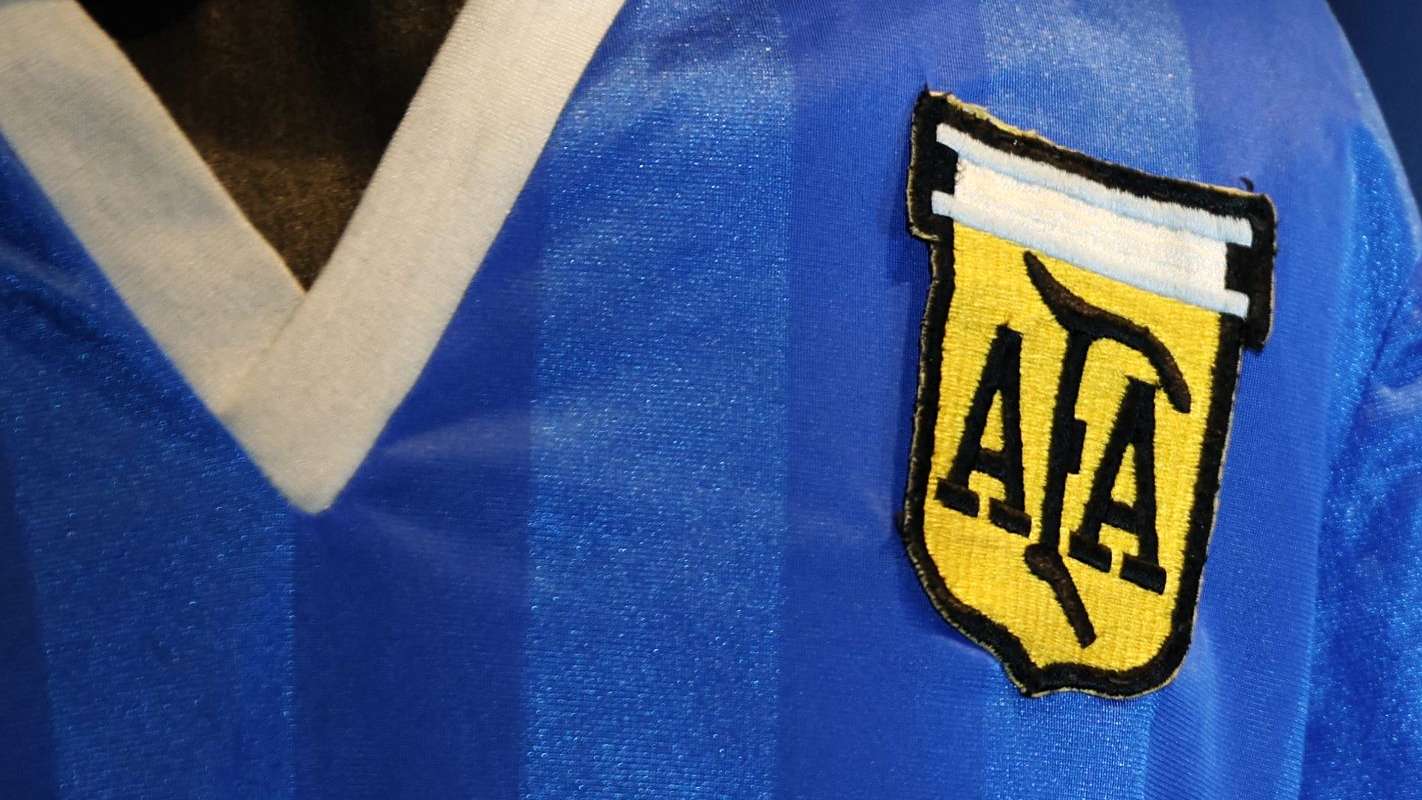
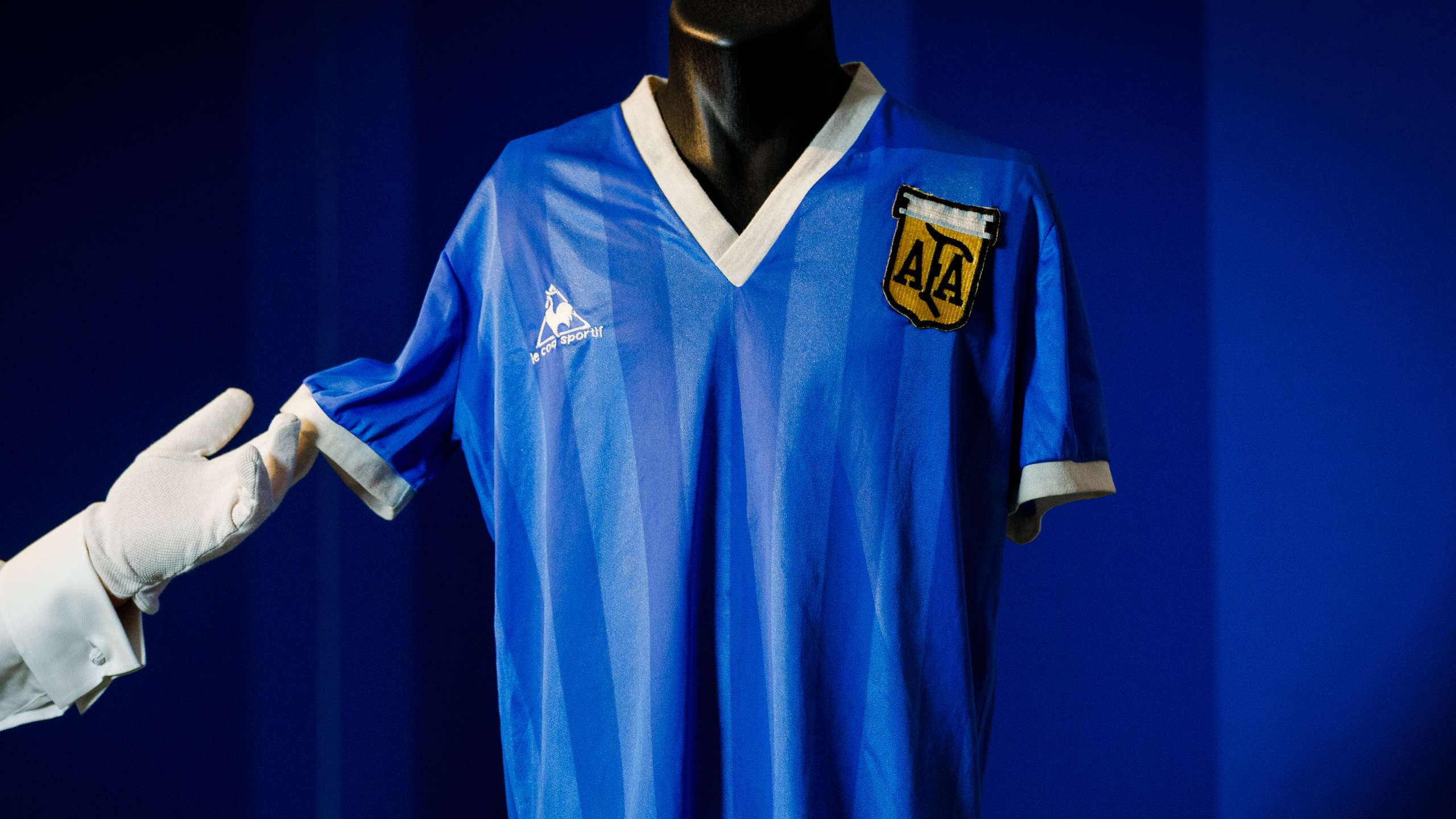
    The shirts were ideal: lightweight blue polyester with the Le Coq Sportif logo embroidered, almost identical to the official ones but much fresher. They were, literally, the perfect solution.

  • BRITAIN-FBL-WC 1986-ARG-ENG-MARADONA-SHIRT-AUCTIONAFP

    Finishing touch

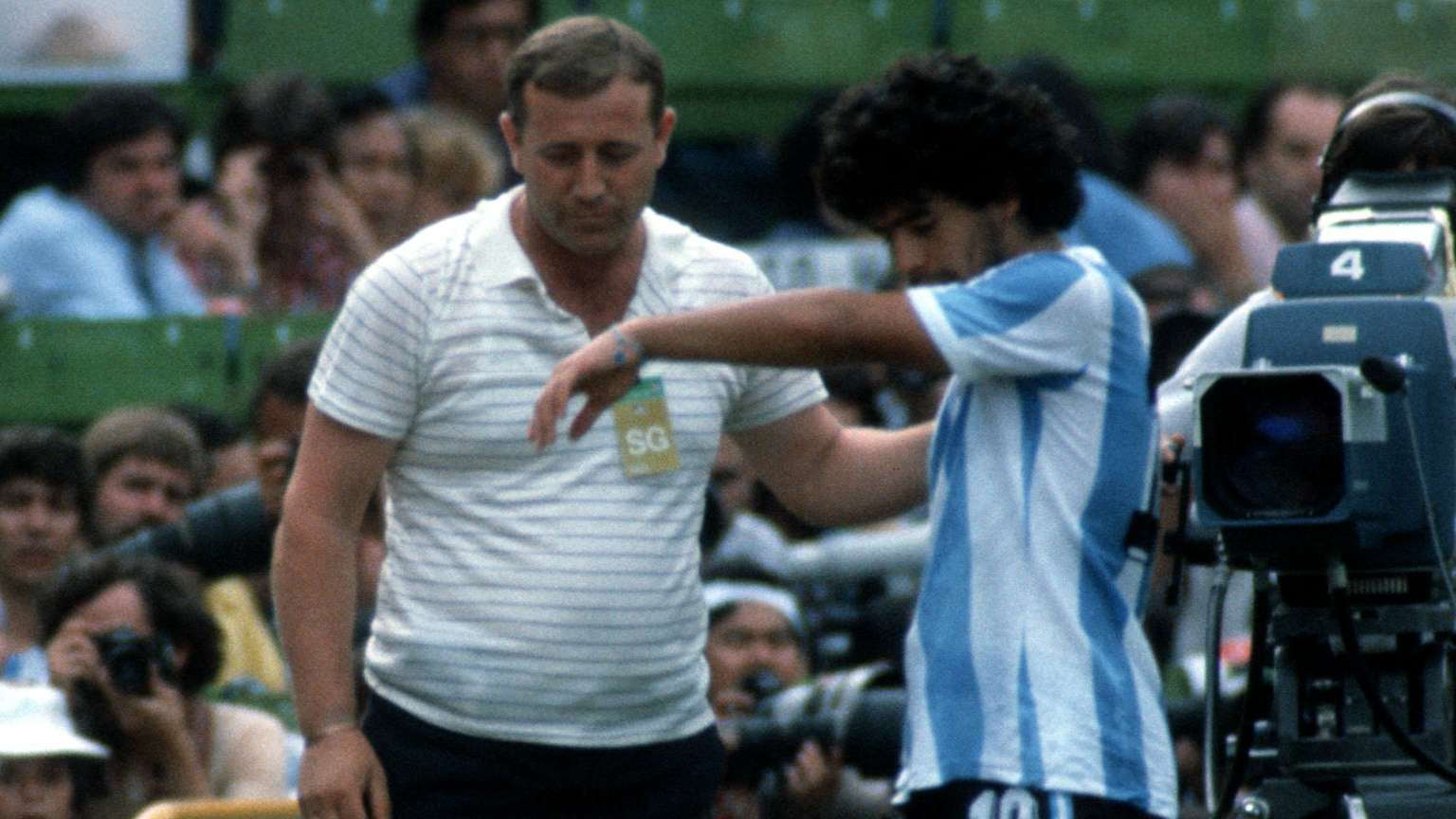
    With the jerseys back at the training base, one crucial step remained: turning them into official kit, as they required AFA badges and numbers. The process was almost artisanal: irons, needles, thread, cut-out fabric, all done against the clock.

    Ruben Moschella, part of the administrative staff, recounted it on AFA’s website: the image of kitmen working late into the night, sewing crests that sometimes came out crooked, misaligned numbers, visible differences between one player’s shirt and another’s.

    Jorge Valdano remembered it vividly: “A shiny blue shirt appeared, with silver numbers. Maradona said, ‘What a beautiful shirt.’ We were all surprised.”

    Some came out neat; others looked clearly improvised. But that didn’t matter. What mattered was that the team had lightweight jerseys, suitable for the midday heat, ready for the most emotionally charged match of their lives.

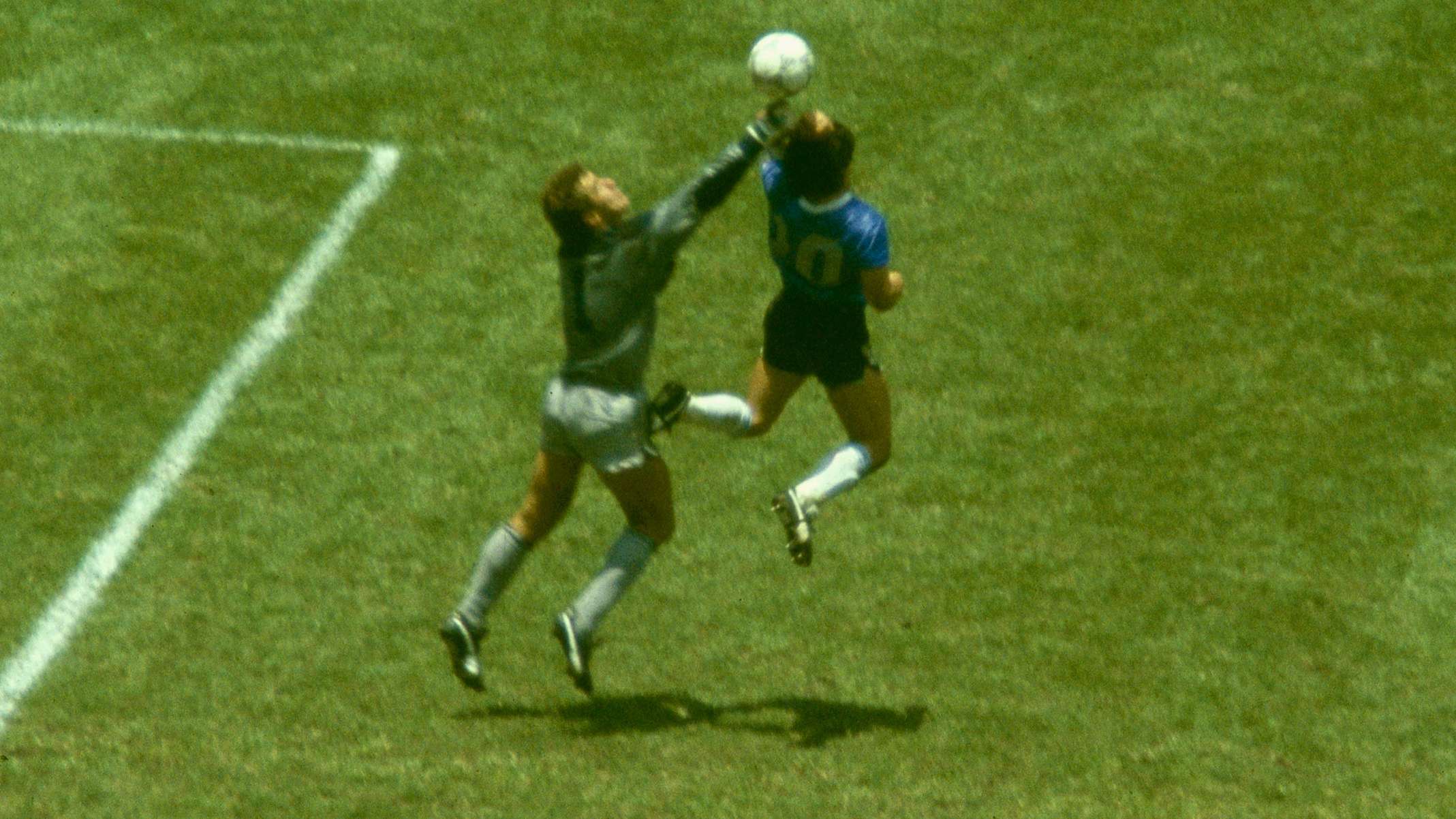
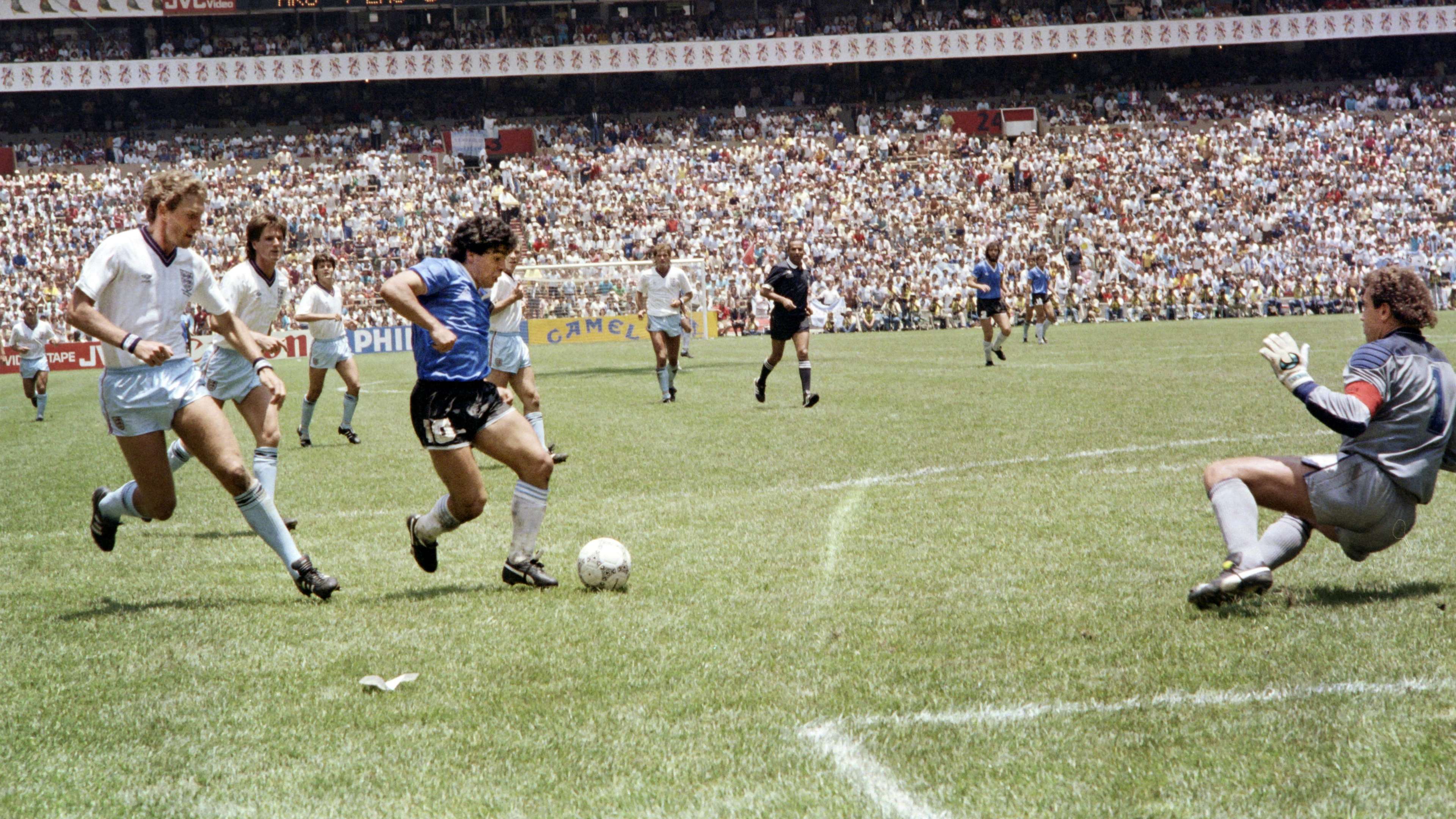
  • Diego Maradona Hand of God Goal Argentina v England 1986Hulton Archive

    The Hand of God

    The rest, as they say, is history. Wearing those improvised shirts, Argentina stepped onto the Azteca pitch and wrote one of the most memorable chapters in football history.

    In the second half, Maradona created the play that still divides opinion: The Hand of God. A leap, a sneaky tap of the hand, and the ball in Peter Shilton’s net. The English protested furiously, but Tunisian referee Ali Bennaceur validated the goal.

    The move was no accident. It was pure street cunning - a play that, beyond controversy, captured a way of understanding football: cleverness, wit, the ability to do the unexpected. The same spirit that had led Argentina to buy shirts in Tepito showed itself again on the field in the form of an immortal goal.

  • TOPSHOT-WORLD CUP-1986-ARG-ENGAFP

    The Goal of the Century

    Four minutes later, Maradona revealed the other side of his genius, taking the ball in his own half, dribbling past five opponents, and finishing coolly past Shilton. It was ‘The Goal of the Century’ - a play still studied in football academies, a moment no video can truly capture, because what happened in those seconds was also a collective emotional state.

    The entire stadium was spellbound: each touch felt like a declaration of freedom, each change of pace a challenge to destiny. Maradona wasn’t just running with the ball, he was carrying the hopes of a people who had suffered and needed a hero. That contrast - the mischievous trick and the masterpiece - embodied the DNA of Argentine football: streetwise and artistic, improvised and sublime.

    And all of it under that bright blue fabric bought in a street market. That jersey, born out of an emergency fix, ended up dressing eternity in the most beautiful goal the World Cup has ever seen. It was the moment when the humble and the grand fused forever, proof that sometimes football’s miracles are stitched together with invisible threads.

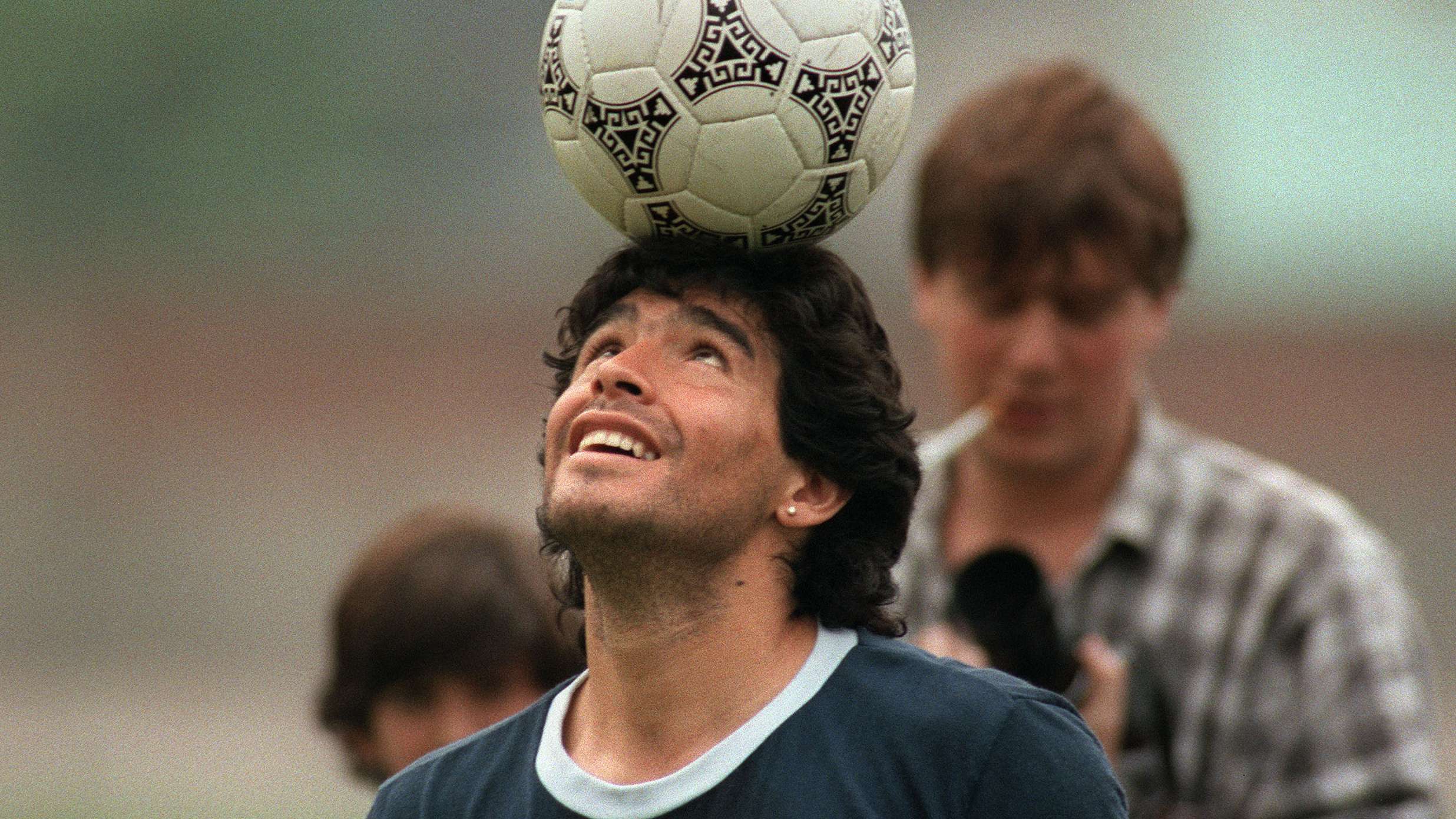
  • Argentine soccer star Diego Maradona, weAFP

    Ingenuity

    Mexico ‘86 can be understood as a World Cup won with ingenuity. Bilardo prepared every detail obsessively, from training schedules to player hydration. But there was also room for creative improvisation: the Hand of God, the Tepito jersey, Maradona’s spontaneous speeches.

    Against Belgium, Maradona repeated his magic. Against Germany in the final, Valdano and Roman Burruchaga made the Albiceleste’s dreams come true. And in all those battles, the team played with a spirit that combined tactical discipline and street cunning.

    That blend was key: Bilardo’s order kept the team afloat under pressure, and Maradona’s spark made them unstoppable when it was time to break lines. Argentina was never just strategy or just talent, it was the union of two visions that seemed incompatible but found harmony in Mexico.

  • Sotheby's Displays Maradona's Historic 1986 World Cup ShirtGetty Images Entertainment

    Legacy

    The blue Tepito jersey was never worn again. Some remain in private collections; others have disappeared. Its value is symbolic more than material. It represents the ability of a group to solve an impossible problem through sheer ingenuity.

    Over time, that shirt became legend - almost on par with Maradona’s goals. Today, any fan who sees that shiny blue jersey with silver numbers doesn’t think of a street counterfeit, but of a symbol of resilience and cleverness. It’s a reminder that glory is often woven from improvisation, from small decisions that turn out to be decisive.

    In Argentina’s collective imagination, that shirt is no longer ‘fake’, it’s authentic because it was on the field in one of football’s most significant matches. A pirated shirt that became a cultural treasure.

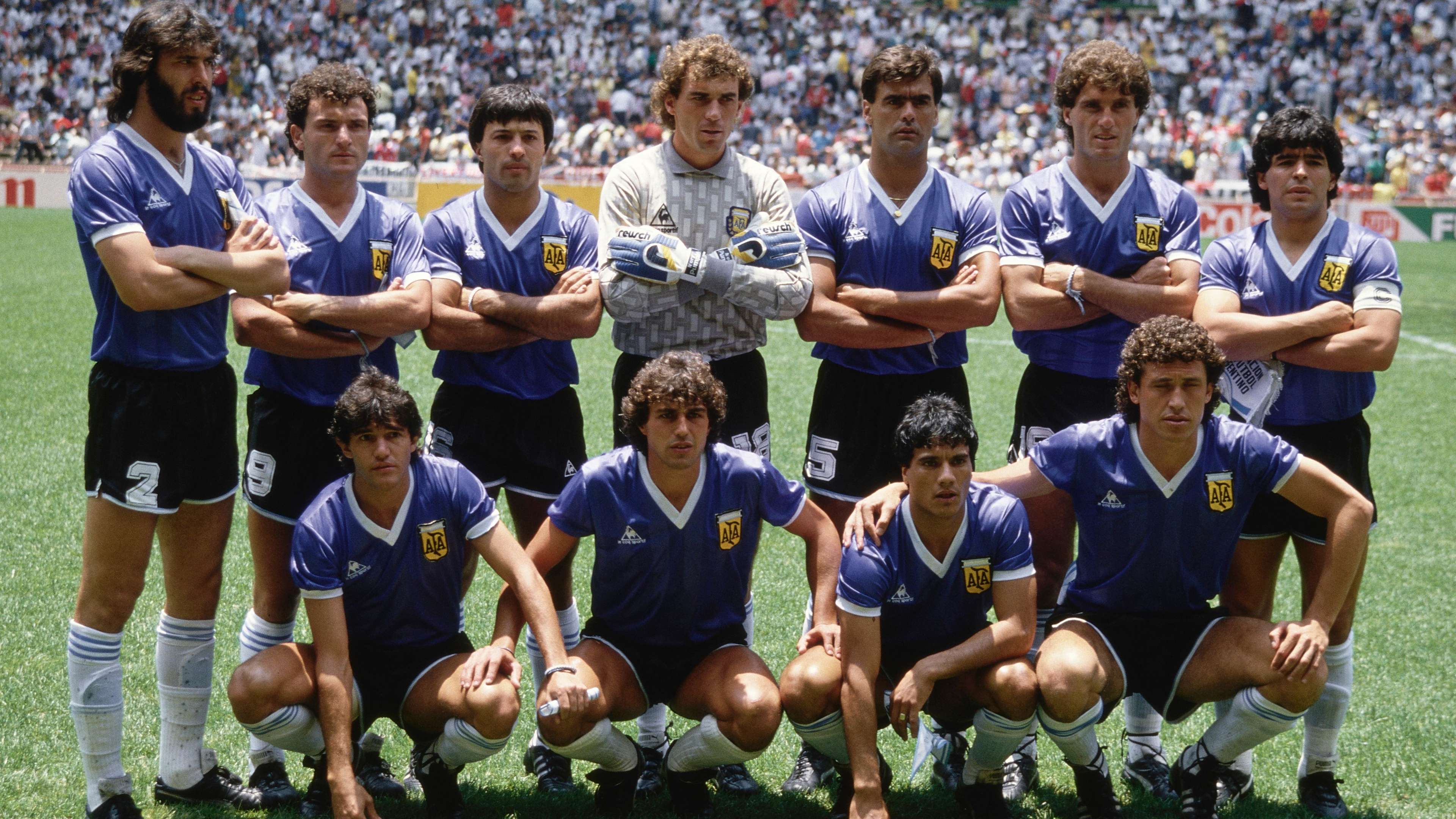
  • Argentina Team v England 1986 FIFA World Cup Quarter FinalHulton Archive

    From the barrio to football's Olympus

    Every time Maradona’s goals against England are remembered, one should also recall those kitmen sewing jerseys in the team hotel. Because without those light shirts, the heat might have taken its toll.

    Mexico ‘86 was great because it had Maradona at his peak, but also because it had small stories of popular ingenuity woven into the larger tale. The tough barrio of Tepito became forever linked to football’s Olympus.

    That, perhaps, is the greatest legacy of that episode: to show that football isn’t played only on the pitch. It’s also played in the hotel corridors, in a street market, in the hands of a kitman stitching a crest against time. At Mexico ‘86, glory was a collective tapestry - each stitch, literal or metaphorical, added to the epic.

    And so, between trickery and genius, between the fake and the eternal, Argentina wrote one of football’s most glorious chapters - a story where a working-class neighbourhood in Mexico City became entwined with Maradona’s legend and the memory of an entire nation.