+18 | Commercial Content | T&C's Apply | Play Responsibly | Publishing Principles
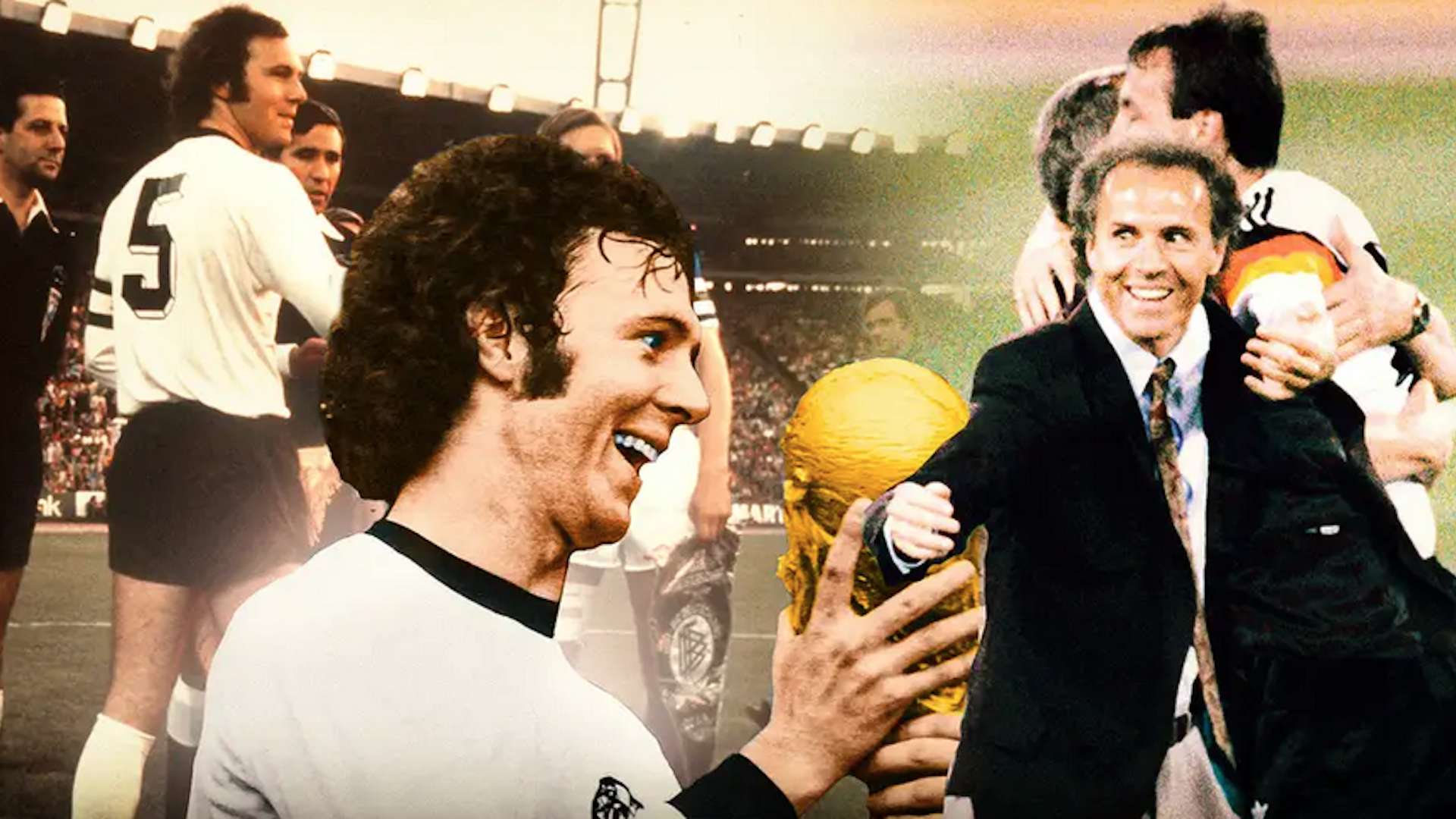
GFX Franz Beckenbauer

Franz Beckenbauer: 'Der Kaiser' was the Germany legend who made defending cool

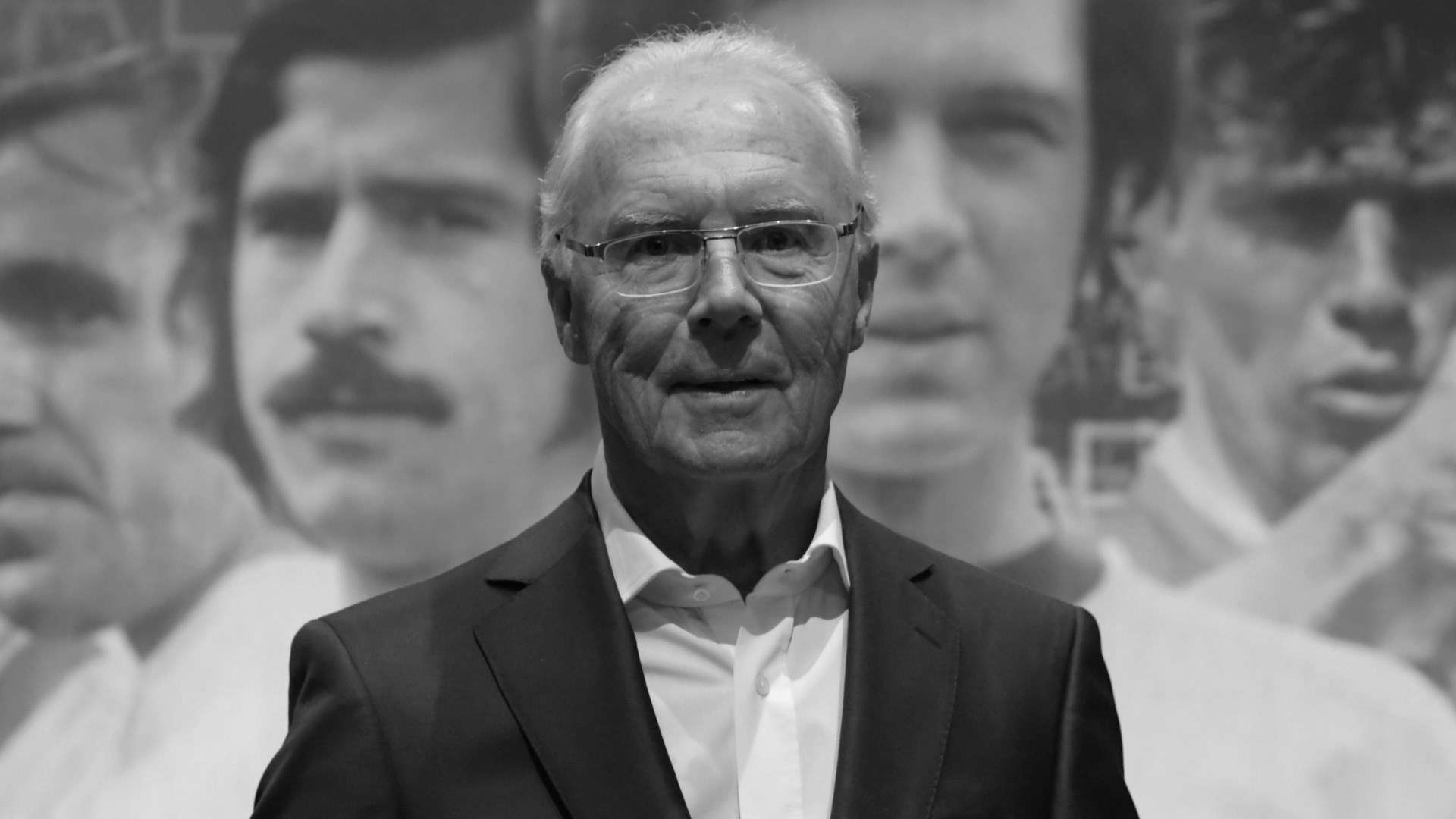
Germany is in mourning. "Our Kaiser is dead," read the front page of Tuesday's Bild. But Franz Beckenbauer's passing at the age of 78 is a loss felt all around the world. He is one of the faces of football, "the greatest defender ever" in the words of Italy's Gazzetta dello Sport, a legendary libero who redefined the role.

As a sweeper, Beckenbauer didn't just clean up after others, he served as a deep-lying play-maker, while regularly stepping into his former position in midfield to join attacks. Essentially, he made being a defender cool.

As Marca said, "We all wanted to be Beckenbaeur!" And that's no exaggeration. For football fans of all ages, Beckenbauer wasn't just an example to follow, he was a mythical reference point, the seemingly unattainable standard of excellence by which all others are measured.

  • Franz BeckenbauerGetty Images

    'Defined an era'

    "As a kid, he was the first foreign footballer I'd ever heard of," former Liverpool and England centre-back Jamie Carragher admitted, "that's because if any player tried to play out from the back, whether at pro or amateur level, I would hear 'He thinks he's Beckenbauer!'"

    Nobody, though, has ever played the role with quite the same efficacy or elegance. Even the great Franco Baresi felt uncomfortable with the constant comparisons to Beckenbauer.

    "He truly was an emperor for the way that he interpreted his role," the Italian icon said. "I admired him so much. He defined an era and for me he was an enormous inspiration."

  • Advertisement
  • 'Our world isn't the same as it once was'

    For Bayern Munich, he was everything, effectively the foundation on which the club's greatness was constructed.

    "Suddenly, our world isn't the same as it once was - darker, quieter and worse off," the Bavarians stated. "The record champions are mourning the loss of Franz Beckenbauer, the incomparable 'Kaiser' without whom FC Bayern would never have become the club it is today."

    And they owe it all to the most infamous and consequential slap in football history.

  • Beckenbauer, BayernDivulgação/Bayern

    'I'm not going to 1860!'

    Beckenbauer grew up in Giesing, an 1860 Munich stronghold. It was his dream to play for his local team and he had the talent, too. Beckenbauer was blessed with a turn of speed he said he owed to the streets: "I knew I had to run quickly when there was trouble. My pace was my gift to keep me out of trouble."

    A move to 1860 appeared inevitable, but when he was still only 13, he played against the team he supported and "their centre-back wasn't very friendly to me".

    "During the course of the game," Beckenbauer later explained to Bayern's official website, "he gave me a slap, and with that, my mind was made up: I'm not going to 1860! In retrospect, I don't think it was a bad decision..."

    Indeed, Beckenbauer's decision to join Bayern instead is one of the game's great sliding doors moments, as it quickly became clear that this was a prodigious talent, one of the first total footballers.

  • The one thing standing in England's way

    He may have started out as a forward, but by the 1966 World Cup, the 20-year-old Beckenbauer had already established himself as one of the most complete - and most feared - midfielders on the planet.

    He scored four times at the tournament, including one goal apiece in the quarters and semis, and England manager Alf Ramsey was terrified by the threat posed by Germany's all-action No.4.

    Sir Bobby Charlton later revealed, "Alf told me that there was only one person that could stop us winning the World Cup - Beckenbauer." As a result, the Manchester United star was tasked with man-marking a youngster in the biggest game of his life.

    Funnily enough, Beckenbauer was given the same job by Helmut Schon, resulting in the pair cancelling one another out as England triumphed 4-2 at Wembley.

  • FRANZ BECKENBAUERImago Images

    'What a lesson he gave everyone'

    Germany gained revenge for that controversial defeat four years later at the Mexico World Cup, when Ramsey's shock decision to remove Charlton from the fray freed up Beckenbauer to spark a famous, come-from-behind win over their great rivals with a 68th-minute goal.

    What followed in the last four was even more epic, though. Beckenbauer suffered a dislocated shoulder 70 minutes into 'The Match of the Century' against Italy, but with Germany having already used both of their allotted substitutions, he refused to leave his team with just 10 men on the pitch. Consequently, Beckenabauer spraying passes around Azteca with his arm in a sling became one of the enduring images of the greatest World Cup in history.

    He may have ended up on the losing side that day, but match-winner Gianni Rivera was left in awe of Beckenbauer, telling the Gazzetta, "What a lesson he gave everyone: taking such a heavy blow but playing on (for 50 minutes). It was heroic."

  • Beckenbauer BWGetty

    From 'Kaiser' to 'Lichtgestalt'

    It certainly solidified the idea that Beckenbauer wasn't just a great talent, but a great character, a natural-born leader. There had been a time when he was considered a cocky upstart, partly because of the way in which he played the game.

    With his head-up style, surveying and indeed controlling all before him, there was a swagger about Beckenbauer that led to him being labelled 'Kaiser Franz' because of the way in which he allegedly responded to hostility and roughhouse treatment with displays of showboating.

    As time went on, though, not even 'Emperor' seemed a sufficiently grandiose nickname for Beckenbauer. It seemed too earthly a title for a two-time Ballon d'Or winner blessed with such grace and good fortune.

    Beckenbauer led West Germany to World Cup glory on home soil in 1974, in between lifting three consecutive European Cups with Bayern Munich, and by the time he won the World Cup as a manager in 1990, he had become known as 'Lichtgestalt', the celestial shining light of German football.

    There were dark times, too, of course. He was caught up in the corruption scandals that engulfed FIFA, while his private life became a topic of public debate on several occasions.

    But Beckenbauer will forever be remembered as one of the most influential figures in football history. There was a reason why he, Pele, Johan Cruyff and George Best were paid enormous sums of money to play in the United States at the tail end of their careers. They were football's first true superstars, trailblazers who didn't just play the game, but changed it.

    And when it comes to attacking idols, everyone will have their favourite out of Pele, Cruyff and Best, but Beckenbauer was - and forever will be - the defender we all wanted to be.