+18 | Commercial Content | T&C's Apply | Play Responsibly | Publishing Principles
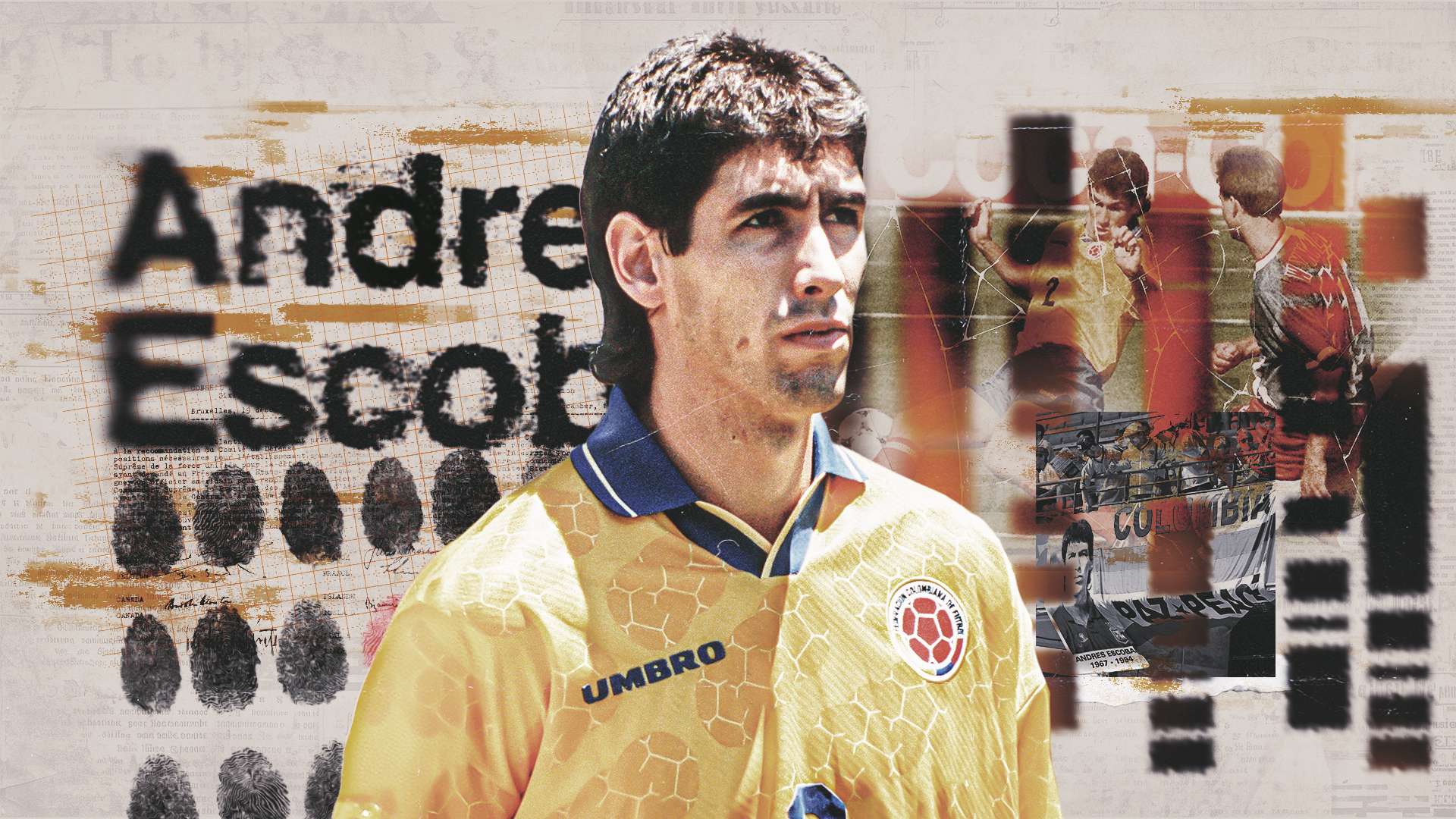
Andres Escobar Wildest Stories GFXGOAL

Soccer's wildest stories: Andres Escobar and the most tragic own goal in World Cup history

The story of Andres Escobar is perhaps one of the most tragic that soccer has ever witnessed. A star defender for the Colombia national team and Medellin giants Atletico Nacional, he was just 27 years old when he was gunned down in his homeland after the 1994 World Cup in the United States.

Escobar was blamed for his country's group-stage elimination. It was his own goal in the first half of their 2-1 loss to the U.S. in their second game that gave the South Americans an insurmountable challenge to stay in the competition, despite beating Switzerland in their third match.

Less than a week after their exit, Escobar was killed outside of a nightclub in Medellin. The man who was subsequently arrested for and admitted to the murder was Humberto Castro Munoz, a bodyguard and driver for two notorious drug traffickers in the large Colombian city in what was yet another collision between Colombian football and the cocaine business. The two worlds had essentially merged together as drug cartels became heavily involved, and the sport was ravaged with corruption. Even Atletico Nacional were at one point funded by world-famous drug baron Pablo Escobar.

While the mix between narcotraffickers and football had resulted in many deaths, the assassination of Escobar was one that shook the world, and it is still not truly known why, exactly, the centerback was murdered.
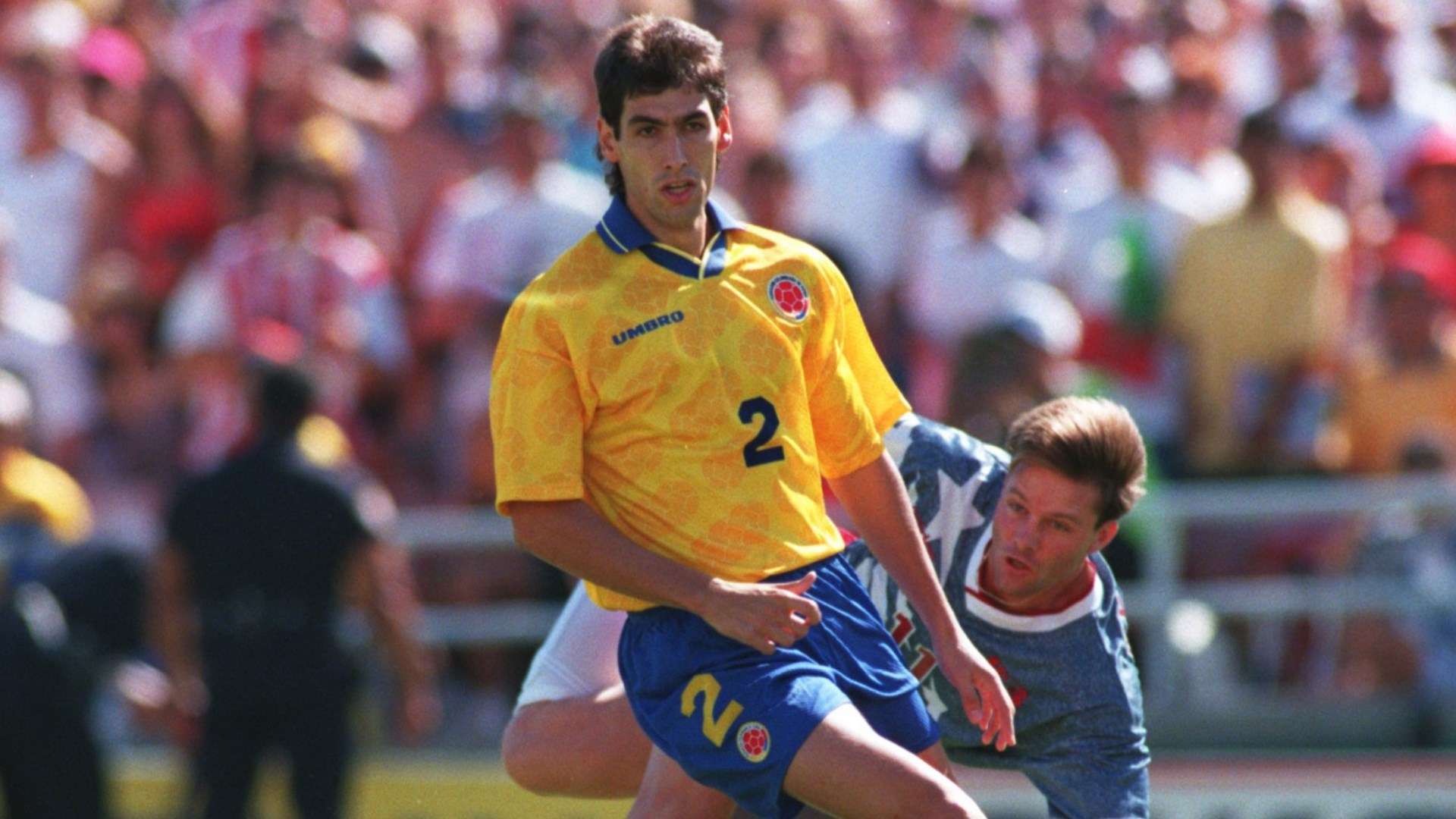
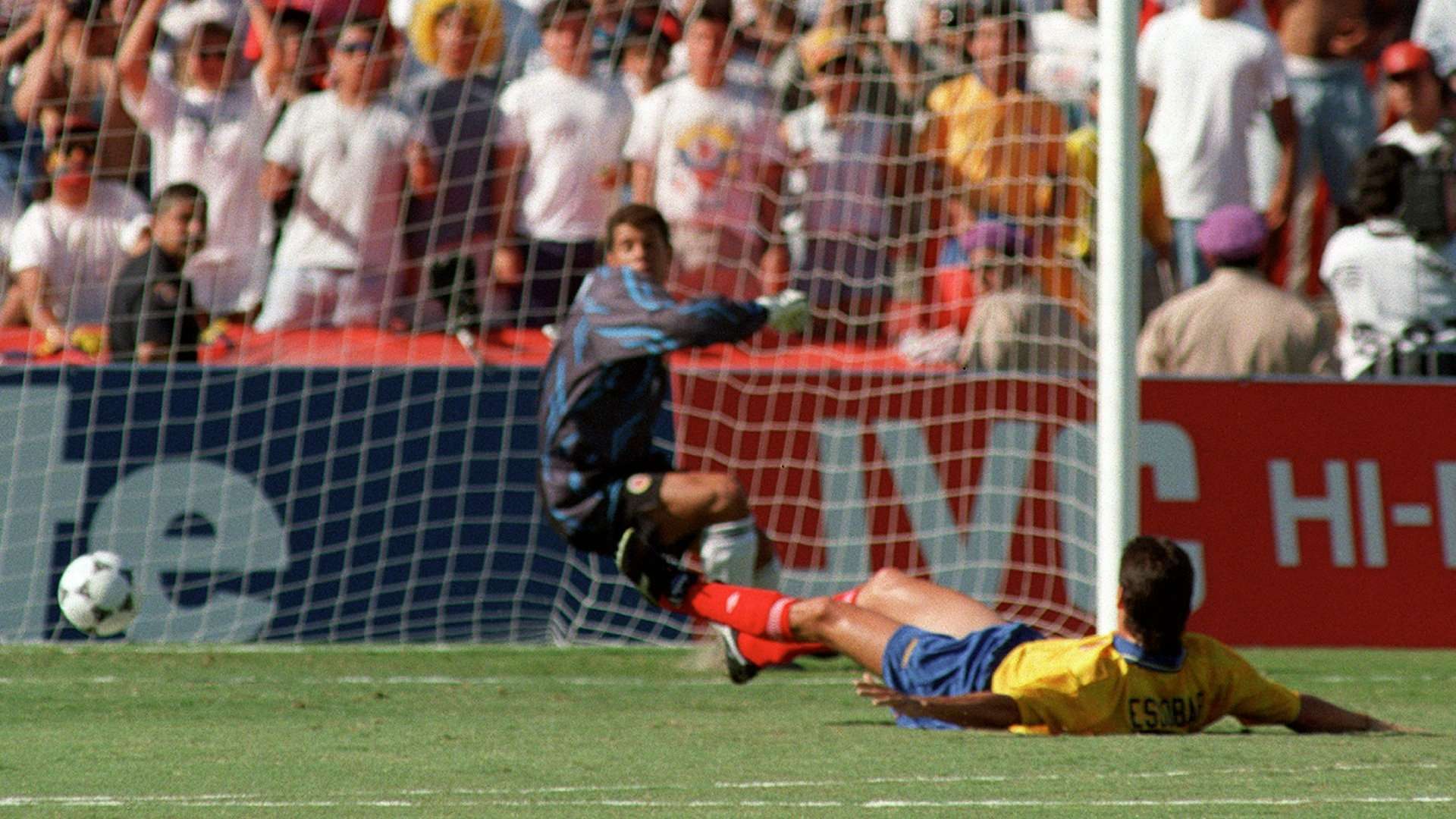
  • Andres Escobar Colombia 1994Getty Images

    Making Medellin proud

    Escobar was born and raised in a middle-class family in Medellin. He stood out as a talented player in school soccer teams and eventually started to prioritise the sport over his studies, following his older brother, Santiago, into the professional game. Initially playing as a defensive midfielder, he was convinced by famous local coach Carlos 'Piscis' Restrepo to instead become a central defender so as to make better use of his height, strength in the air and confidence on the ball.

    Before turning 18, Escobar signed for Atletico Nacional, where his brother already played. It took some time for the youngster to make his debut, though, and even longer to secure a regular place in the starting lineup. He eventually had a bit of luck, however, as the regular left-sided centerback, Francisco Maturana, got into an argument with the team's assistant manager and was soon banished. Shortly after turning 20 years old, Escobar was trusted to replace him permanently.

    He then had even more luck, as Atletico coach Maturana also happened to be the national-team manager and, in March 1988, gave Escobar his senior debut for Colombia in a 3-0 win against Canada. Maturana immediately made the defender a regular starter alongside legends like Rene Higuita and Carlos Valderrama, and it didn't take long for Escobar to become a household name in the South American nation.

  • Advertisement
  • Hero for club and country

    Escobar's lack of experience and his youth sparked some concerns amid his rise to mainstay in the Colombia squad, despite his capable performances against Canada, the U.S. and Scotland. It was in a game against England that he truly announced himself, though, as he got on the end of Alexis Garcia's corner kick to head in a goal, securing a 1-1 draw against the likes of Bryan Robson, Gary Lineker and John Barnes. "I went to look for the header because I had confidence in myself and because we were at a disadvantage," he said.

    The following year was a monumental one for Atletico Nacional and Escobar. At the time, Colombian drug lords were akin to today's American billionaire and Middle East royal families as they took control of clubs and ran them as their own playthings. Pablo Escobar's revolutionising of the Medellin team was well underway, while Cali cartel leader Miguel Rodriguez Orejuela oversaw America de Cali.

    They invested in training facilities and in new players, usually using financial tricks to inflate costs so that they could launder their money. Corruption soon plagued the game, too, culminating in the murder of an official after he refereed a match between teams run by Orejuela and Pablo Escobar.

    Atletico Nacional reaped the benefits on the field, though, and in 1989, Andres Escobar helped lead them to their first ever Copa Libertadores success. The centerback played in every single game and even scored the late winner as they beat Deportivo Quito 2-1. The Colombian team beat the likes of Racing Club and Millonarios on their way to the final, where they overcame a 2-0 deficit from the first leg against Olimpia to see off the Paraguayan team on penalties. No Colombian team had ever won the competition before.

    They also went on to beat Mexican side UNAM 6-1 on aggregate in the Copa Interamericana - a two-legged tie between the Copa Libertadores and CONCACAF Champions' Cup winners - and were runners up in the Intercontinental Cup, losing 1-0 to an AC Milan team consisting of Franco Baresi, Paolo Maldini, Frank Rijkaard, Carlo Ancelotti and Marco van Basten.

    Atletico were making a name for themselves, and as a trusted centerback at the age of 22, Escobar's stock was rising, too.

  • Andres Escobar 1994 World Cup ColombiaGetty

    World Cup woe

    After his 1989 success, Escobar was lured to Europe, joining Swiss side Young Boys. Despite convincing his brother to join him, his venture in Bern did not go well as he failed to adapt.

    "We had a transparent relationship and that's why when he told me to stop playing in Colombia to accompany him to Switzerland, where he signed for Young Boys, I didn't hesitate," Santiago Escobar recalled. "We lived there for six months, during which we shared and learned together. That marked me and today I remember it with a mixture of joy and sadness."

    After a few months, Escobar returned to his homeland, where he won the Colombian top-flight in 1991 and was ever-present as the national team competed in the Copa America that year.

    The defender suffered a horrible knee injury, however, and missed the 1993 Copa America - where Colombia finished third - as well as the entire 1994 World Cup qualifying campaign, including a famous 5-0 victory against Argentina. He was, however, back for the start of 1994 and was immediately returned to the lineup as Colombia went on a seven-game unbeaten run in the build-up to the summer tournament in the U.S.

    Escobar's first World Cup experience had gone well - he played every game as Colombia made it to the last 16 in Italy in 1990 - and there was plenty of excitement around La Tricolor's camp. Those hopes took a bit of a blow, however, when they lost 3-1 to Romania in their opening game, but the team could recover given U.S. men's national team drew with Switzerland. A win against the tournament hosts and a strong showing against the Swiss would still see Colombia through.

    Catastrophe struck in the first half against the Stars and Stripes, though, when John Harkes' cross flew into the Colombia box. Escobar stretched out a leg to block it, but it trickled into the goal and the South Americans were trailing. Early in the second half, Earnie Stewart doubled the USMNT's lead and it was all over.

    Colombia never truly gave up and managed a stoppage-time consolation goal through Adolfo Valencia, and that spirit was on show again when they met Switzerland and managed a 2-0 win, but the damage had been done and they were soon on their way home.

  • Senseless slaying

    "Life does not end here," Escobar told reporters hours after the defeat to the U.S. He wrote an article for El Pais under the same title, writing: "We must be gallant in victory, but much more so in defeat... But please, let the respect remain... A big hug for everyone and to tell them that it was a phenomenal, rare opportunity and experience that I had never felt in my life. See you soon, because life doesn't end here."

    Escobar had a horrid time after the own goal, naturally. He had trouble sleeping and could have gone to meet his brother's family in Miami for a holiday to recover from the trauma, or accepted an offer to stay on as part of a Colombian television station's coverage of the tournament. Instead, he opted to go home immediately, telling his sister, Maria Ester: "I want to go to Colombia and show my face."

    Friends said he obviously wanted to be alone, but also felt the need to talk about the incident and be open with the Tricolor fans. "When Andres returned from the United States, he was sad, as expected, but also optimistic because he knew that he had not committed any crime by scoring the own goal," childhood friend Juan Jairo Galeano said. "In fact, he was calm and looked strong, because he was a person of great character."

    Just days after his return to Medellin, Escobar visited a club with Galeano and other friends. Sitting at another table were drug traffickers David and Santiago Gallon.

    Jesus Albeiro Yepes, the prosecutor in charge of the case, put it: "Andres was with Juan Jairo Galeano and two friends at the nightclub. From the table of Pedro and Santiago Gallon, who were with a group of friends, they began to shout: 'Own goal, Andres, own goal.' They provoked him again and again. He asked for respect and walked away. Andres was uncomfortable all night. When he left the place, already in his car, he realised that those who bothered him were in the parking lot and entered there."

    Escobar is said to have gone to his car when the three men confronted him. He said the own goal had been an innocent mistake, but one of the men pulled out a gun and fired six times. "Goal!" it was claimed he shouted with every blast. The three men fled and Escobar bled out before dying in hospital less than an hour later.

  • The aftermath

    Yepes remembers: "I was in a taxi at dawn when the news hit me. Without preamble, the announcer declared [on the radio]: 'Andres Escobar has just been killed'. The taxi driver stopped the car, put his hands on his head, and remained silent for a minute. until he screamed: 'You bitch!'"

    "I just felt complete sadness. Your first thoughts go out to his family," Harkes, the man whose cross Escobar knocked into his own goal and who was preparing for his team's knockout tie against Brazil when he heard the news, wrote years later. "The day itself became a blur, maybe it’s because you try to push it away, you don’t want to hear about it. And in the hotel that night, you try to just think about the game. But you can’t. You try to find answers, but you can’t."

    It did not take long for the police to arrest a suspect. Humberto Castro Munoz admitted to the slaying the following day and was soon sentenced the 43 years in prison, though he was released 10 years after his conviction.

    "Frankly, I believe that there is no justice in Colombia," Darlo Escobar, Andres' father, said. "Colombian justice for me is a deception, because it deceives the people and the family by telling them that he was sentenced to 43 years in prison, and now this murderer is released."

    There has been plenty of speculation about why Escobar was murdered. Some feel he was simply in the wrong place at the wrong time, while prosecutors believes that Castro Munoz's employers, the Gallon brothers, ordered a hit on the star because they lost a lot of money gambling on the match against the United States. The pair were charged with covering up the crime, even though Yepes wanted to charge them as accomplices, and they were released after a matter of months. Escobar's girlfriend, Pamela Cascardo, believes the Gallons bribed government officials to get a shorter sentence for the trigger man.

    Even the other Escobar, Pablo, still lingers over the death. The drug baron died in December the previous year and many have claimed that, had he still been alive, nobody would have had the courage to assassinate the star player of his team.

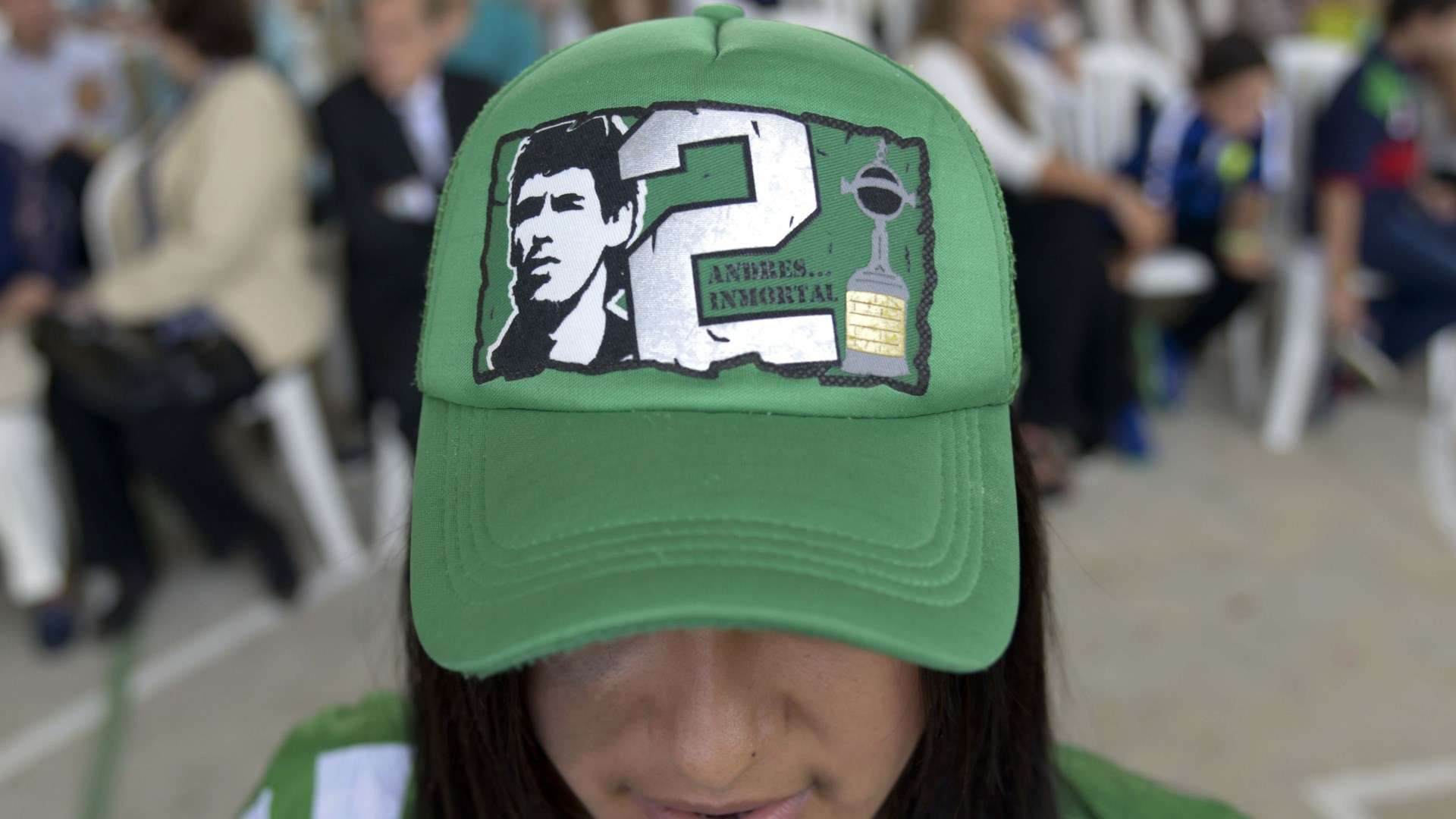
  • Andres Escobar hat Getty Images

    Loss of soccer's 'Gentleman'

    At 27 years old, Andres Escobar had his whole life and career ahead of him. There was talk of him joining Milan as Franco Baresi's successor, while he was adored as one of his country's finest players and described as having "the elegance of [Franz] Beckenbauer".

    He was loved not just for his footballing ability, though. Team-mates, coaches and those close to him have all spoken of how fair, calm and gentle the defender was. He had even been nicknamed 'The Gentleman'.

    "I had a very close friendship with him. Brother, accomplice, partner, and all the adjectives that can define a great relationship," Santiago, his brother, said 25 years later. "We lived our childhood together, our football careers were very similar, I loved him and I still do."

    Escobar was planning on marrying his girlfriend later in 1994. "I loved Andres," she said. "He was going to be my husband, the father of my children, but it didn't happen... I learned from this sad and hard experience that I had to start from scratch."

    In another interview, she added: "Every day I feel it and remember everything he taught me... He taught me that one should not give what is left over, but rather what comes from the heart, something that is valued and not easy to give away. Andres did apply well that, saying that your left hand does not know what your right hand is doing."

    His childhood friend, Juan Jairo Galeano, who was with him the night of his murder, opened up on their friendship, saying: "I met Andres when I was 16 years old and he was 12, and from that first meeting I knew he had something special. He was respectful, sincere and generous. He liked, for example, to do charity work in parishes without anyone noticing."

    Colombia team-mate Luis Fernando 'Chonto' Herrera, meanwhile, said: "He was a very serious person, but he was not shy at all. Behind his restraint there was a happy, playful person who liked to tease. He was also an extraordinary centerback, the best in the history of Colombian football. A few days after arriving in Medellin, Andres invited me out and I told him that he wanted to rest at my house. That was the last time we spoke. I found out what happened to him from a colleague. I went into an incredible nervous breakdown. I did not understand. In football there has to be tolerance because mistakes are always made. I still haven't accepted it."

    Almost 30 years have come and gone since one of Colombia's finest defenders was brutally assassinated. Just like Galeano, the footballing world has a hard time understanding such a mindless murder could happen to such a beloved and admirable figure.