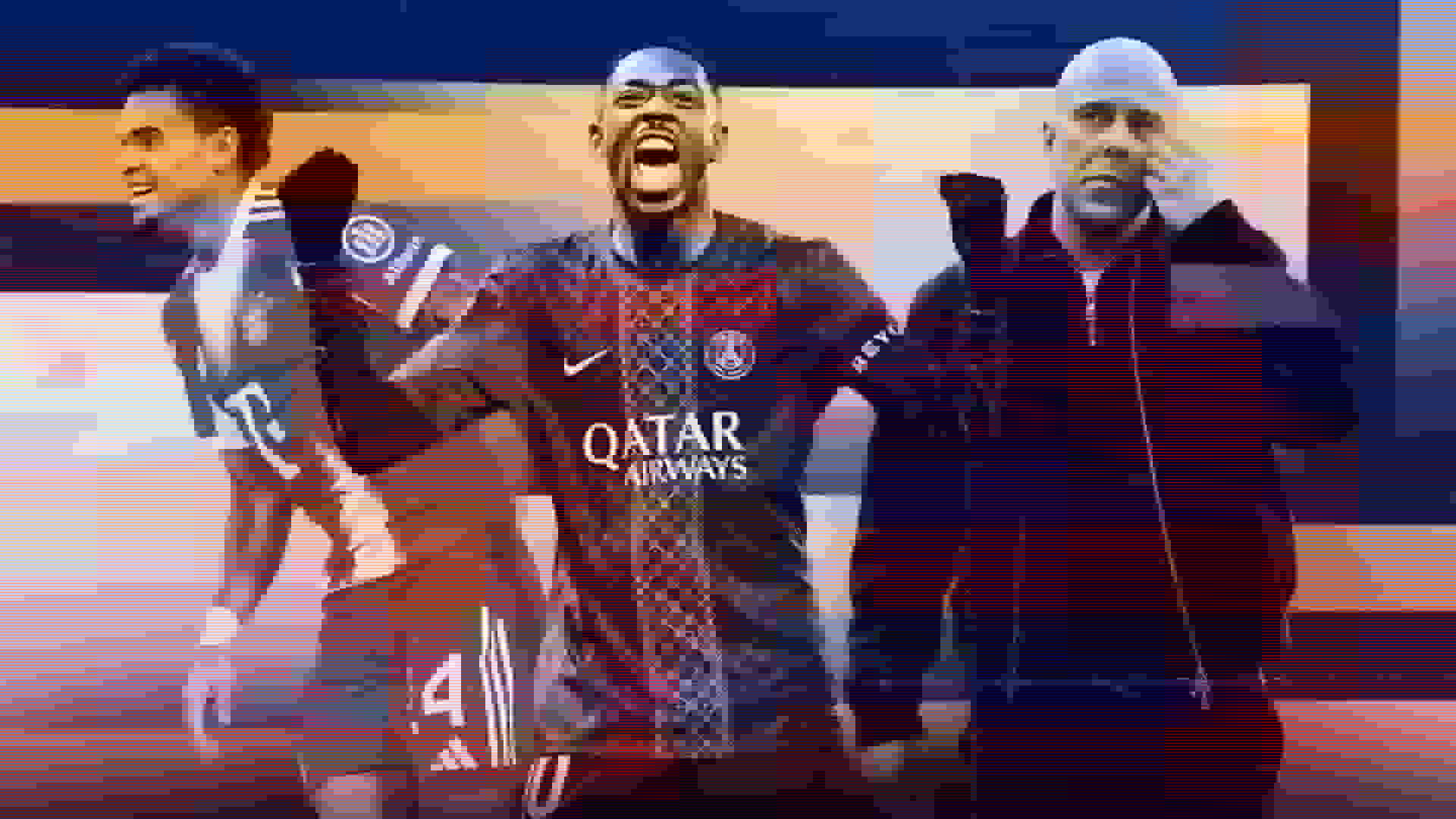

For the last six years, legendary magazine France Football and world governing body FIFA have worked together to name the player recognised as the planet's best.
From 2016 onwards, however, there will be no collaboration, as the former partners go their separate ways.
But what caused this partnership to fail? How did it ever come about in the first place? Read on to find out all the vital information regarding the changes to the prestigious award.
WHY DID FIFA AND FF JOIN FORCES?

Active since 1956, when the first winner was England great Sir Stanley Matthews (above), the Ballon d'Or - or, as it was often referred to previously before being opened up, the European Footballer of the Year - award has always been a great honour for any winner.
'Pogba won't win the Ballon d'Or'
That change to include any player from world football, however, meant an overlap with the equally prestigious FIFA World Player of the Year award was inevitable. From 2005 onwards both prizes went to the same player, a process accelerated by France Football's decision in 2007 to change voting rules, inviting players and coaches to cast their ballots along with a select group of journalists.
After five years of giving dual awards, FIFA and FF finally took the plunge and merged their awards in 2010, to create the FIFA Ballon d'Or prize.
WHAT WAS THE RESULT OF THE MERGER?

It is always dangerous to confuse correlation with causation, but one thing at least can be affirmed with absolute certainty: since its inception, the FIFA Ballon d'Or award was dominated by just two players.
The award was transformed into the private property of Lionel Messi and Cristiano Ronaldo, who picked up three and two of the five editions respectively. Most years those decisions were inarguable, but the choice of Messi in 2010 over World Cup winners Xavi and Andres Iniesta for one cast doubt on the objectivity of the award.
WHAT CHANGES NOW?

The deal finally came to an end in September 2016, when FIFA pulled the plug on their association with an event that had become a global spectacle under their auspices. While the decision is still fresh, the consequences will be felt with immediate effect.
France Football reacted to the news by announcing a raft of changes to their Ballon d'Or format, the most important of which concerns the voters. No longer will players receive backing from their team-mates and coaches; from 2016 onwards, only journalists will choose the winner, a return to the pre-2007 regulations.
The shortlist for the award has also been expanded from 24 to 30, and in a break with the tradition set during the FIFA-backed competition the top three players will no longer be announced in advance. There is also an alteration to the date of the ceremony, which has moved back to its former home in December instead of the New Year.
'Bale will win Ballon d'Or one day'
It is in fact FIFA's new competition which will most resemble its predecessor. The Best FIFA Football Awards will be handed out in January, and were voted on in 2016 by journalists, coaches, players and the general public, with each group receiving 25 percent of the vote. Antoine Griezmann, Cristiano Ronaldo and Lionel Messi have been confirmed as the top three, and the winner will be revealed on January 9 in Zurich.
As to the previous titles, both FIFA and France Football have affirmed that their historic records will take into account all five FIFA Ballon d'Or awards awarded as a continuation of their own prizes.