+18 | Play Responsibly | T&C's Apply | Commercial Content | Publishing Principles
Gold Cup Fans 2025Getty Images

Where are all the fans? Tarnished Gold Cup fights for relevance, despite compelling play, as CONCACAF tournament goes head-to-head with Club World Cup in U.S. this summer

Jeremy Antonisse took his time. After all, he had plenty of it. The Curacao winger had made a burst forward in 94th minute, his side trailing 1-0 to Canada. And after an incisive feed into his path, the PSV winger had the space to consider the angles, ponder the distance between him and the goal, take an extra touch, and slot home past a helpless goalkeeper.

He turned away in celebration, but as he looked towards the fans, his teammates mobbing him, he peered into what was a largely empty stadium, Curacao supporters dotted in the seats throughout Shell Energy Stadium, home of Houston Dynamo. Part of that, of course, was due to the fact that some of the loyal support had flooded out of the gates, assuming there was no way that the team could piece together a miraculous 1-1 draw.

But it spoke to a broader issue. This was one of the biggest games in the nation's history, the chance to pip a CONCACAF rising power. And the game didn't come close to selling out.

Such has been the story of the 2025 Gold Cup. It has offered plenty of quality, countless memorable moments, and a reinforcement of the jeopardy that the federation can bring. But with seemingly declining interest in the tournament itself, widely vacant stadiums, and the madness of the football calendar snatching some of its best talent away, there is a sense that even a good competition won't quite be enough.

The tournament is at a crossroads like never before. And no one quite has a solution.
  • Landon Donovan Gold Cup 2002Getty

    What the Gold Cup should be

    As a quick refresher. The Gold Cup is a competition played by (almost) every team in CONCACAF every other year - plus one invited guest. Qatar were in it for a couple of tournaments in a row. Saudi Arabia are involved this time. It was founded in 1991, and it was pretty much the only measuring stick for CONCACAF sides outside of the World Cup.

    UEFA had the Euros. CONMEBOL had the Copa America. CAF had the African Cup of Nations. This was CONCACAF's response. The Confederations Cup rather muddled things for a while, but that brought in outside teams that treated it with varying degrees of seriousness. The Gold Cup was, well, the Gold standard.

    The key word there is was. In theory, the Gold Cup was North and Central America's equivalent to the major tournaments held by other federations. It didn't matter that in the early days Mexico were by some distance the best side with the most complete history. This was the way to measure up.

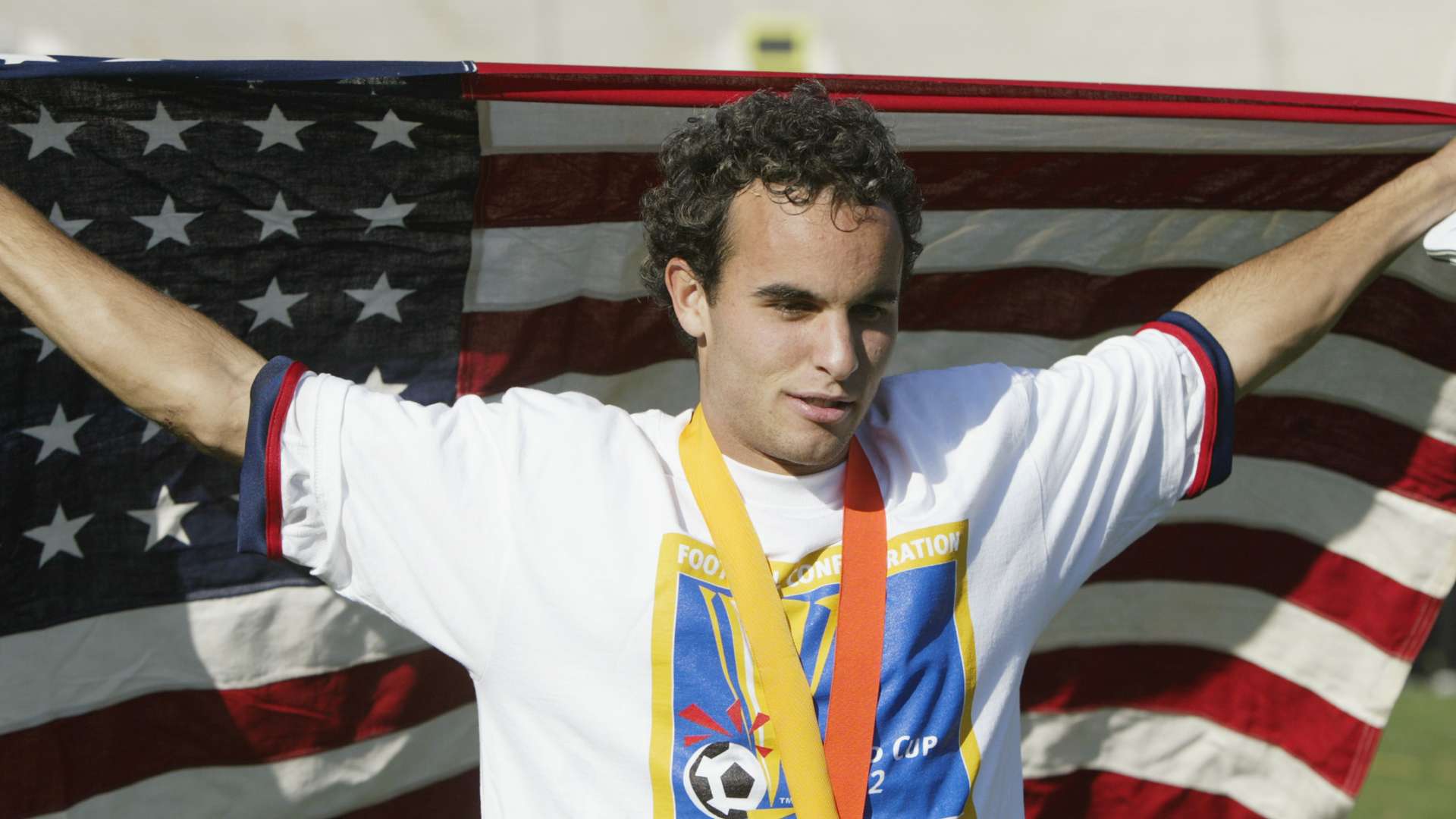
    In the early 2000s, it became more relevant in the United States - if only because the USMNT improved. The 2002 iteration felt seminal. Although the U.S. had won it before, that particular squad set the tone for what was undoubtedly a rise in the quality of American soccer.

    Landon Donovan starred in the midfield. Kasey Keller held it down in goal. Brian McBride, Cobi Jones and Carlos Bocanegra were all a part of that team. The U.S. won comfortably in the final. That set the standard going forward.

    "I was probably the most motivated I've been in my career," Landon Donovan told the U.S. soccer site.

    And it hummed along after that. The tournament is where the likes of Tim Howard, Clint Dempsey, Michael Bradley and others U.S. stars cut their teeth at the international level. They played through injury. They really wanted to win this thing. Sure, some managers used the month-long affair as a chance to experiment. But in general, it felt like equal parts extended tryout and must-win competition.

    "I think it's a wonderful way to get your feet wet in terms of what it means to be in an international competition - the cadence of the games, how you recover, the different types of styles of opponents that you're going to play," former USMNT midfielder Dax McCarty told GOAL.

    That has since changed. And this year's tournament is most emblematic yet of the shift.

  • Advertisement
  • Al Ahly FC v Inter Miami CF: Group A - FIFA Club World Cup 2025Getty Images Sport

    A crowded football calendar

    The concerns start with the crowding of the football calendar. This is nothing new. More and more tournaments have been forced into the fray. Club teams - both in North America and in Europe - have to contend with more fixtures. Traditional competitions are longer. Contests such as the Leagues Cup have added a whole new slate of games to things.

    FIFA has perhaps played the biggest role, though. There were fears that the introduction of the Nations League - marketed by FIFA but run by CONCACAF - would strip away interest in the Gold Cup. That competition checked some of the boxes that the Gold Cup did, while also offering a chance for various visions of competition.

    Everyone is involved, while the stronger teams are consolidated into individual groups. It is tricky to field a weaker side when you know that your opponents will bring out their big guns. One only has to look at the meltdown following the USMNT's Nations League semifinal defeat to Panama in the spring to see how important the contest has become.

    "More importance has been placed on the Nations League," Herculez Gomez told GOAL.

    The Club World Cup has also played a role. Some top players remain with their club teams. The U.S. are without presumptive starters Weston McKennie and Tim Weah, who are playing in the CWC with Juventus.

    There is also, more generally, a sort of fan fatigue. There is no doubt that American supporters of the Premier League or top European teams long for the sport to come back when their clubs aren't in action during the summer. But packing the calendar has, in reality, had something of an opposite effect.

    Where once there was nothing, there is now seemingly too much, the Gold Cup and CWC clashing, simultaneously held in the U.S. over the past two weeks, and running into next month. There is only so much time in the day.

    And some don't even have an interest in the CWC. Why might they look elsewhere?

    "I don't see any situation where I'll be watching the CWC in the summer," CBS analyst Jamie Carragher told GOAL. "I'll be on holiday. I don't even think I'll keep abreast of the games. I might watch the semifinals or the final, if it's two really big teams."

  • USA fansGetty

    Fans, fans and more fans

    Perhaps the best way of encapsulating the interest in a competition, though, is how many people show up to watch it. The Club World Cup has had its issues with both massive and minimal crowds, but the Gold Cup's problems have perhaps been more pronounced.

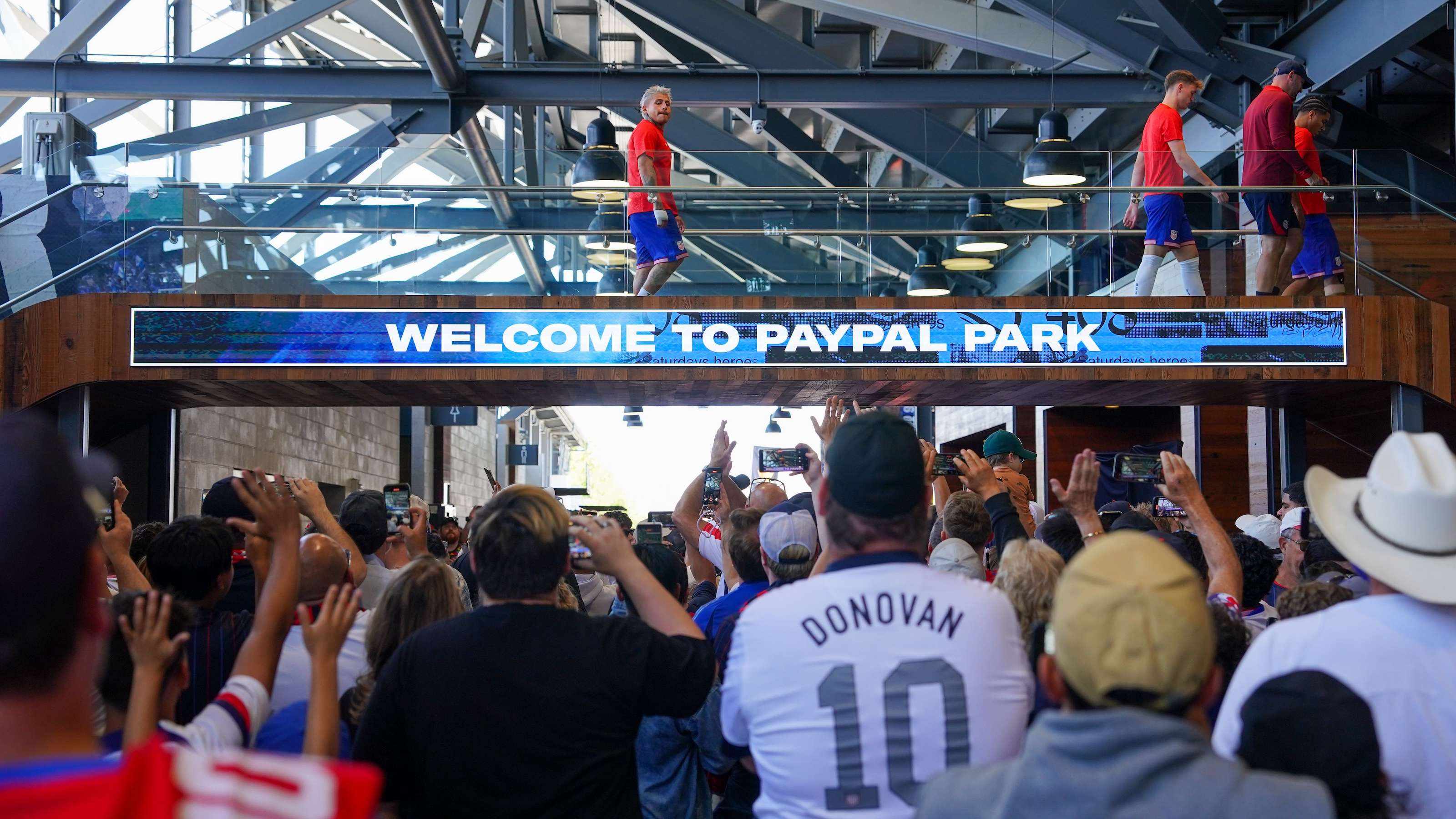
    The USMNT, this tournament's hosts, have played in less than full stadiums. Only 12,000 showed up to see them take on Trinidad & Tobago - which kicked off at 3 p.m. local on a bright and beautiful day - and just 11,727 attended their the second match against Saudi Arabia. 

    Mexico, too, have struggled to sell out. Only 34,000 showed up in cavernous AT&T Stadium to see Mexico beat Suriname, 2-0. That venue has historically driven nearly 70,000 supporters of El Tri. CONCACAF's response after it became clear that sales weren't strong was to close off several sections, including the entirety of the 400-level nosebleed seats. But even then, the lack of support was clear.

    And then there are the smaller nations. Trinidad & Tobago-Haiti was played in front of just 2,405 fans.

    There are two potential reasons for that. The first is the political climate and immigration issues in America, which have actively discouraged some fans from attending games. The second is a switch in tradition. Gold Cup games used to be played in back-to-backs. Go to one game and you could stick around for another. That would encourage even some with no apparent stake in the game to watch.

    Overall, the Gold Cup averaged just more than 19,000 fans per game in the group stage, a 32-percent decrease from an average of 28,055 in the 2023 tournament. The drop was even more dramatic for the USMNT and Mexico matches, down 57 percent and 21 percent, respectively. CONCACAF, which - like FIFA for the Club World Cup - uses dynamic ticket pricing for its matches, says it’s distributed nearly 50,000 for the Gold Cup final, which kicks off at 7 p.m. ET on July 6 at NRG Stadium in Houston.

    There is a school of thought that suggests that fans will pay closer attention as the tournament continues, and the matches become more important. Historically, the U.S. has strolled through the group stage, benched its starters, and brought in the bigger names for later rounds of the tournament.

    That won't happen for the USMNT this summer. Christian Pulisic, Antonee Robinson and a virtual starting lineup of players are missing because of CWC commitments, injury, rest or other reasons, and won't be coming in as the calvary, even if Mauricio Pochettino's team advance in Sunday's quarterfinal against Costa Rica.

    For now, the trends aren't particularly good.

  • Malik Tillman USMNT vs Haiti HICGetty/GOAL

    The USMNT predicament

    For the USMNT, it's difficult to gauage, exactly, what this all means. There are two schools of thought. The first is that the Gold Cup means something - a theory built on the idea of tradition and American exceptionalism. The opposing one is that, well, it doesn't - a summation based on a widespread apathy and need for player rest.

    Both things can be true at the same time. It is entirely plausible that the U.S. want to win - something that last happened in 2021. Pochettino has insisted that he is not here to treat the tournament like a training exercise. His decision to take identical squads to the pre tournament friendlies and the competition itself alone outlined that he wanted continuity over the course of a month.

    And with limited competitive windows ahead of the 2026 World Cup, some have suggested the USMNT needed a more robust roster for this Gold Cup. So yes, then, there are the absentees. Weah, McKennie and Gio Reyna all have club obligations. Robinson is injured. Sergino Dest still needs time to fully recover from knee surgery. Pulisic asked for the summer off due to fears of load management and stress put on his legs after another campaign in which he sustained an injury.

    His decision angered the USMNT sphere in full, and led to a mud-slinging match among former U.S. nationals and the player himself. Pulisic claimed that he wanted to play in the pre-Gold Cup friendlies, but Pochettino said no. Former USMNTers weighed in, claiming Pulisic had misplaced priorities or, worse, was disloyal. Clint Dempsey pointed out that he would play through anything if it meant having the chance to represent his country.

    "For me, it was never a question if I was going to go into the national team and play,” Dempsey said. “Whether it was Gold Cup, World Cup qualifying, the Confederations Cup, Copa America, the World Cup, I wanted to be there because as a kid, I dreamed about representing my country."

    Whether you think Pulisic is right or wrong doesn't matter. His decision, more broadly speaks to the clear divide during the competition.

    "I hate to take wind out of the talking heads that want to be hyperbolic in this moment, but the Gold Cup has almost never created the majority of a World Cup roster," TNT commentator and former U.S. international Kyle Martino told GOAL. "This Gold Cup roster of missing stars is no different than any Gold Cup roster in the past. Sorry to go against the narrative that we should all pull our hair out and yell at people that aren't dedicated, but this is how it's always looked."

  • FBL-CONCACAF-NATIONS-CAN-MEXAFP

    What it means to everyone else

    Jesse Marsch outlined his intent for Canada in no uncertain terms just before the tournament. He wanted to win, he said. Canada needed it, he claimed. Improvement thanks to the eye test is all well and good. But at some point, you have to lift a trophy.

    Such has been Marsch's attitude towards international competition since taking the job before Copa America in 2024. He has had no problems calling out the USMNT for the Pulisic situation.

    "There's been a certain dialogue with certain teams in the region about the Gold Cup and whether players want to come or not," he said. "I haven't had one discussion that's been like, 'Yeah, I'm not sure if I'm going to make it.'"

    He has also shown a real passion at the helm, and earned himself a two-game suspension for berating the referees for a decision in the Nations League back in March.

    "If I had to do it again, I would," Marsch told The Athletic. "It's not like I went into the game thinking, 'OK, I'm going to get thrown out.'

    Mexico, too, look strong and full of verve. They’ve taken close to a full-strength squad to the tournament, led by veteran striker Raúl Jiménez. The Dominican Republic played in their first international tournament - and even found the back of the net against Costa Rica. Honduras, Panama, and Guatemala all looked good.

    That was all good content. This tournament has been full of it. But even then, no stadiums have sold out.

  • USMNT fansGetty Images

    Solutions are few and far between

    It's hard to figure out what, exactly, the solution is here. Some have suggested that stretching out the time between tournaments might make the Gold Cup a little more relevant, or at least build up the anticipation. That, combined with the relevance of the Nations League, might help while also keeping an international competition cadence - with a tournament once every four years ultimately crowning a CONCACAF champion.

    "Maybe it should be more in line with the other continental competitions, where it's played every four years. I completely understand that," McCarty said.

    But that would mean the eroding of tradition. And although the sport likes to embrace new approaches, it is very reluctant to part with the old - even in federations that have admittedly less history. Playing all fixtures in smaller-capacity MLS stadiums other than, say, the semifinals and final might work, if only to cultivate atmospheres.

    Still, CONCACAF might find it extremely difficult to get teams to wake up one day and immediately care. There is no doubt that the Gold Cup's importance is diminishing. It's just a shame that the competition is losing its value while the product - and drama - is as compelling as ever.