+18 | Play Responsibly | T&C's Apply | Commercial Content | Publishing Principles
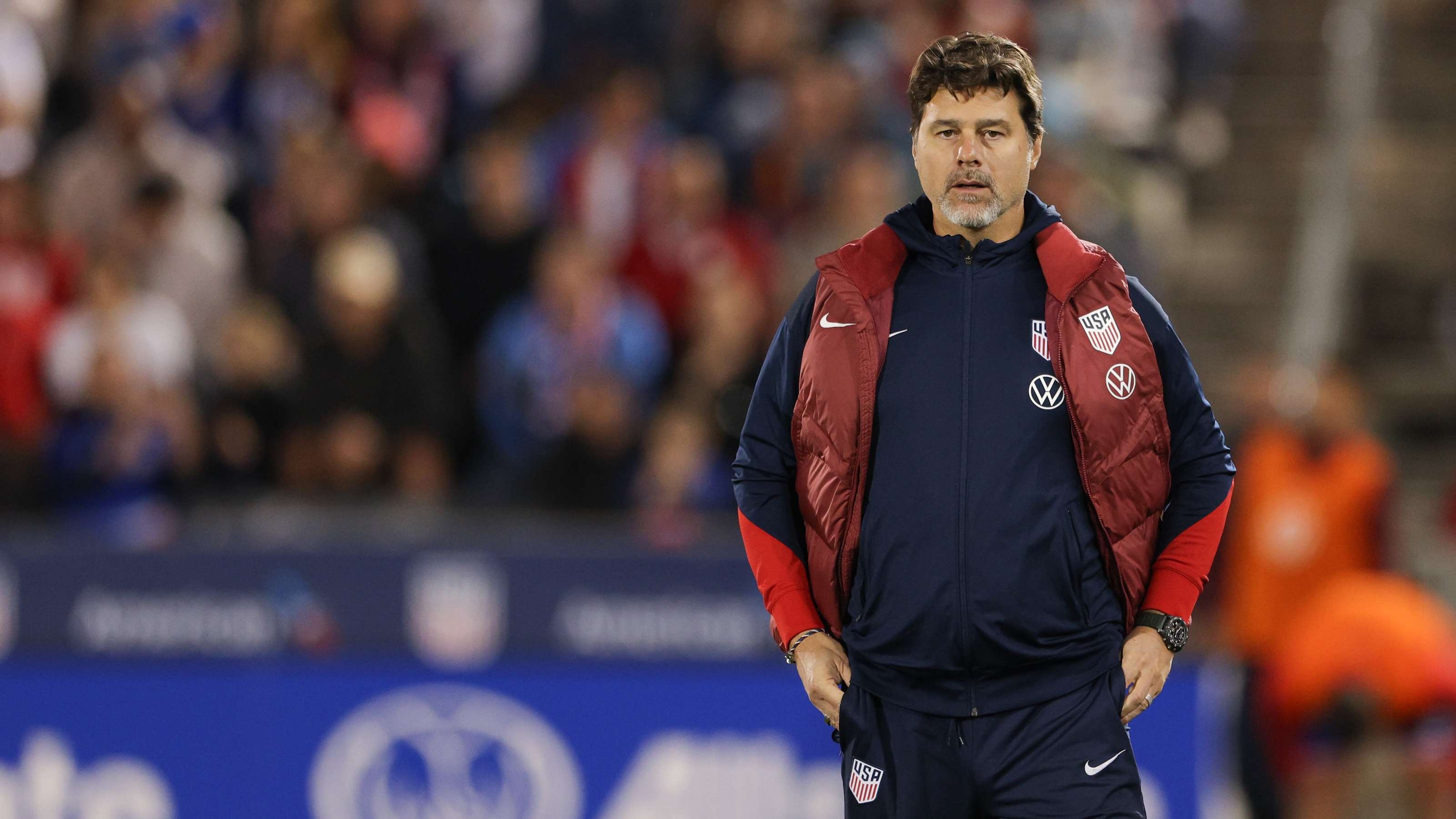
Mauricio Pochettino, Folarin Balogun, Cristian RoldanGetty/GOAL

Talking Tactics: Why Mauricio Pochettino's concessions just might allow USMNT boss to deliver on his remit - World Cup success

Perhaps the most encouraging part is what happened after Christian Pulisic limped off the Dick's Sporting Goods Park field with a hamstring injury. That really should have been game over. The U.S. men's national team is supposed to lean on its star man, improve every time he touches the ball, and see their chances of winning improve exponentially when he makes things happen.

In short, they can't win without him. 

So much for that narrative. Pulisic was removed from last Tuesday's match against Australia in the 31st minute. The U.S. scored in the 33rd. They did so again in the 52nd. Without their main man, Mauricio Pochettino's side quite comfortably saw off an opponent set up to make their life a nightmare.

It is such a soccer cliche to suggest that "these are the kinds of games that they used to lose." But there is a thin veil of truth to that. The U.S. were supposed to lose in that scenario. But they didn't.

Of course, the USMNT are always better with Pulisic. But without him, they turned in the kind of performance that offered that most valuable of commodities in soccer: hope. Part of this is down to the intangibles - vibes, motivation, the apparently crucial "fighting spirit."

But it's also tactical, a change in formation and crucial flexibility around it that might just turn that hope into something even more tangible: winning.  

  • Haji Wright USMNTGetty Images

    A pair of good results

    It's been a strange year for the USMNT. No one, it seemed, was quite sure what the goals were. Did Pochettino need results? Did he need to establish a culture? Did he have time to do both, with a World Cup on the horizon? Yes, and no. There were tactical ideas, new players brought in, speeches about how he was "not a mannequin."

    But there weren't really any convincing scorelines. The U.S. got as far as they should have in the Gold Cup - falling to Mexico in the final - lost the games they should have lost, and just about won the games they were expected to win. Pochettino is 11-7-2 in 20 matches in charge.

    In hiring the former Chelsea and PSG manager, US Soccer intended to bring in a "serial winner." What they got instead was a culture guy who didn't seem to know exactly what culture he wanted.

    In that light, then, back-to-back good results is impressive. A 1-1 home draw with Ecuador doesn't make for excellent reading. But the South American side hadn't lost in 11, and had been the surprise of CONMEBOL World Cup qualifying. This was not a win, but there were positives to be taken.

    Australia was better. The USMNT went down a goal, rallied, scored two, should have bagged a couple more, and went home with the most comfortable of 2-1 wins - against a side that had beaten Jesse Marsch's Canada just a few days before.

    The dust has settled, and it now seems a pretty impressive October window.

  • Advertisement
  • United States v Ecuador - International FriendlyGetty Images Sport

    A shift in formation

    It is worth asking, then, how this all happened. If the U.S. were so poor for so long, so averse to getting results, how is it that things are now revolutionary? Why has the optimism returned? Strip away the glaring fact that soccer has a short-term memory, and it really comes down to one big tactical change: a switch in formation from a 4-2-3-1 to a 3-4-3

    This isn't necessarily revolutionary. Pochettino isn't the first manager to play three at the back. He certainly won't be the last. But in context, it is pivotal. When Pochettino arrived, there were a two fundamental assumptions about playing style. The first was that he was a 4-2-3-1 truther. The second was that he believed, unwaveringly, in a high press.

    He soon learned, it seemed, that the latter can be translated into defensive weakness. This is not club soccer, where you have days on end on the grass, and plenty of film to watch in the days in between. These are complex systems that have to be learned over time. And Pochettino didn't have any of it to work with. 

    What he has done, then, is what most good international managers do, and revert into the system that fits his squad the best. This seems obvious. Pochettino has a bunch of good players. This is the setup that, in theory, gets the best out of them. Simple? Yes, but not always so easy to pull off.

  • Mauricio Pochettino USMNTGetty Images

    An act of compromise

    Actually implementing such a change requires a remarkable act of compromise for a manager who likes control. Pochettino's brilliance is partially in his man management, but mostly due to his tactical nous. He has been so good for so long because his basic principles have been readily applied, tweaked, and reinvented for the relevant squad.

    This is a guy who took a fundamentally flawed Tottenham, won 86 points in the Premier League, and carried them to a Champions League final. These things don't happen by accident. Relinquishing what he knows, then, is a difficult thing. He deserves plenty of praise for realizing that he had to change.

    And he good news is that this still has the look of a Pochettino side. The USMNT don't press high. They don't scramble for the ball. But they still are fiercely vertical when they have it. They take risks in attack, allow for positional fluidity, and admit, by result, that their defensive structure might be a bit suspect when they lose the ball - it's how they conceded the first goal to Ecuador.

    And that led to some results.

  • Max Arfsten USMNTGetty Images

    Attacking quality

    It starts up front. Pochettino's best attacking trait is that he is willing to allow players to express themselves in the final-third. Yes, this is the bit where we have to talk about Pep Guardiola. So much of modern soccer ignores that. Guardiola's idea of "juega de posicion" limits players to specific zones or areas - and prevents them from moving outside of them.

    The logic is that if you position a load of good players in specific areas, and allow them to be their best - within that very space - you can piece together a reliable attacking system. That makes sense, and every club practices some version of it.

    Pochettino doesn't reject it outright, but his version of the U.S. is far more fluid. Max Arfsten, oddly, is the perfect example. The left wing back is encouraged to attack. But there is not necessarily a consistency in his movements. Sometimes, he overlaps. Sometimes, he cuts inside. Against Australia, he popped up in the middle. These things are not conventional. Some coaches might hate them. But for Pochettino, it's ideal. 

    It also helps that, outside of Pulisic, the U.S. has a number of quality No. 10s who can recognize the movements of players around them. Malik Tillman played that role admirably against Ecuador, assisted on Folarin Balogun's goal and created six chances. Diego Luna, in a brief cameo, showed much of the same. 

  • Cristian Roldan USMNTGetty Images

    The midfield can change things

    These are all good things that can make the U.S. difficult to play against, and full of attacking expression. But, of course, it comes with a certain amount of risk. Playing three centerbacks is ideal in this effort. Most teams play with either one or two strikers. The U.S., then, are guarenteed to have at least one extra man at the back. 

    The issue comes in midfield. Playing in a double pivot with No. 10s asks a lot out of the midfield duo. In an ideal world, such a system requires two midfielders who can put in the work of three. Indeed, part of the reason that Chelsea won the 2015-16 Premier League title in a 3-4-2-1 is that N'Golo Kante's ferocious work rate meant they rarely got countered. 

    Now, the U.S. does not have a world-class midfielder of that mold. But Tyler Adams is the prototype of sorts. He has the requisite energy, tackling ability, and ball progression skills. His midfield partner for the World Cup is still up for debate. But, oddly, Cristian Roldan make a pretty compelling case against Australia.

    With Adams out, the 30-year-old Seattle Sounders veteran played the role immaculately. He was a bundle of energy in the midfield, won his tackles, and progressed the ball forward. Many picked up on his two assists. But his 100 percent duel win rate might be even more valuable. 

    Pochettino suggested that Roldan might be the "perfect" midfielder. In this system, alongside Adams, there could be some truth to that notion. 

  • Christian Pulisic, USMNTGetty

    What's next

    So, the USMNT have a productive system that might just work. It has taken 13 months, a culture shift and a brash and passionate manager letting go of some of his fundamentals. But there could be something here. Compromises have been made on both sides. Pochettino might venture back to his 4-2-3-1 here and there, but he cannot refute that a 3-4-3 is more effective. 

    It could change, too. Sometimes, he will use wide players. Sometimes having two No. 10s is more effective. Antonee Robinson is an upgrade over Arfsten. Sergino Dest will likely start on the right - both he and Robinson missed the last camp because of injuries. The centerback trio still needs figuring out, while Haji Wright - who scored both goals against Australia - made a compelling case to push Balogun for a starting spot.

    Some players might be siphoned out, too. There doesn't seem to be a future for Weston McKennie here. Tim Weah, too, might struggle to get into the side. But international soccer is about the best system to suit your squad, and that might mean making a few individual sacrifices to piece together the best team. And for a manager that has one remit - World Cup success - that might not be such a bad thing.