+18 | Play Responsibly | T&C's Apply | Commercial Content | Publishing Principles
Paul McDonough USLGOAL

'Set their own course of destiny' - USL’s plans to launch a Division One league presents both opportunity, uncertainty for club owners

Virtually nobody knew what the emergency meeting was about. There was going to be an announcement from USL League President Paul McDonough. But it was a Wednesday night. These things aren’t normal.

“Guys were taking bets as to what the announcement would be, or what the call was about,” McDonough told GOAL, reflecting on the hastily called meeting among USL club owners earlier this month.

The information shared was nothing any of them expected: The USL was planning to restructure the way professional soccer is played in the United States. The organization, viewed by many as the little brother to MLS, revealed to its owners that within the next few years - likely 2028, McDonough told GOAL - the USL intends to launch a Division 1 soccer league in the United States, on the same level as MLS.

And McDonough told them he planned to go public with the news within 24 hours.

That was Feb. 12. The USL's plan was first reported on Feb. 13. Since then, USL clubs been forced to figure out whether they want to play in the highest division of American soccer, or, effectively, run in place.

  • Sacramento Republic Railyards StadiumManica Architecture

    'A three-tiered system'

    The regulations are complex. The USL Championship is currently a sustainable league that operates with 24 teams. It has expansion goals of its own and intends to bring in four more franchises by 2027.

    But U.S. Soccer rules dictate that Division 1 leagues have very specific requirements to ensure sustainability. For one, they need to have 12 teams, spanning three time zones. At least 75 percent of the teams have to be in metropolitan areas of at least 1 million people. Stadium seating capacity must be a minimum of 15,000.

    Owners are also required to demonstrate a record of financial stability and prove that they can operate a team for a minimum of five years. Primary team owners must have an individual net worth of $40 million. Ownership groups are required to have a combined net worth exceeding $70M. There are also rules including TV broadcast rights, team employment sizes, and a full-time league operations staff.

    As of now, USL meets some, but not all, of those requirements. Of the 24 USL Championship clubs, 17 operate in markets with populations exceeding of 1 million - including the likes of Phoenix, Las Vegas, Sacramento and Indianapolis.

    The stadium capacity issue, in truth, is where things get more complicated. Eleven clubs currently have soccer-specific stadiums – seven are either in the planning process or have broken ground. Only two stadiums meet capacity requirements - Miami FC and Birmingham Legion. But neither are soccer-specific venues. In other words, this would require immense investment to happen.

    The league insists that it comes down to the individual clubs to decide whether they want to spend in order to meet the criteria. Make the effort to join the top flight, or stand pat? That's a club-level decision. Either way, there is support from U.S. soccer in general, with the governing body offering their backing for a Division 1 push to go ahead, according to The Athletic.

    “The interesting part is this gives us a three-tiered system, which is a differentiator in the way we structure our league," McDonough said. "Our teams are able to set their own course of destiny based on their own ambition."

  • Advertisement
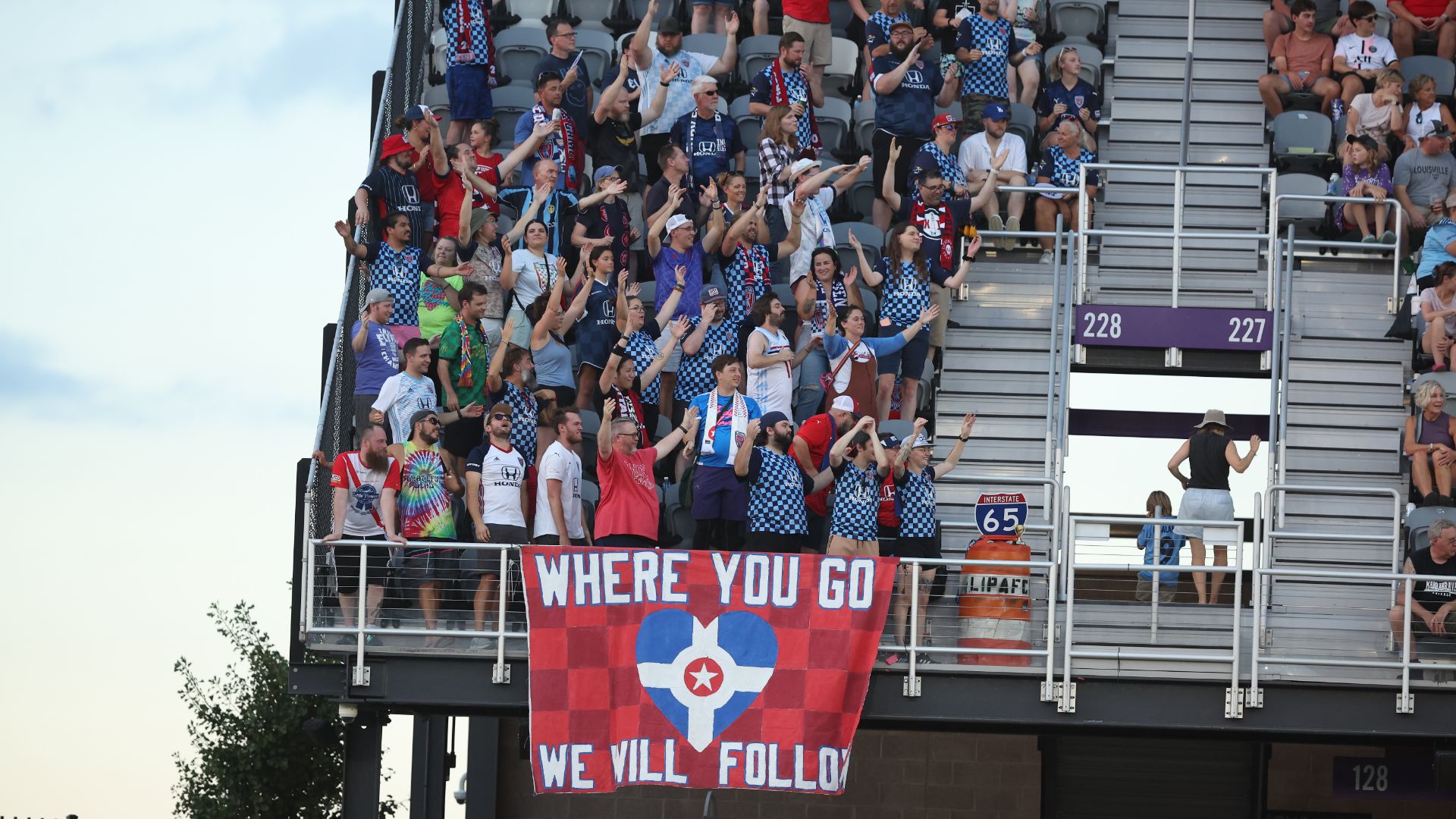
  • Indy Eleven Louisville City USLEM Dash Photography

    'This kind of changes things'

    Sources in the league, however, told GOAL that some clubs are still waiting for further information before electing to commit to the top flight.

    There are concerns as to how much it might cost to increase the capacity of existing stadiums. Some in the process of building new venues don’t know whether to expand projected plans to the required 15,000 or stick to lower capacities. And there is a widespread reluctance to publicly commit, at least at the moment. Attendance, even for some of the best-established clubs, is a concern. And there are no guarantees that they will be able to fill a whole ground - even if they spend big to expand.

    “I do think our fan base has a lot of room to grow," a spokesman for Louisville City told GOAL. "But that said, we're already averaging about 10,000 fans at games. We've had as many as 14,600 a game. So we’re ready made for this opportunity."

    Still, some clubs have told GOAL that they plan to be a part of the new top flight – at least, in theory. Such is the case with Detroit City. The club plays in the third-largest media market in the USL. Club CEO Sean Mann insists that his team will push to be involved.

    “It's something that we anticipate applying for once the league sets an application process out there,” Mann said.

    Others have said that they are committed to playing at the highest level of soccer possible – without outright stating that they plan on joining the top flight.

    “Backed by an ownership group that consistently invests in the club and the sport, we remain committed to taking Phoenix Rising to the highest level of soccer in North America,” Dr. Pablo Prichard, Phoenix Rising principal owner and CEO, told GOAL in a statement.

    McDonough admitted that he understands that some clubs might be unhappy, or surprised, at the way the league plans were announced. The USL held pre-planned meetings with Championship and League One ownership groups the week after the Division 1 announcement, and McDonough conceded both were spent with clubs asking clarifying questions.

    According to sources around the league, there weren't always concrete answers. But that's not to say there isn't reason for optimism.

    “This kind of changes things,” a spokesperson for Louisville told GOAL. “It gives all these clubs something to aspire to, and get a lot of these stadium plans moving and actually happening.”

  • Colorado Springs stadiumUSL

    'Enthusiastic supporters of promotion-relegation'

    McDonough officially stepped into the role of USL president 18 months ago. When he joined the league, there had already been concrete conversations about the possibility of promotion and relegation in the United States, he said. A move to Division 1 would turn abstract conversations into a genuine possibility.

    The logistics behind it would seem to be complicated. Relegation in European football, though woven into the very fabric of the sport, is expensive. Clubs lose around 60 percent of their revenue for the drop from the Premier League into the Championship. The English FA has offered so-called “Parachute payments” to clubs to prevent them from falling into financial ruin after falling into the Championship.

    McDonough insists that such losses would not be incurred in the USL. His reasoning? The massive TV deal that Premier League clubs benefit from doesn’t exist in the USL. At least not today.

    “We don't have huge national revenues, so the local revenue is going to stay somewhat the same," he said. "Because what we find with our clubs, the fans support their local club. And we can have a team that finishes in towards the bottom of a league, and they're still getting five or 6,000 people."

    Some USL clubs who intend to play at the highest level are enthusiastic about the possibility.

    “We've been very enthusiastic supporters of promotion-relegation," Mann said. "It is not only the way that the sports are played around the world, it's also, strategically, it's a way for American soccer to differentiate herself in a very competitive sports landscape."

    For clubs lower down the leagues, a system that includes promotion and relegation could bring a sense of drama currently unique to the European game.

    “The bottom-of-the-table matches are sometimes or usually, more exciting than the middle-of-the-table matches, like in England,” FC Naples owner Bob Moreno said. “It's that angle that I love the most. It's just it brings, there's more games of consequence.”

    There is also a tangible sense of hope that comes with the possibility of promotion.

    “I think there's that competitive mindset for teams that are looking to climb up the ladder,” Portland Hearts of Pine president Gabe Hoffman-Johnson recently said. “It’s not a major focus for us, but we're excited about the possibility of what that could look like, I also think it's just good for the growth of the game in this country.”

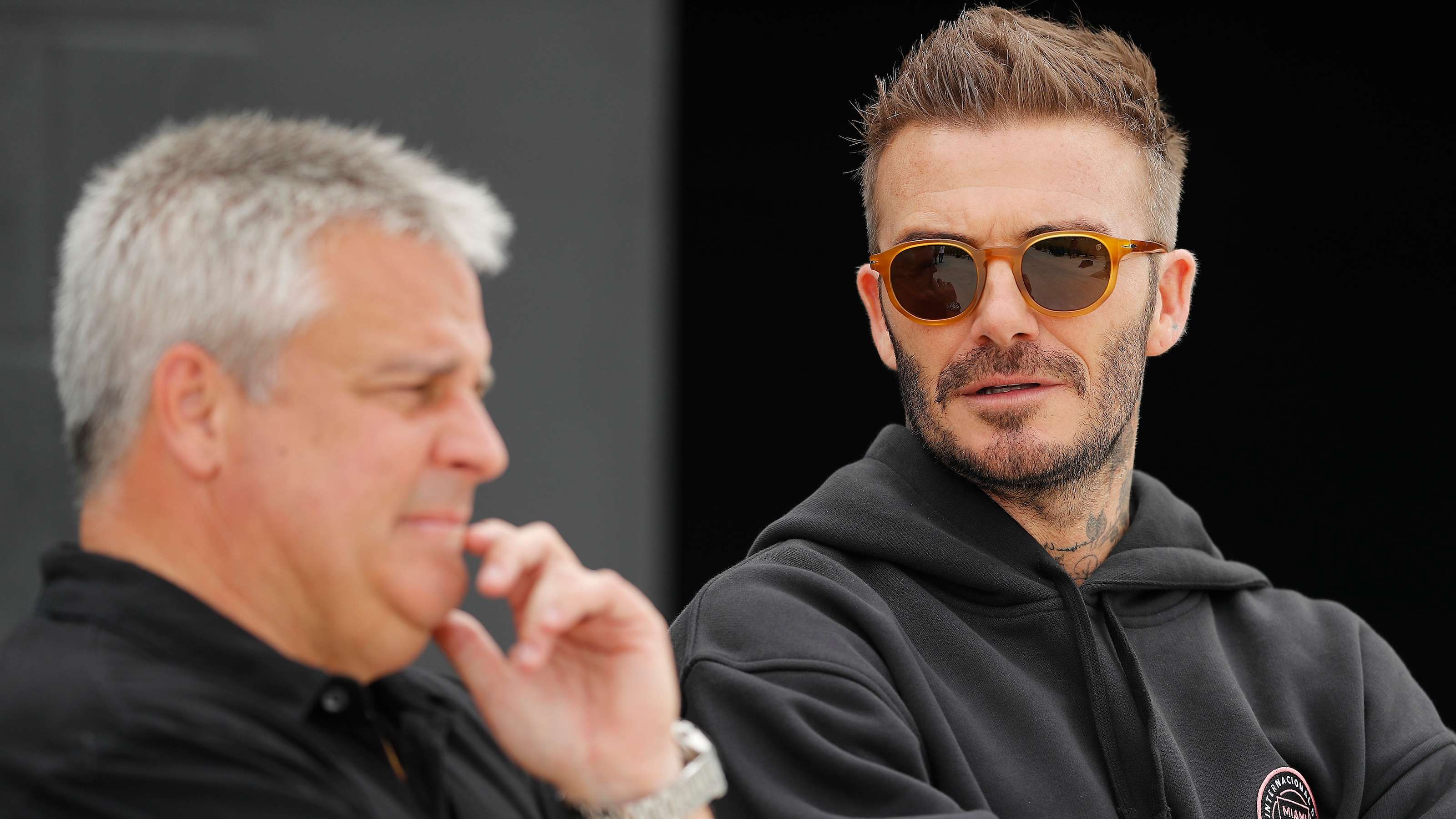
  • USL President Paul McDonough and Miami's David BeckhamGetty Images

    'We as investors could go get involved'

    Before joining USL, McDonough was chief soccer officer at Wasserman Sports Agency. Prior to that he had worked David Beckham, serving as COO and sporting director at Inter Miami, where he managed business operations and helped lead the club from its nascent phase through its inaugural season.

    Some of the crucial conversations from his previous roles have carried with him until today. One of them? The European interest in American soccer.

    “They look at the angle and they say ‘How do we find the next Weston McKennie? How do we find a cheap player, bring them over, develop them, and sell them?'" McDonough said.

    He heard similar things from would-be investors when he started the USL role.

    “The conversations when I came into the league office with some of the people were, 'Listen, your system's good, because we as investors could go get involved with a club, and we can be our own boss,' " he said.

    McDonough is hoping that a similar pitch will work for others in the coming years - especially with multi-club ownership becoming an integral part of the global soccer scene. Manchester City’s City Group, for example, are invested in NYCFC.

    But there is a key difference. MLS clubs, when they sell to foreign markets, are forced to hand over a cut of their sales to the league and its counterparts - 95 percent goes to the teams. The league collects five percent (as compared to 10 years ago, when teams were only allowed to take 66 percent.)

    “If you can have that freedom and control and put it into a multi-club system, it's not a bad thing," McDonough said. "So if you want to take a young Colombian player, drop them in here, you can sign them on a four-year deal, but you have complete control, and you don't have to ask anyone's permission but yourself. Where you can sell them, where you loan them, you may sell them for just what you put into them, and you get a bigger 50 percent sell on. That's what our clubs have that freedom to do.”

    It would seem to run counter to the original proposals around USL clubs, which have traditionally been owned by local businesspeople. Sacramento Republic, for example, were recently subject of a takeover by a nearby Native American tribe.

  • Don Garber, MLSImagn

    'Any opportunity to build the sport professionally'

    Whether this rivals MLS in totality remains to be seen. The USL started the USL Super League, a Division 1 women’s outfit at the same level as the NWSL. Thus far, attendances have been lower, while major players have stuck to the league with the longer legacy - although salaries are roughly equal between the two leagues.

    Can the USL compete at the same level as an established league such as MLS, which just began its 30th season? The USL and MLS operate differently - USL owners run teams as separate businesses, whereas MLS utilizes a single-entity system for ownership where owners are partners in league business. The USL does not have a salary cap, nor does it have restrictions on academy territories, unlike MLS, which gives MLS franchises control over youth players in their markets.

    MLS, for their part, has insisted that it is welcoming the rival first division

    “Any opportunity to build the sport professionally is positive," Commissioner Don Garber said at a news conference last week. "I've said this many, many times: fans determine what teams they care about. Sponsors and broadcasters determine what properties matter to them, and to their viewers, and to their customers.

    "So, all of us are going to do what we can to build the best possible product. I look forward to seeing how it plays out over the next number of years."

    Others in the U.S. soccer sphere argue that any chance to grow the game is a worthy opportunity.

    "I think it's a product of this country and this continent be being very, very excited and proactive about the World Cup coming here, and all of the eyeballs that are going to be on this continent, this country, this summer, with the Club World Cup. But more importantly, with the largest World Cup that's ever going to happen," Apple TV analyst and former MLS MVP Taylor Twellman told GOAL. "I saw the same announcement that everybody else saw. I'm as interested as everybody else is. There seem to be a lot of questions still remaining."

    The original target start date for the league was 2027. McDonough admitted that 2028 is more likely. And meanwhile, clubs remain in a state of confusion, to a large degree, as to how, exactly, this might work. The opportunities are limitless. The logistics, however, are mightily unclear.

    "They can be really successful clubs, but I think it's just something that we thought could be a good thing," McDonough said. "It's our next evolution,"