+18 | Play Responsibly | T&C's Apply | Commercial Content | Publishing Principles
San Diego Fan story GFXGetty

'You have to have that buy in' - How MLS expansion side San Diego FC is cultivating next generation of multicultural soccer fans in community with complex sports history

Oliver Rodriguez still remembers his first drum beat. He can mimic it over video chat, playing an imaginary bass drum with his left hand, and a cymbal with his right, a pitter-patter of classic barra rhythm ubiquitous at South American and Mexican soccer games.

He first played it at seven years old, when he attended a Liga MX game with his father. At halftime, he was introduced to one of the drummers, taught the simple groove, and allowed to practice for the entire second half. Rodriguez, now 18 and living in San Diego, still plays some variation of it to this day.

The Southern California native - and proud San Diegan - is one of the hundreds of thousands of fans San Diego FC is trying to reach ahead of its inaugural season in Major League Soccer. This is a unique sporting culture, a place infatuated with its soccer but - truth be told - slightly resentful of the professional franchises in other major sports that have been stripped from its grasp over the years.

The challenge for the club, then, is to tie it all together, and in the midst of a chaotic political climate, unite fans around an entirely new product.

“It's been very, very carefully thought out,” Jerry Jimenez, supporter relations manager at San Diego FC, told GOAL. “Understanding that supporters need to grow into what their own culture is going to be. They need to figure it out on their own. And we're here just to facilitate that and be a conduit to what they want to create for the community.”

  • San Diego Loyal LA GalaxyIMAGN

    Many years of hurt

    The history of soccer in San Diego is a complex one. This is a diverse city. The Mexican border is just 17 miles south of downtown. For many of the long-time residents - Latinos, Mexico natives or Mexican-Americans who have since settled in the area - Liga MX soccer reigns supreme.

    There are supporters of the big teams - Club America, Pumas, Cruz Azul. But there is also a strong passion felt for Club Tijuana, known colloquially as Los Xolos.

    And then, there are the American teams who have come and gone. First, there was 1904 San Diego, a club founded by Eden Hazard and Demba Ba. But that folded within five years. Then, there was the San Diego Loyal. They had a better run, competing in the USL for four years. That side, too, fell apart, and haven’t been active since 2024.

    Ironically, it is the club whose arrival was the death knell of the Loyal’s tenure in San Diego that is now lobbying for local support. San Diego FC knows this.

    "You have to have that buy in, you have to have that representation. But the club has to be honest about that,” Jimenez said.

    This is only further complicated by the fact that San Diego has always existed in a strange place in the American sporting landscape. It is the country’s eighth-largest city, by population, but until Feb. 22, has just one remaining professional franchise - the San Diego Padres.

    The NFL’s Chargers used to play there - and had a strong following - but they relocated up I-5 to Los Angeles in 2017. Before that, there were the NBA’s San Diego Clippers, but they, too, were snatched by the city two hours to the north in 1984.

    “San Diego has always been a city where we just, for some reason - I don't know why it is - we keep losing people, but everybody keeps telling us we're amazing. But, we lost the Chargers, we lost basketball teams. The Padres, that's the only major league team we have left,” sadi Miguel Barajas, a leader of Chavos Frontera Ultras, the first Supporters’ Group to declare allegiance for the club.

  • Advertisement
  • San Diego FC MLSThe San Diego Union-Tribute

    Pleasing the locals

    Barajas represents another group that San Diego has focused on. His story is rooted in a clash of identity. Raised in San Diego by a Mexico City-born father, Barajas was introduced to soccer through his family’s allegiance to Chivas Guadalajara.

    He fell in love with the game through that team, which enjoyed immense success throughout the late 1990s and early 2000s. But a complementary understanding of soccer culture was cultivated elsewhere. Barajas served in the Air Force - there is a large military air base in San Diego - and when stationed in Germany was exposed to the European attitude towards the game.

    It all meant that when professional soccer first arrived in San Diego, he simply had to stay in touch. Barajas was still playing at a good level - he still plays indoor once per week - when the Loyal arrived in town. He threw his support behind the USL team, and was a regular at their games.

    San Diego FC, when announced as an MLS expansion franchise in 2023, was something of a conflict. His group, Chavos, decided that they would split into two chapters. One would remain, well, loyal, to the Loyal. Another would become SDFC fans. Given that it was unlikely that the two teams would ever meet - outside of the U.S. Open Cup - it was a comfortable situation.

    But when the Loyal folded, Barajas had only one option.

    “It was just one of those bittersweet situations,” he said. “We had the Loyal that we really loved, but they can’t promote or relegate. They were just stuck in the middle, and then we had this other club that was coming in that’s going to be a major league club. So we just had to make that transition.”

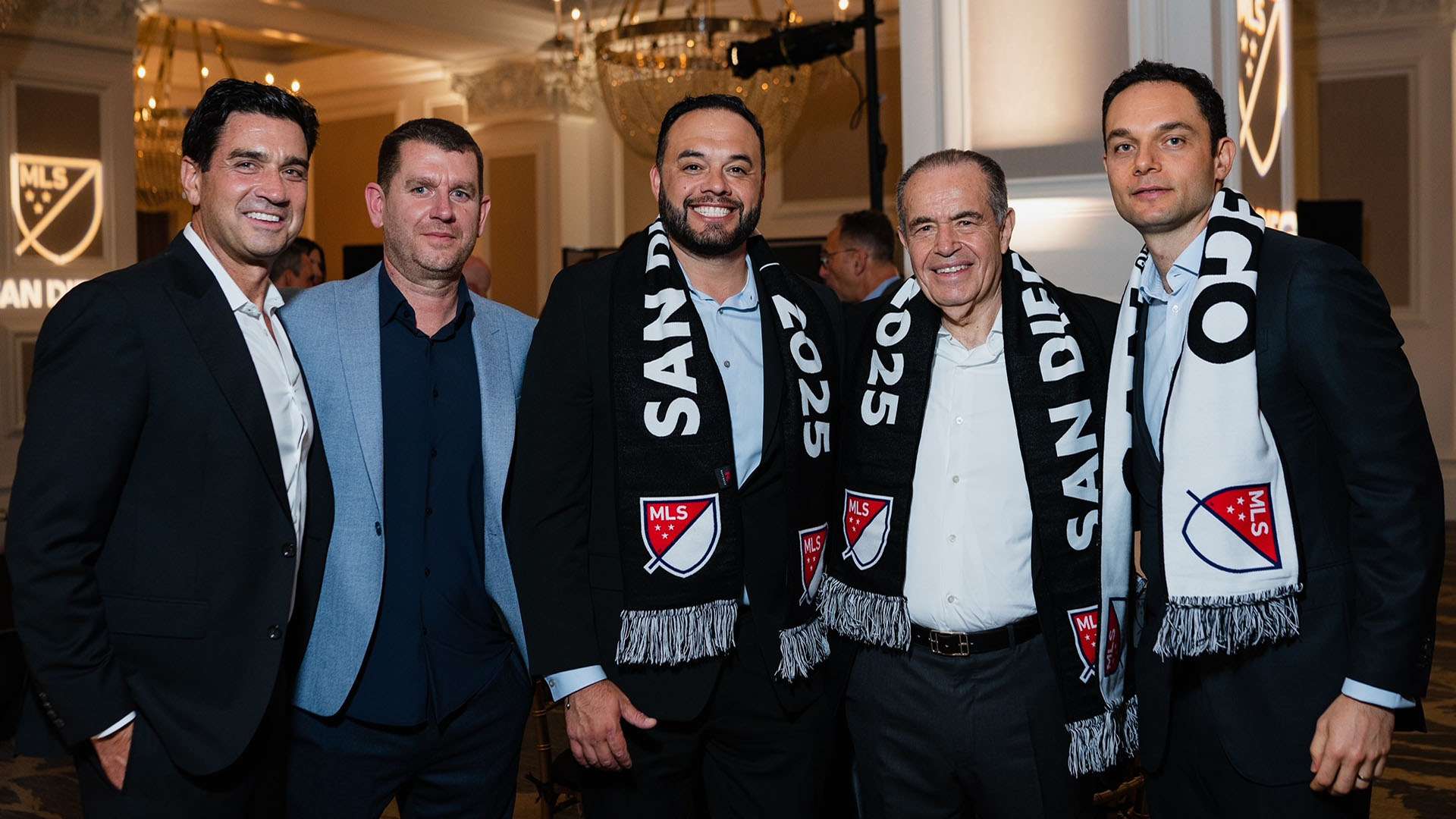
  • San Diego MLS expansion ownership 2023Getty Images

    Reaching out to the community

    At first, Barajas was skeptical. But then, soon-to-be San Diego FC CEO Tom Penn came to town. He had built LAFC from the ground up, and developed a real passion around the team in a town that was full of LA Galaxy loyalists.

    Penn’s remit was simple: get people to like, if not love, this team. Barajas was hooked from relatively early on. It started with information sessions and presentations in communities (there were, he admits, a few beers involved at local breweries). But the real appeal for Barajas was the promise that this team would represent his people.

    Part of allure was San Diego’s association with the Right to Dream Academy. Started in 1999, the system was originally applied as a means of finding, developing and offering opportunities to young players in Ghana. It has since expanded, with a strong association with Danish side FC Nordsjaelland. San Diego is its next frontier. And for Barajas, who had become disillusioned by the pay-to-play model that dominates American youth soccer, the promise that the sport could be cheap and accessible was vital.

    “They have been making efforts to have free programs for kids around the county,” Barajas said of San Diego FC. “They've been putting out pitches and little soccer fields. They bring up all kinds of tournaments. It's been really good, and refreshing to see.”

  • BMO Stadium LAFCIMAGN

    Making the right hires

    Jimenez moved to San Diego when he was 11. For 17 years, he was a plumber who happened to like soccer. He didn’t really have a connection to a club for most of his life. He flirted with Chivas USA before they folded, and was heavily involved in the 3252 of LAFC - driving two hours north on the weekends to support the club. But even then, there wasn’t massive affiliation with a badge, he said.

    And then, the Loyal came to town. Jimenez had something of his own to connect to. He became heavily involved in Supporter’s culture around the USL club, and when the San Diego Wave of the NWSL started up in 2021, Jimenez was brought on board to serve as a bridge between the club and the community.

    It only made sense, then, that he would join San Diego FC. He was employee No. 6, brought on when the club didn’t really exist.

    “To bring in a supporter liaison that early on into the club's history, that tells you right away, that the club understands supporter culture is important,” Jimenez said. “And I think our ownership and our board knows that, and so it was very easy in the beginning to have that sense of belonging.”

    They did similar things elsewhere. San Diego has made an effort to hire from the local area - bringing in people to fill numerous roles from the existing soccer community. Jimenez lives just around the corner from Barajas. Friends have been hired. This has been set up as a community club - through and through.

  • Attracting the transplants

    Justin Brown was a diehard Atlanta United supporter - until just more than a year ago. The Georgia-born engineer, who was a massive football fan growing up, fell in love with Atlanta United when they came to his native state in 2017. He had watched some Premier League in his day, but felt a real connection to a local team when it arrived.

    But then, when his circumstances changed, and a permanent move to San Diego came about, he was quick to search elsewhere. Abandoning Atlanta United wasn’t easy. But San Diego’s outreach ensured that it wasn’t too hard.

    “There was some bad blood between some Loyal fans and San Diego FC,” Brown said. “But I went to some of the first meetings and talking to the people at the club, knowing who they put in place, I felt really comfortable.”

    San Diego has a strong base of California natives, but also a significant chunk of transplants. It would make sense, after all. There is quite the allure to this sunny city, nestled on the beach. Still, that added an extra layer of complexity for the club. The new faces, it seems, have had no problem integrating themselves.

    Brown is one of them. He is among the founding members of Riptides Club, one of seven Supporters' Groups that have founded the San Diego Independent Supporters Union. His specific group contains a mixture of fans - some native, some from afar. But there’s less of a connection to the classical Spanish-speaking traditions of the game. So, Brown and his friends have had to learn.

    They started chant practices a year ago. At first, it was around 20 people in an open space, learning how to chant in Spanish. These days, there are more than 100, with drums and the kind of atmosphere that makes it feel like a matchday.

    “San Diego is multicultural, but we’re also multilingual,” Brown said. “A lot of people here speak Spanish natively, a lot of people speak English. Some don’t speak any Spanish, though, so we’ve got to teach them these Spanish chants.”

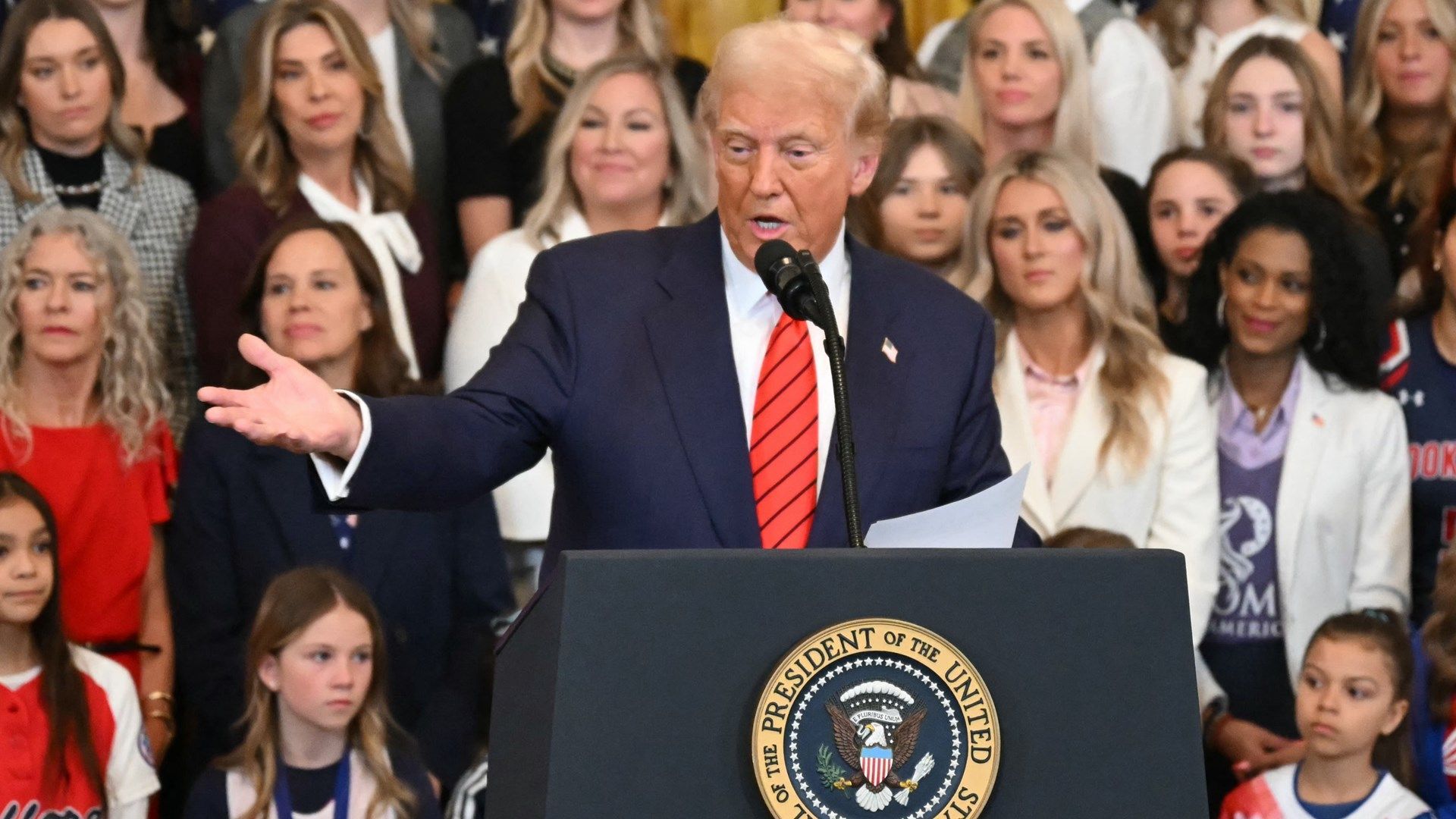
  • Donald Trump 2025Getty Images

    Not without tension

    Before all of this - before the Loyal, 1904 and San Diego FC - an undercurrent of fans started to support Liga MX soccer in a different way. Getting to a Xolos game, just across the border, is easy - and for a long time, was the only way to interact with professional soccer.

    It’s simple: drive to the border, go through immigration - if timed right, it could be as fast as 15 minutes - then a short drive to the stadium. Tacos in the parking lot, a few large beers, 90 minutes of soccer, more beer, more tacos, and an easy ride home. For more than a few San Diegans, it was an excellent night out.

    But perhaps more importantly, it was an easy marriage of cultures. America, meet Mexico - and vice versa - through the vessel of soccer.

    Recently, though, some tensions have started to flare. Brown said the climate brought about by the election of President Donald Trump has made San Diego, in some quarters, a racially uneasy place. It can be tense. Shortly after taking office in January, the Trump administration rolled out a blueprint to beef up security at the southern border in a series of executive orders, making good on a defining political promise to crack down on immigration.

    There is a legitimate concern that two cultures that were once united by soccer could be driven apart by voices of intolerance some seek to foment.

    “Something that I don't even think people have really started thinking about is: is it safe for people to come to the game?” Brown said. “I mean, people that would be considered ‘illegal’ in that sense? If they're San Diegans, they should have a place here.”

    It has led to honest conversations among supporter groups, and the individuals within them. And if there comes a time when voices that represent San Diegan culture - and a harmony of sorts brought about by soccer - need to be heard, then those involved insist that they will make their messaging loud and clear.

    “There might be some events that happen where all seven support groups agree ‘We’ve got to take a stand’ and it'll be a collective stand,” Barajas said. “But we won’t try to do anything without the support of everybody.”

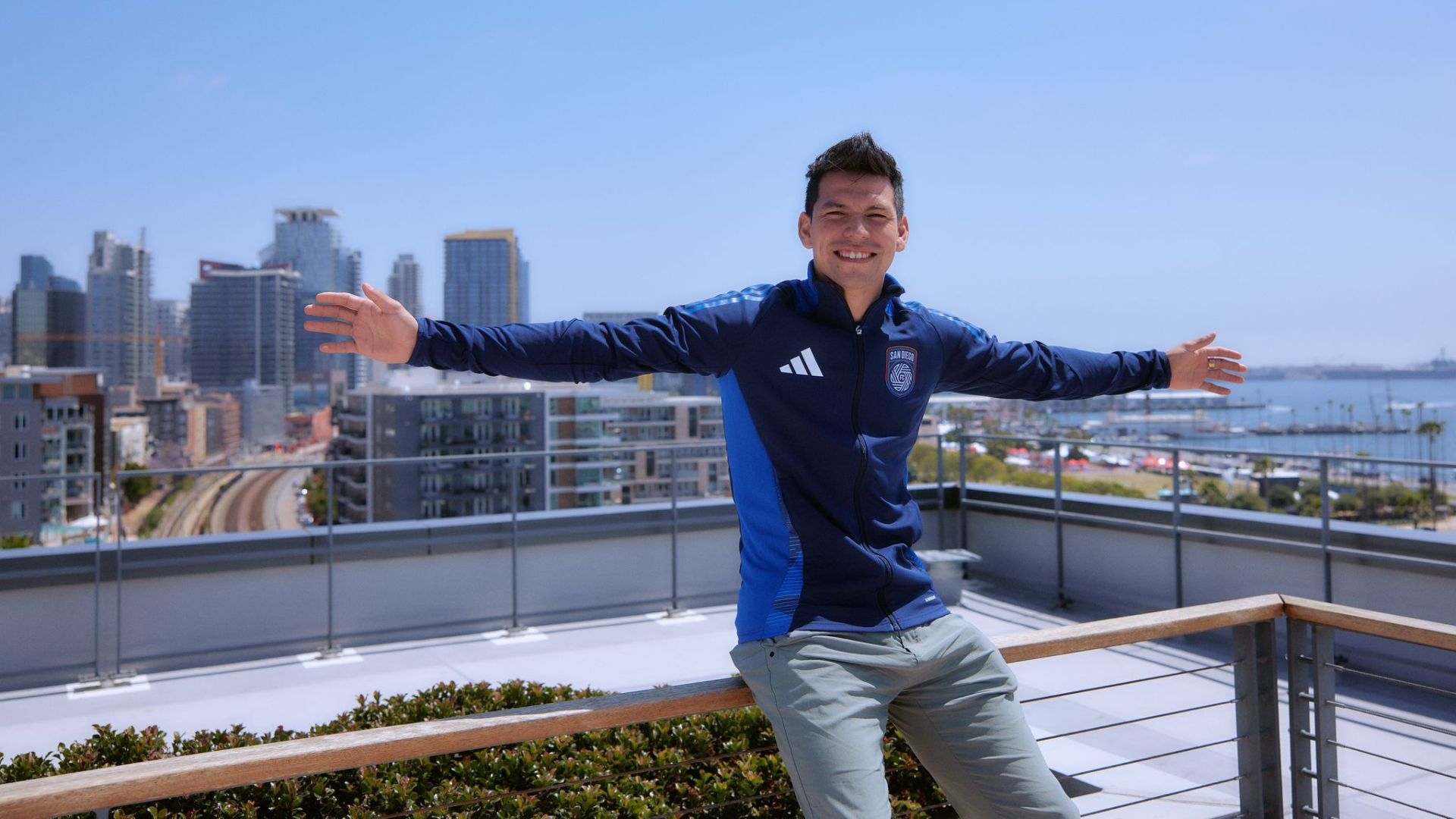
  • Hirving Lozano San Diego FC 2@sandiegofc

    What's next for SDFC, fans?

    San Diego FC has made its efforts to reach out into a community united in some ways and divided in others - and piece together a unifying force behind a new MLS club. Expectations here, for fans, are reasonably high. Brown said that a playoff spot would be a minimum goal. Barajas said postseason soccer would be a dream. For Rodriguez, just seeing a team from his city wear the badge - and fight for it - is enough.

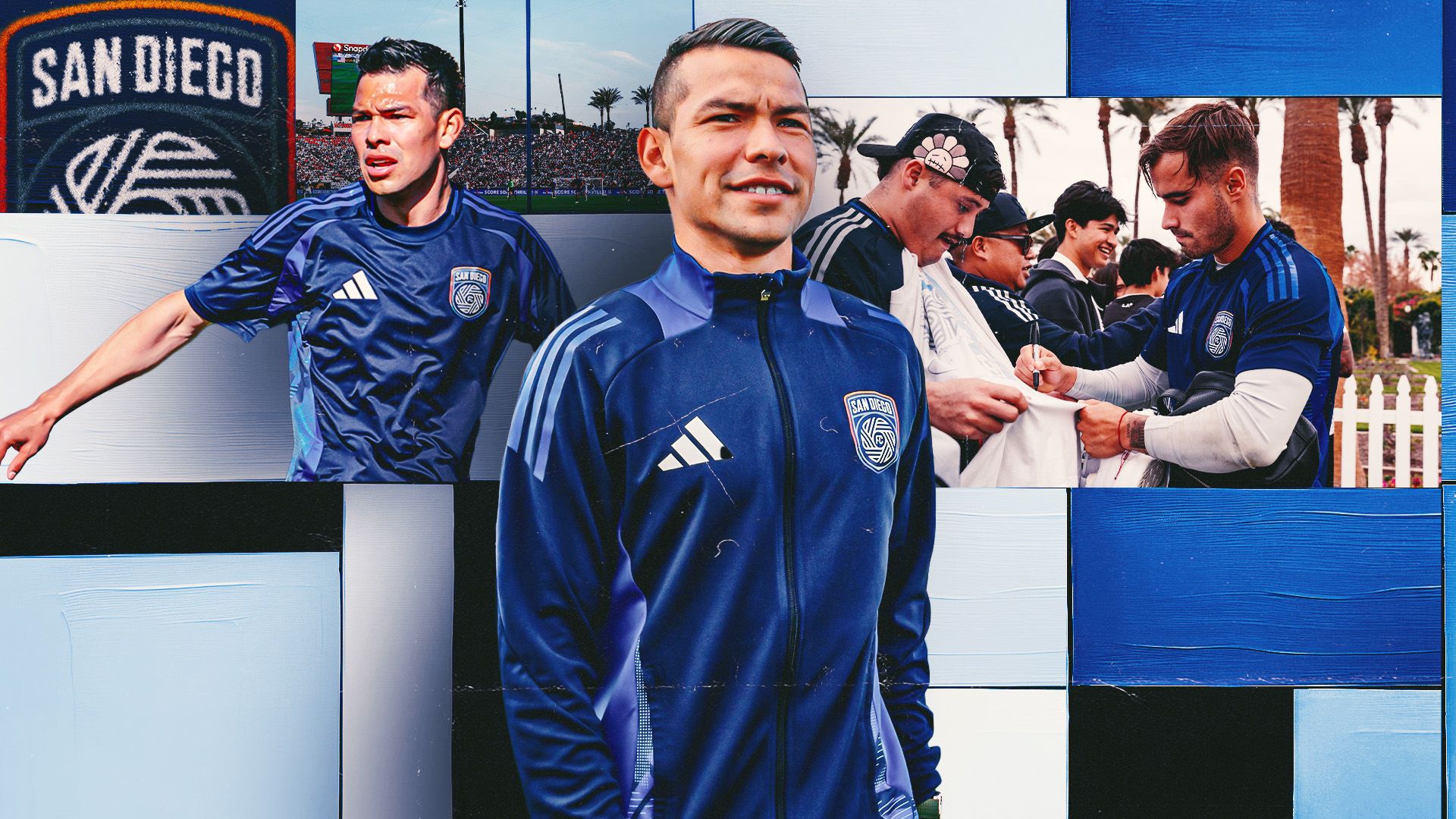
    And, yes, there is soccer to be played. San Diego have made an impact signing in Mexican national team star Chucky Lozano - something they promoted with a “Chuckyfest” event that included supporter groups from throughout the region. The winger will certainly score goals and also sell a fair few shirts in the Mexican-American community.

    “A lot of people here are going to have someone local to look up to,” Rodriguez said. “They won't have to look at Ronaldo or Messi, or they won't have to look at Neymar down south. They can look at San Diego, at Snapdragon Stadium.”

    History suggests that this might not be all that simple. San Diego has some experienced MLS players, and a few interesting European imports, led by a coach, Mikey Varas, who knows the American soccer landscape well. Still, there is every chance that they struggle to find their feet in the league. Then again, many speculated that St. Louis City would do the same - and they won the Western Conference regular season title in their first year of existence.

    For the club, though, the focus is on making sure that they have the fans on their side, ones that can move past previous experiences and exercise trust after years of feeling disconnected from a sport they love.

    You can already hear the pitter-patter of Rodriguez’s drums echoing from the stands.