+18 | Play Responsibly | T&C's Apply | Commercial Content | Publishing Principles
De Jong Xavi Felix Barcelona GFXGetty/GOAL

Frenkie de Jong injury is crushing for Barcelona - midfield maestro makes Xavi's side tick

Barcelona should have little to complain about following their epic comeback win over Celta Vigo on Saturday. Trailing 2-0 at home after 82 minutes, they scored three times across the next eight to seize a 3-2 victory and move to the top of La Liga. This is, objectively, a good thing, the kind of victory that will come to be dubbed as ‘season-defining' if Xavi's side defend their domestic crown in 2023-24. And although Barca can have very few gripes right now, there was something discouraging in the way this was won.

Of course, the final scoreline is worth celebrating, but the nature of the comeback was worrying. Barca were erratic as they pushed for the winner. They were frantic without being controlled, incisive without being precise. They basically won thanks to three separate moments of undeniable quality that happened to come within a short spell.

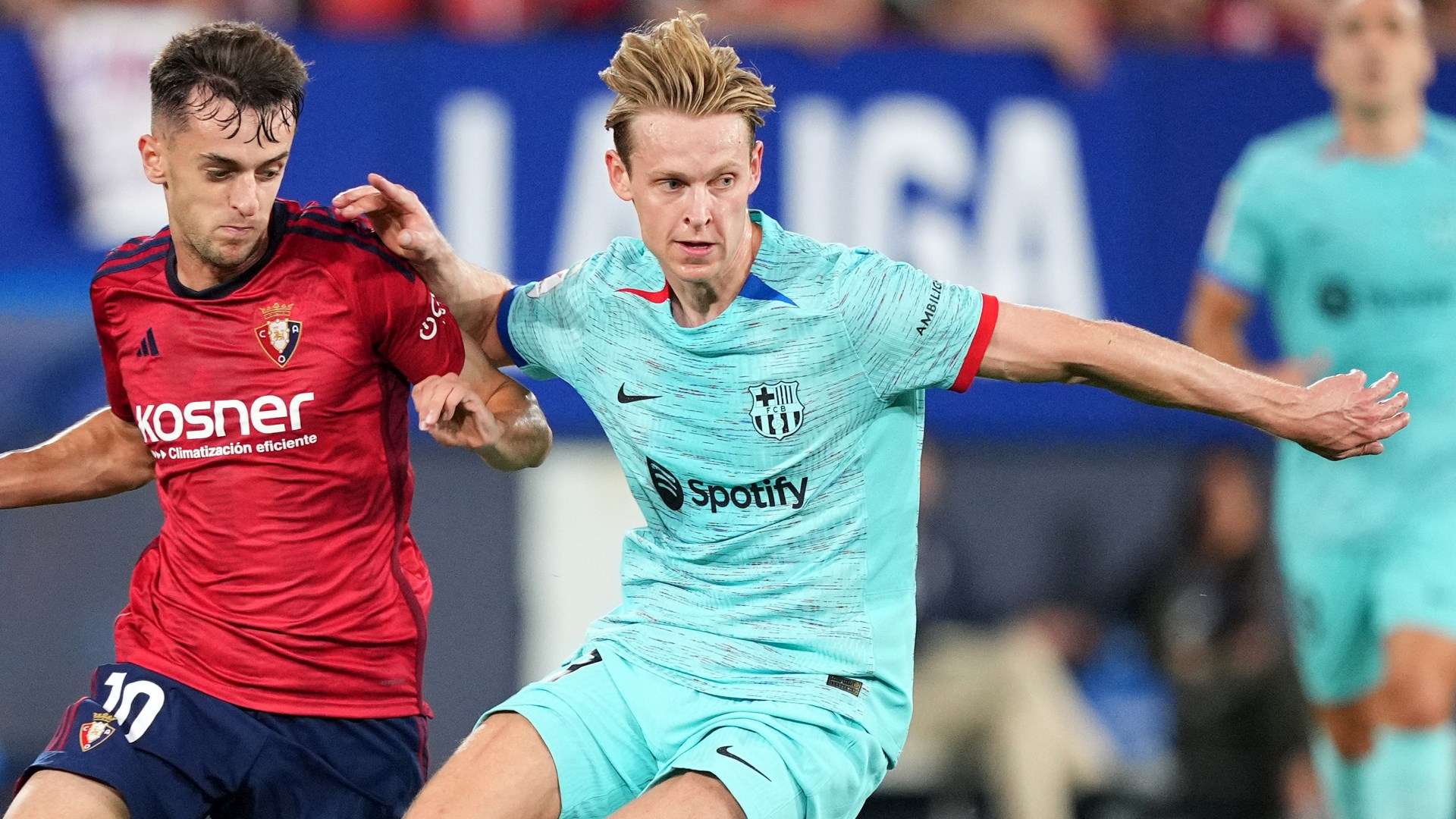
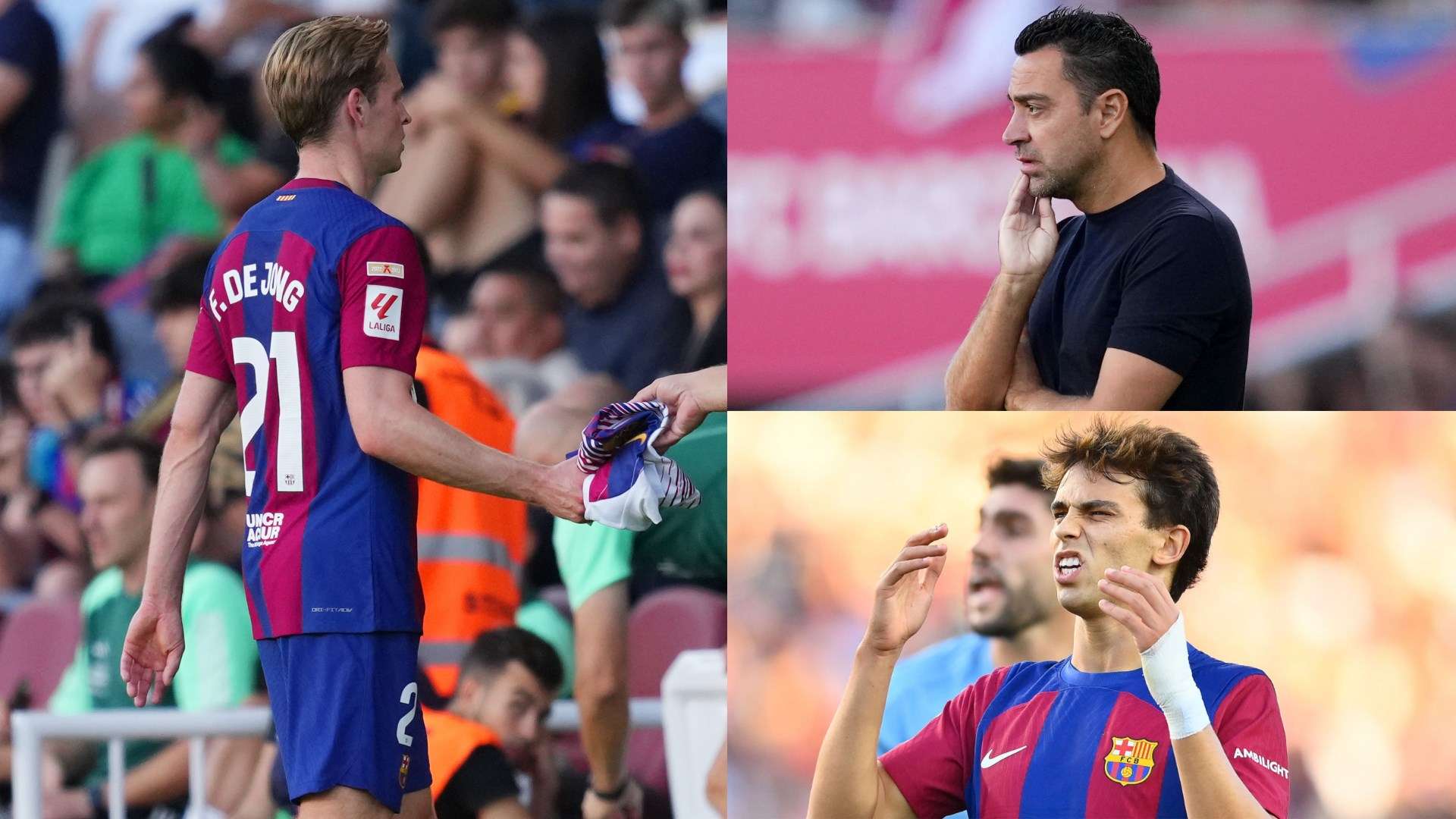
And that chaos can be attributed to the absence of one critical player in centre-midfield. Frenkie de Jong, the kind of footballer built to metronomically break down an opponent, had limped off with an injury in the first half — and could now miss up to six weeks of action.

Barca have endured their fair share of injuries already this season. Star defender Ronald Araujo is only now making his way back after missing a month of action, while midfield dynamo Pedri has not featured since the second week of the campaign. De Jong, though, might be the greatest loss of them all.

The once-written off Netherlands international has now become this team's most crucial component, and Barca simply will not be the same side without him in their ranks.

  • Frenkie de Jong Barcelona 2023-24Getty

    Why is De Jong so important?

    De Jong functioned as the most reliable part of this Barcelona team. There is a linear progression from the revival of Sergio Busquets' career — somewhere in the spring of 2021 — to De Jong's current status as Barca's talisman. Busquets and De Jong formed a formidable partnership at the base of midfield, the two working in tandem to allow Busquets to become more pragmatic and De Jong more adventurous. They were an odd duo, but one that developed enough to carry Barcelona to the Spanish title in 2023.

    The departure of Busquets — he moved to Inter Miami over the summer — seemed likely to throw De Jong's role into jeopardy. Instead, he has arguably improved alongside Oriol Romeu, a less advanced but certainly similar player to Busquets, who effectively does all of the Busquets things — but not as well (which is certainly reasonable for a player signed for €8 million (£7m/$8.6m) from mid-table Girona).

    In effect, De Jong has developed as a player entering his prime should, being handed a defined role in a winning side, and making it his own. Box-to-box playmakers aren't really stylish anymore; everything is about incision and creating the perfect angle for the final pass. Modern midfielders usually receive the ball and move it very forward very quickly. Even the best at their role, such as Joshua Kimmich or Rodri, aren't ones for dribbling or expression at the level of De Jong.

    The ex-Ajax man is different, a player who starts deep, can carry the ball forward, and deliberates, well, deliberately, before keeping things ticking. It's a key part of a Barca side that is still learning to find its way in attack, their measured presence at the base of midfield who sets everything up.

  • Advertisement
  • Pedri(C)Getty Images

    Better equipped to cover

    Without that, Barca are a radically different side, even if Xavi's has a sneaky amount of depth to turn to this year. The obligatory annual injury to Pedri has been solved by a resurgent Joao Felix, as well as the arrival of the crafty Ilkay Gundogan. Raphinha's suspension for a ridiculous red card received against Getafe on the opening weekend was amended by the emergence of Lamine Yamal — Spain's latest soon-to-be overworked youngster. Araujo, arguably Europe's most consistent defender last season, has also been covered for when struggling with a muscle issue.

    These are the kind of knocks that would have rattled Barcelona of years past. Pedri's hamstring injury, sustained last year against Manchester United in the Europa League, had instant ramifications, as Barca both crashed out of Europe and then were overrun in the middle of the park by Real Madrid in the Copa del Rey semi-final. It was without Araujo last autumn that Barca saw their Champions League campaign crumble, with poor defensive showings against Inter and Bayern Munich to blame.

    This one, then, will be another test. But the other options — Felix, Gavi and Gundogan — aren't quite of the same archetype. If the solution is plug-and-play, then things look admittedly grim.

  • Sergi Roberto Barcelona 2023-24Getty Images

    Underwhelming alternatives

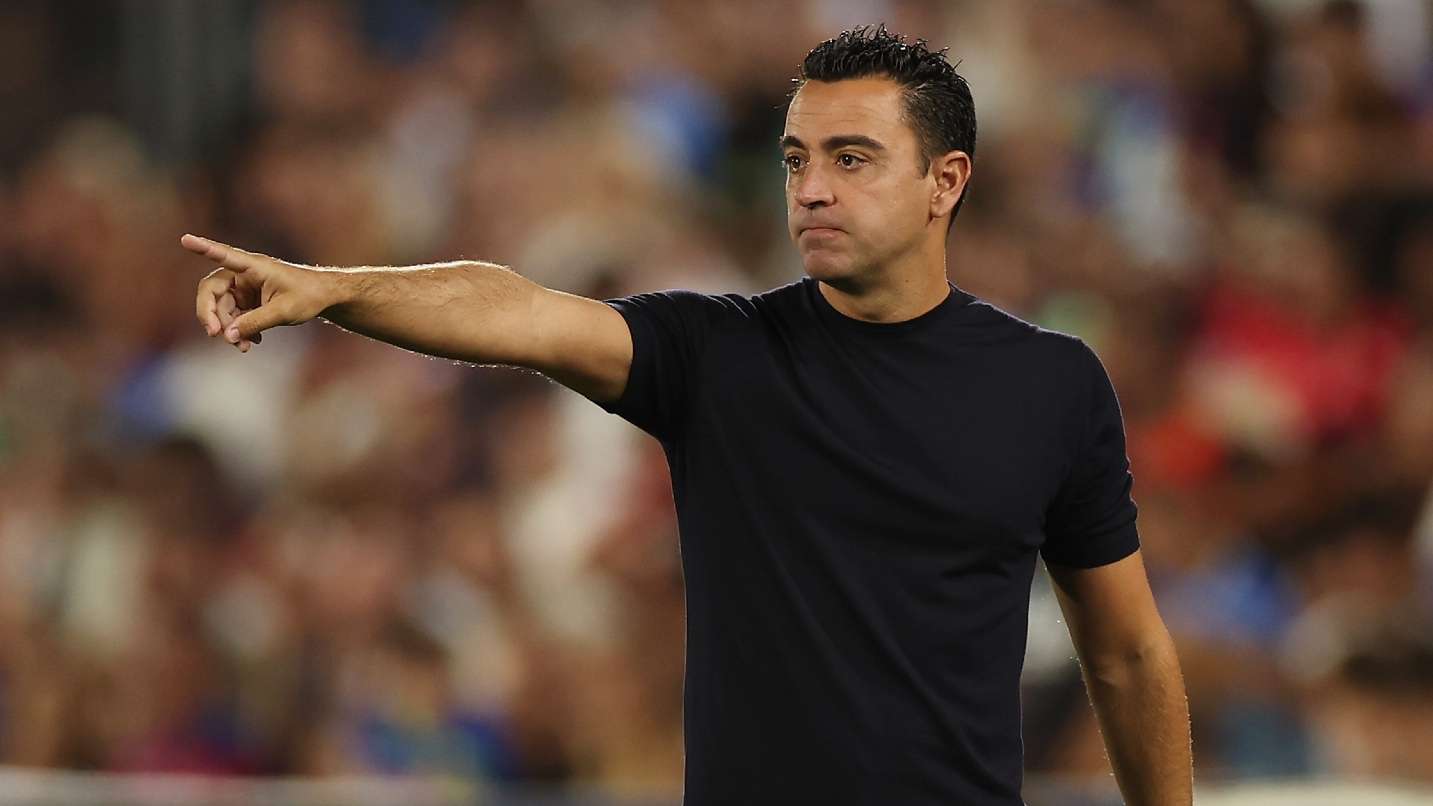
    Xavi, of course, has backed his players to fill in. He has to. At his press conference on Monday, he spoke of how academy product Fermin Lopez and converted right-back Sergi Roberto can impact the game when required.

    "We have alternatives and one of them is Sergi Roberto. He’s a formidable wildcard for me as a coach, a luxury wildcard. Just like Fermin, he can help us a lot... He can be important," the manager said ahead of Tuesday's clash with Mallorca.

    Neither are midfield maestros in De Jong's mould, though. Roberto has started 33 of his last 50 games at right-back, and only 11 as a midfielder, usually on the right side of a 4-3-3. His off-ball work gets him into the side — Xavi has spoken in the past about how his defensive instincts make Roberto an excellent pressing midfielder — but he is certainly not one for playing on the left side of a box midfield and dictating things from a deeper-lying role.

    Fermin, meanwhile, is an attacking midfielder, best used higher up the pitch, an expert operator in the final third. He is, indeed, one for the killer pass or speculative shot. His only significant minutes for the Blaugrana came in pre-season, where he turned in a duo of admittedly impressive showings against much-changed Arsenal and Real Madrid sides. Although his lack of defensive nous might not be a problem against a struggling Mallorca side, it is difficult to imagine Xavi entrusting him against the more attacking outfits in the weeks to come.

  • Frenkie de Jong Barcelona 2023-24Getty Images

    The games De Jong will miss

    Barca's upcoming run of games is not for the faint-hearted, even if they will be favoured to win in the majority of them. After Tuesday's meeting with Mallorca, they have less than a 72-hour turnaround before taking on a Sevilla side who, despite struggling so far this season, have the experience and quality to challenge anyone.

    From there, they face what is likely to be the toughest of their Champions League group-stage matches in Porto, before rounding out this mini-section of the season with a visit to Granada ahead of the international break.

    Upon their return, home games against an always difficult Athletic Club side and Shakhtar Donetsk are on the docket, before the first Clasico of the season takes place on October 28. De Jong's initial diagnosis of needing six weeks to recover means he is highly likely to miss the clash with Real Madrid, where he would have been even more key than usual given the midfield talent on the other side.

    There's a decent chance he misses the away games against Real Sociedad and Shakhtar that follow the Clasico, too, and so Xavi will need to ensure the solution to his newest problem is a robust one.

  • Xavi HernandezGetty Images

    Is a change of system necessary?

    The Barca boss must, then, confront the possibility that a change of system could be needed. Xavi's team were at their most effective last season when employing a box midfield in possession. Busquets and De Jong were the double pivot at the bottom, while Gavi and Pedri occupied either position further up the pitch. That system has served them well in spells this year, with Gundogan rotating into Pedri's spot.

    But the arrival of Felix has changed things, as he doesn't function in the same way. Whether by a lack of tactical discipline, or the coach's insistence he express himself — probably a mixture of both — Felix has become more of a second striker, seeing Barca's shape shift to something more reminiscent of a classic 4-3-3, with a recognised striker, two wingers, and three defined midfielders.

    And perhaps that makes the most sense for now. It was thanks to the width of their attacking full-backs and numbers in the middle that Barca won Saturday's game against Celta. There was no De Jong in the side, and Barca kept things simple. If some configuration of Romeu, Gundogan and Gavi make up the midfield, with Lewandowski, Felix and Raphinha or Yamal up front, the Blaugrana should have more than enough quality to win the majority of their games in the interim.

    That is, indeed, the flip side of depth. Having serviceable options in key areas means that there might not be drop off in terms of individual performance. But those pieces, talented as they are, might simply have to function in a different way.

    If Barca are to repeat their La Liga crown, push for the Champions League — and look good doing it — then they might just have to adjust tactically for life without their most important player. These are still the early stages of a long campaign, but change might be necessary to keep Barcelona afloat.